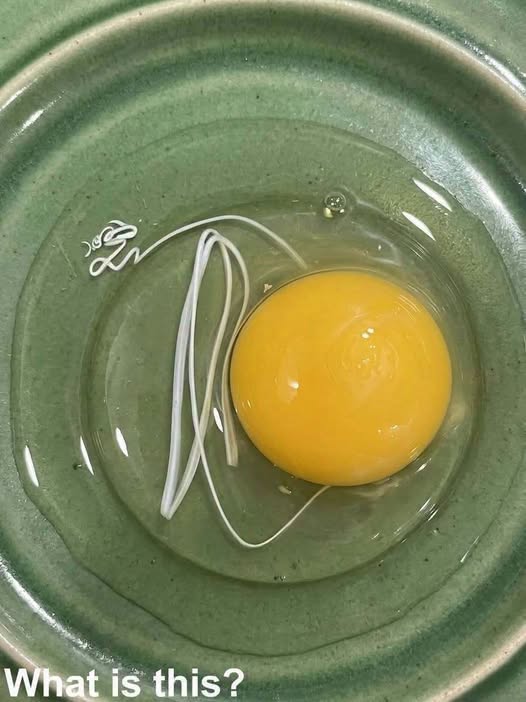
Preparing breakfast is usually a simple routine, but sometimes small details can lead to unexpected discoveries. One morning, while cracking eggs to make breakfast, I noticed something unusual inside one of them—a thin white strand floating beside the yolk.
At first glance, it seemed unfamiliar. Because food safety is important, seeing something unexpected inside an egg naturally raised questions. Was the egg still fresh? Was the strand normal? Why had I never noticed it before?
Curious about what I had found, I examined the remaining eggs in the carton. The others appeared ordinary, which made the single white strand stand out even more. Rather than making assumptions, I decided to learn more about this natural feature of eggs.
After reading food safety resources and educational materials, I discovered that the white strand has a name: the chalaza.
The chalaza is a natural part of an egg’s structure. It consists of small strands of protein that help keep the yolk centered inside the egg. These strands act like tiny supports, protecting the yolk and helping maintain the egg’s structure.
Many people do not notice the chalaza because it can vary in size and visibility from one egg to another. In some eggs, it is very noticeable, while in others it may be difficult to see.
Interestingly, visible chalazae are often associated with fresher eggs. As eggs age, these protein strands may become less prominent. This means that the presence of a noticeable chalaza is generally considered a normal sign of freshness.
Learning about this small feature completely changed my perspective. What initially seemed unusual turned out to be a fascinating example of how nature helps protect the contents of an egg.
This experience also serves as a reminder that unfamiliar things are not always causes for concern. Many natural features of everyday foods go unnoticed until we take a closer look and learn more about them.
The next time you crack an egg and notice a white strand attached to the yolk, you can recognize it as the chalaza—a natural part of the egg that helps keep everything in place.
Sometimes, simple kitchen moments become opportunities to learn something new, and this small discovery is a great example of how understanding can turn uncertainty into knowledge.