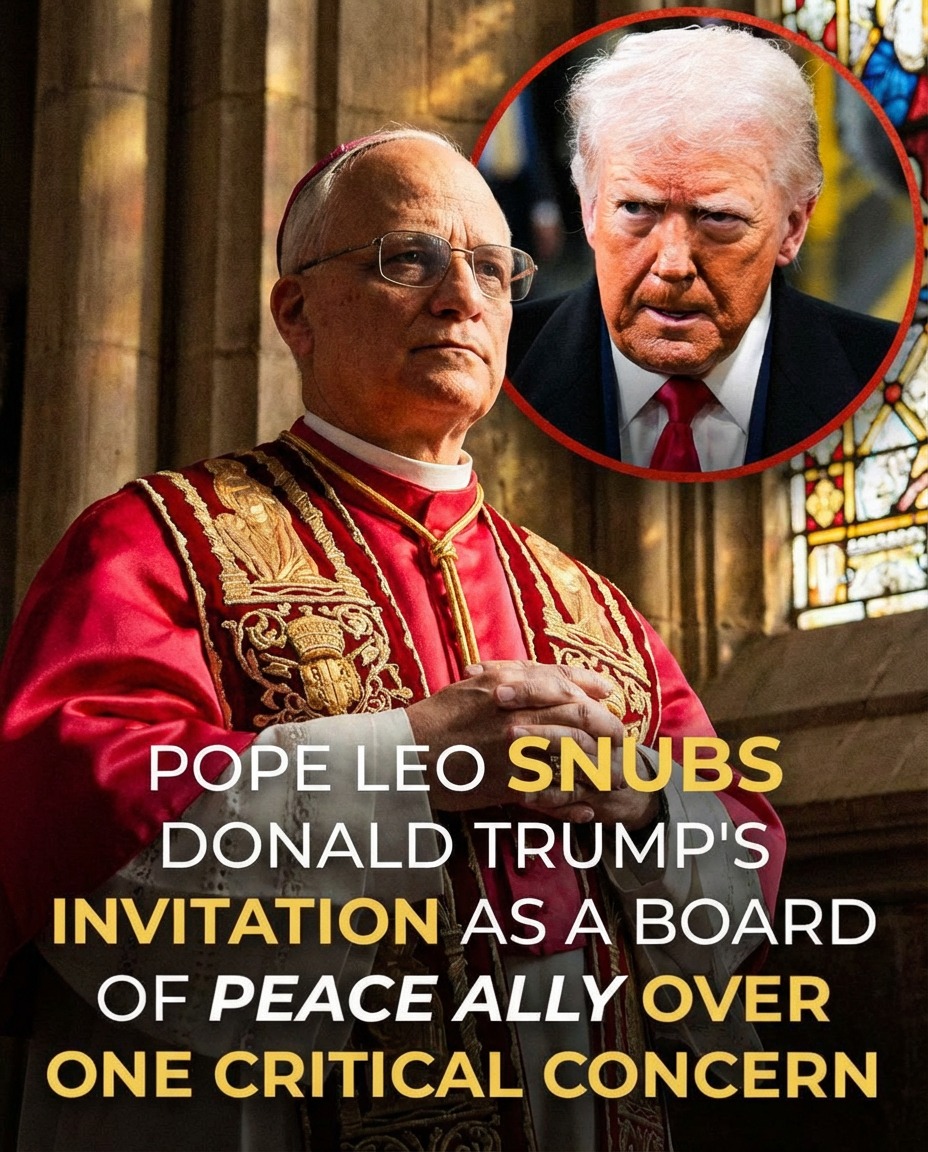
The Vatican has responded carefully but firmly to an invitation from President Donald Trump to participate in a newly proposed “Board of Peace” initiative focused on rebuilding and stabilizing Gaza following recent conflict.
While the White House described the initiative as a significant step toward long-term recovery and development, Vatican officials indicated that the Holy See would not participate in its current form, citing its unique diplomatic role and longstanding approach to international peace efforts.
According to the administration, President Trump introduced the Board of Peace in January as part of a broader framework intended to help end hostilities and support a transition toward stability and reconstruction in Gaza. The proposal outlined a coordinating body designed to oversee implementation of recovery plans, facilitate international cooperation, support infrastructure and economic development, and promote long-term accountability. The White House stated that the board would be chaired by the president and include an executive panel composed of individuals with experience in diplomacy, infrastructure, and development policy.
During a diplomatic engagement in Rome, Vatican Secretary of State Pietro Parolin addressed questions from journalists regarding the proposal. Cardinal Parolin explained that the Holy See would not participate “because of its particular nature,” emphasizing that the Vatican does not operate like other sovereign states in international political initiatives.
He also noted that certain elements of the proposal were unclear, stating that parts of it raised questions and contained “critical points” that would require further clarification before any reconsideration could take place.
A central theme in the Vatican’s response was its longstanding support for multilateral diplomacy. Cardinal Parolin suggested that, at the international level, crisis management and peace processes are best handled through established global institutions such as the United Nations. The Holy See has historically advocated for UN-centered approaches to conflict resolution, humanitarian coordination, and reconstruction efforts.
Following the Vatican’s statement, White House Press Secretary Karoline Leavitt publicly defended the Board of Peace initiative, describing it as a serious effort aimed at promoting peace and recovery. She expressed disappointment that the Vatican declined to participate but reiterated the administration’s commitment to advancing its proposed framework.
The exchange reflects a broader dynamic in international diplomacy, highlighting the balance between newly proposed frameworks led by individual governments and multilateral approaches supported by global institutions. While the Vatican has chosen not to join the initiative at this stage, its response underscores its commitment to neutrality and its preference for internationally coordinated peace efforts.
As discussions continue, the future direction of reconstruction and stabilization efforts in Gaza will likely involve ongoing dialogue among global leaders, institutions, and faith-based actors.