
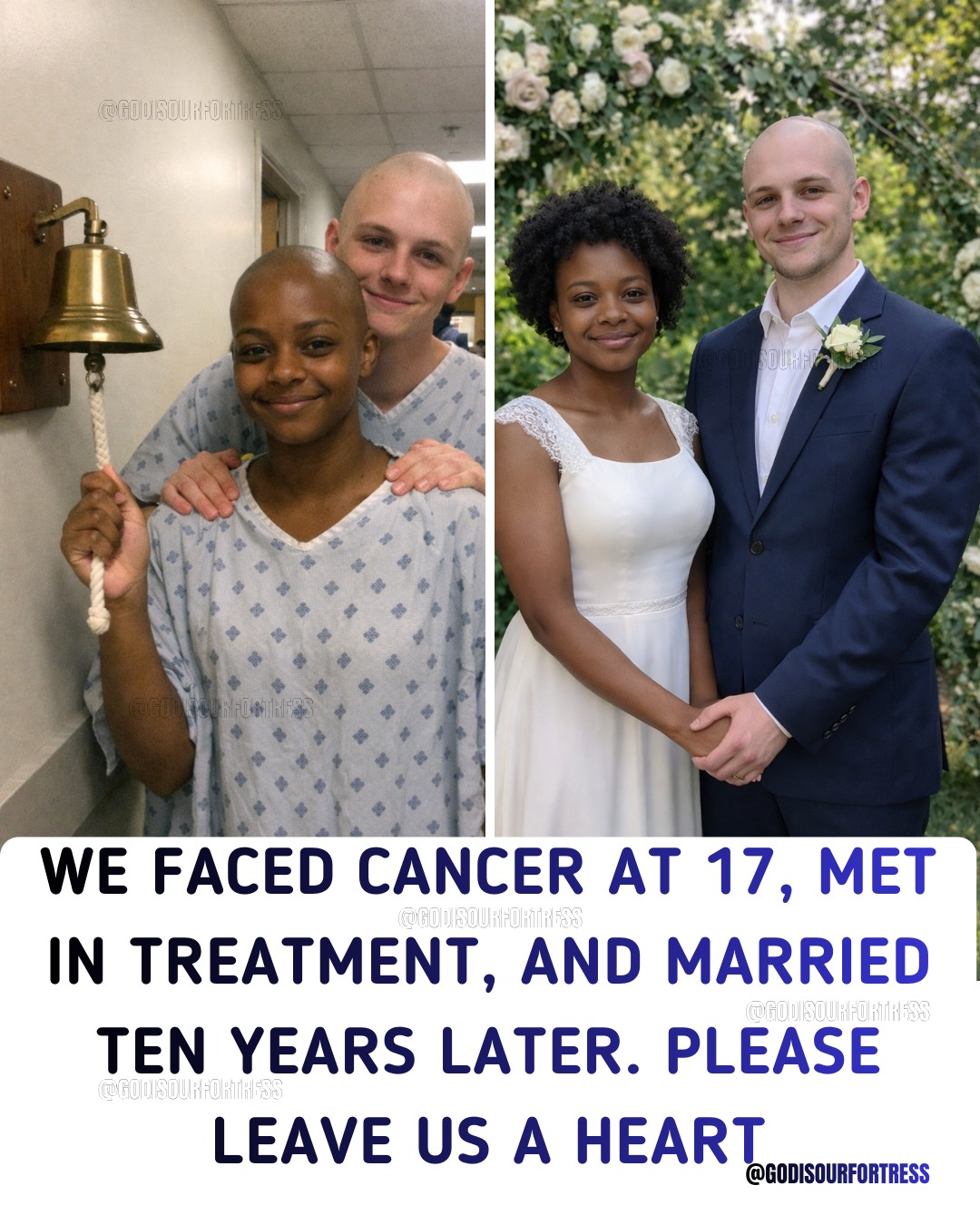
We Met at Seventeen in a Hospital Hallway A Decade Later, We Began a Life Together
We were only seventeen when our lives crossed paths, not in a classroom, not at a celebration, and not through friends, but in a quiet hospital hallway where time seemed to move differently.
We were there for different diagnoses, facing separate battles, yet sharing the same place and the same uncertainty. What began as two teenagers enduring treatment in the same building became, a decade later, a marriage built on the strongest foundation imaginable: having survived the worst together.
Two Teenagers, Two Battles
Days were filled with appointments, test results, and long hours of waiting. School routines faded into the background, replaced by treatment schedules and cautious hope. Plans for the future were paused, rewritten, or quietly set aside.
Being seriously ill at seventeen is a particular kind of hardship. Your friends are worrying about exams and weekend plans while you are learning medical vocabulary no teenager should know. The world keeps moving, and you are stuck in a hallway, waiting. That shared stuckness was what first connected us, even before we spoke.
From Smiles to Something Steadier
At first, we did not talk much. A few polite smiles turned into conversations, and conversations slowly became something steadier. There is an honesty that illness forces on people. When you are both exhausted, both scared, both trying to be brave for your families, pretense feels pointless. We skipped the small talk that seventeen-year-olds usually hide behind and went straight to what mattered.
In the middle of exhaustion and fear, we found comfort in simply not being alone. Faith, patience, and quiet encouragement became part of our daily routine, even on days when optimism felt hard to find. We celebrated each other’s good test results like personal victories. We sat with each other through the bad days without needing to fix anything.
The Bell He Waited to Ring
Michael finished his treatment before I did. The nurses told him about the bell, a sound that marked the end of one chapter and the beginning of another. In cancer centers, ringing the bell on your last day of treatment is a beloved tradition, a moment of triumph shared with everyone on the ward.
Everyone expected him to ring it right away. Instead, he chose to wait. He said it did not feel right to move forward alone.
I think about that decision often. At seventeen, with his own battle behind him and his whole life waiting, Michael chose to stand still. He visited. He waited through my remaining treatments. He put his celebration on hold so that we could have ours together. It was the first of many times he would show me what his love actually looked like: not grand gestures, but steady presence.
Ringing It Together
Months later, my own treatment came to an end. On that final day, Michael stood next to me. Together, we rang the bell, not as a celebration, but as a moment of gratitude for making it through something we never expected to face so young.
The sound of that bell carried everything: relief, grief for what we had endured, gratitude for the nurses and doctors, and the fragile, enormous hope that the hardest part was behind us. We rang it together because we had survived together, and neither of us wanted to pretend otherwise.
Learning to Live Again
Life after cancer was not instantly simple. There were follow-up visits, lingering fears, and the challenge of learning how to live normally again. Survivors talk about this phase as its own kind of difficulty. The crisis ends, everyone celebrates, and then you are left to figure out who you are when you are not a patient anymore.
We had to rediscover what everyday life looked like after hospitals had shaped so much of our world. Simple things felt strange: planning more than a few months ahead, complaining about ordinary problems, trusting our bodies again. But through that process, we learned lasting lessons: love is consistency, and faith is choosing to stay when things are uncertain.
Growing Up Faster
We grew up faster than most people our age. Responsibility replaced carelessness. Gratitude replaced impatience. When you have faced mortality at seventeen, the small stuff genuinely bothers you less. We learned to distinguish between problems and inconveniences, a skill many people never develop.
Through it all, we stayed by each other’s side, supporting one another through every step forward and every moment of doubt. The relationship that began in a hospital hallway was tested by everything that came after, and it held. Not because it was perfect, but because it was built on the truth of who we were at our most vulnerable.
Ten Years Later
Ten years later, we found ourselves standing in a place that once felt impossible to imagine. There were no hospital corridors, no medical equipment, and no bells. Instead, there was family, open air, and a future filled with quiet confidence.
What began in a season of treatment ended in marriage. Michael did not just wait for a moment. He stayed for the journey that followed, through recovery, through rebuilding, through all the ordinary years that felt extraordinary simply because we had almost lost them. And together, we moved forward with hearts shaped by resilience, gratitude, and hope.
What Our Story Teaches
- Presence is the purest form of love. Michael’s decision to wait before ringing the bell said more than any words could.
- Shared hardship can build unbreakable bonds, when both people choose honesty over pretense.
- Recovery is a journey, not a moment. The bell was a milestone, not a finish line.
- Gratitude is a practice. We learned it in a hospital hallway, and we practice it still.
- The best love stories are not about perfection. They are about two people who keep choosing each other.
Frequently Asked Questions
Where did the couple meet?
They met at seventeen in a hospital hallway, where both were undergoing treatment for different diagnoses.
What is the significance of the bell?
Ringing the bell is a tradition marking the end of cancer treatment. Michael finished first but chose to wait, and they rang it together when the narrator’s treatment ended months later.
Why did Michael wait to ring the bell?
He said it did not feel right to move forward alone. He waited through the narrator’s remaining treatments so they could mark the milestone together.
Was life easy after treatment ended?
No. They faced follow-up visits, lingering fears, and the challenge of relearning normal life after hospitals had shaped their world. Recovery continued long after the bell.
How did the story end?
Ten years after meeting, they married, surrounded by family in the open air, moving forward with hearts shaped by resilience, gratitude, and hope.

