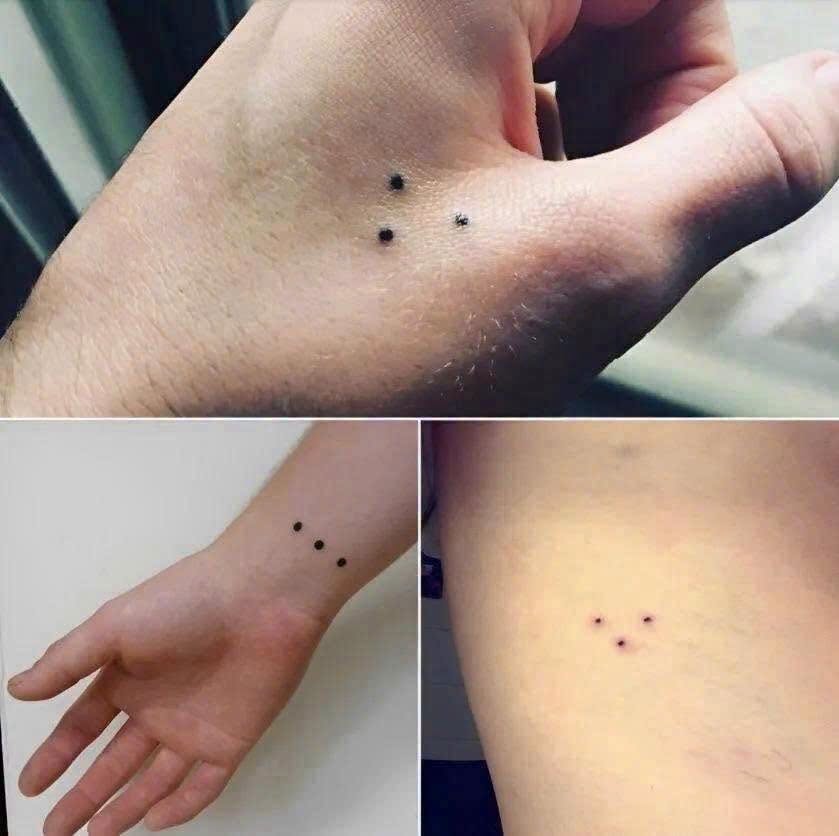
What Does a Three Dot Tattoo Mean? Understanding the Different Interpretations
The three-dot tattoo is one of the most recognizable minimalist tattoo designs in the world. Although it is small and simple, just three dots arranged in a triangle, it has attracted plenty of attention over the years because of the many meanings people associate with it.
Some online posts claim that seeing someone with a three-dot tattoo is automatically a warning sign. However, the reality is much more complex. Like many tattoos, its meaning depends on the individual, their background, and the reason they chose the design.
"Mi Vida Loca": My Crazy Life
For many people, the three-dot tattoo symbolizes the phrase "mi vida loca," which translates to "my crazy life" in Spanish. Rather than referring to criminal activity, the phrase is often used to represent overcoming life's struggles, facing difficult experiences, and continuing to move forward despite challenges.
For some, it serves as a reminder of personal strength and resilience: a small, permanent mark that says "I've been through hard times and I'm still here." The phrase captures something universal about the human experience. Everyone's life gets crazy sometimes. The tattoo honors survival.
This interpretation is particularly common in Latino communities, where the phrase carries cultural resonance beyond any single definition. For many wearers, it's about identity, endurance, and pride in having navigated a difficult path.
Deeply Personal Meanings
Others choose the tattoo for deeply personal reasons that have nothing to do with any traditional interpretation.
Three dots can represent family members, children, close friends, or significant milestones in life. A parent might get three dots for three children. Someone might mark three turning points that shaped who they are. The simplicity of the design makes it a perfect vessel for private meaning.
The design may also symbolize the past, present, and future, reminding the wearer of their life's journey and personal growth. This temporal interpretation gives the tattoo a philosophical dimension: wherever you've been, wherever you are, wherever you're going, all held in three small points.
In some cultures and belief systems, the tattoo carries spiritual or religious significance. It may represent concepts such as faith, hope, and love, or symbolize balance between the mind, body, and spirit. The number three itself carries sacred weight in many traditions, from the Christian Trinity to the three jewels of Buddhism.
Because of its simple appearance, the design can be adapted to many different personal meanings. That's both its power and the reason it's so often misunderstood.
The Minimalist Appeal
There are also people who select the three-dot tattoo simply because they appreciate minimalist body art. Small tattoos have become increasingly popular over the past decade, and many individuals prefer subtle designs that hold private meaning or simply match their personal style.
Not every tattoo is a manifesto. Sometimes three dots are just three dots: clean, elegant, and quietly cool. The wearer might love the aesthetic, want something discreet for professional reasons, or be testing the waters with a first tattoo. Assuming deep significance where the wearer intended only style is its own kind of misreading.
The Gang Association: What to Know
It is true that in certain regions and specific circumstances, the three-dot tattoo has been associated with criminal organizations or gangs. This connection exists and shouldn't be entirely dismissed.
However, experts emphasize that this connection is not universal. A tattoo alone cannot accurately reveal someone's background, beliefs, or intentions. Context matters enormously: the same three dots mean very different things on different people in different places.
Body art has evolved significantly over the years. What may have once carried one meaning can take on entirely different interpretations as tattoo culture becomes more mainstream. Today, millions of people wear tattoos that represent memories, achievements, loved ones, or artistic expression rather than any connection to illegal activity.
Making assumptions based solely on a tattoo can lead to misunderstandings and unfair judgments. In a world where teachers, nurses, parents, and professionals increasingly wear visible tattoos, judging someone by their ink is more likely to reveal your biases than their character.
Why Symbols Rarely Have One Meaning
The three-dot tattoo is a perfect case study in how symbols work. A symbol's meaning isn't fixed in the design itself. It lives in the relationship between the symbol, the wearer, and the observer.
Consider other symbols with multiple meanings: the cross, the lotus, the anchor, the semicolon. Each carries religious, cultural, personal, and aesthetic interpretations simultaneously. The three dots are no different.
This is worth remembering far beyond tattoos. We constantly encounter symbols, gestures, and designs that we interpret through our own limited experience. The three-dot tattoo reminds us to pause before concluding, to consider that our first interpretation might not be the right one, and to respect that meaning belongs first to the person who chose it.
Every Tattoo Has a Story
Every tattoo has a story, and that story belongs to the person wearing it. The three-dot tattoo is a reminder that symbols rarely have just one meaning. Whether it represents resilience, family, spirituality, life's journey, or simply a personal aesthetic choice, its significance depends on the individual.
Before drawing conclusions about someone based on a small tattoo, it is worth remembering that appearance alone does not tell the whole story. Understanding the context behind a symbol is often far more meaningful than relying on stereotypes or assumptions.
If you're curious about someone's tattoo, the best approach is also the simplest: ask with genuine respect. You might hear a story about survival, about love, about faith, or about nothing more than a fondness for minimalist design. Any of those answers is more interesting than an assumption.
Frequently Asked Questions
What does the three-dot tattoo usually mean?
The most common interpretation is "mi vida loca" (my crazy life), symbolizing resilience through life's struggles. However, it can also represent family members, past/present/future, spiritual concepts like faith/hope/love, or simply minimalist aesthetic preference.
Is the three-dot tattoo a gang symbol?
In certain regions and contexts, it has been associated with gangs. But experts stress this connection is not universal. The same design carries many other meanings, and a tattoo alone cannot reveal someone's background or intentions.
Why do people get minimalist tattoos like three dots?
Small tattoos have grown hugely popular for their subtlety, elegance, and versatility. People choose them for private meaning, professional discretion, aesthetic preference, or as a first tattoo.
Should I be concerned if I see someone with this tattoo?
No. Making assumptions based solely on a tattoo leads to misunderstandings and unfair judgments. The design has many legitimate meanings, and context matters far more than the symbol alone.
What should I do if I'm curious about someone's tattoo meaning?
Ask respectfully. Most people with meaningful tattoos are happy to share their stories when approached with genuine curiosity rather than judgment. The story belongs to the wearer.