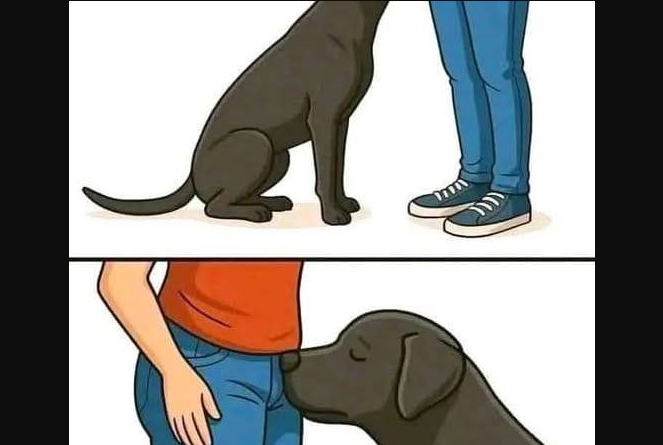
Dogs experience the world in a way that is very different from humans. While we rely mostly on sight and conversation to understand our surroundings, dogs rely primarily on scent. Their noses are their main source of information, helping them interpret people, places, and even emotions.
A dog’s sense of smell is incredibly advanced. Scientists estimate that a dog’s nose is many times more sensitive than a human’s. While we may notice only a faint odor, a dog can detect layers of information hidden within it. Scent helps them recognize individuals, remember past encounters, and interpret subtle biological signals.
Why Dogs Sniff Certain Areas
When a dog leans in to sniff someone closely during a greeting, it can sometimes feel awkward. However, this behavior is completely natural. Dogs are simply gathering information.
Certain areas of the human body naturally produce stronger scent signals due to specialized sweat glands. These glands release chemical markers that can communicate details such as age, biological differences, emotional state, and even subtle changes in health. While humans are not consciously aware of these signals, dogs can easily detect them.
To a dog, this is no different than introducing themselves. It’s their version of a handshake or a friendly “hello.” They are learning who you are in the most efficient way they know how.
It’s About Curiosity, Not Disrespect
It’s important to understand that this behavior is not about dominance, mischief, or bad manners. Dogs are not trying to embarrass anyone. They are simply following instinct.
In canine social behavior, scent plays a major role in communication. Dogs often greet other dogs by sniffing because it provides important information quickly. When they greet humans in a similar way, they are applying that same natural process.
Understanding this can help remove some of the discomfort. What may feel unusual to us is completely normal in a dog’s world.
How to Gently Redirect the Behavior
If you prefer that your dog greet people differently, training can help. Dogs respond very well to calm guidance and consistency.
You can teach your dog to sit before greeting guests. Use a steady voice and reward them with praise or a small treat when they follow instructions. Over time, they will learn that sitting politely earns positive attention.
The key is to redirect, not punish. Punishing natural instincts can create confusion. Instead, encourage the behavior you want to see while calmly guiding them away from what feels uncomfortable.
The Power of a Dog’s Nose
The same sense of smell that sometimes creates awkward greetings is also what makes dogs such attentive companions. Dogs can detect subtle changes in body chemistry. Many owners notice that their dogs seem to sense stress, sadness, or illness even before anyone says a word.
Research has shown that dogs can recognize shifts in breathing patterns, heart rate, and hormonal changes. This ability is one reason dogs are often trained as service animals or therapy companions. Their noses allow them to stay closely connected to the people around them.
A Sign of Connection
When a dog leans in to sniff during a greeting, it’s often a sign of interest and engagement. They are focusing on you. They are gathering information and building familiarity.
Dogs use scent to create memory and recognition. That’s why your dog can identify you instantly, even in a crowded place. To them, your unique scent is part of what makes you “home.”
Final Thoughts
While it may feel a little uncomfortable at times, a dog sniffing during a greeting is simply natural behavior. It comes from curiosity and instinct, not bad intentions.
With gentle training and clear boundaries, you can shape how your dog greets others while still respecting their natural communication style. At the same time, it helps to appreciate just how remarkable their sense of smell truly is.
In the end, that powerful nose is not just gathering information. It is part of how dogs form bonds, recognize the people they love, and stay connected to the world around them.