Why Are Some Window Bars Curved at the Bottom?
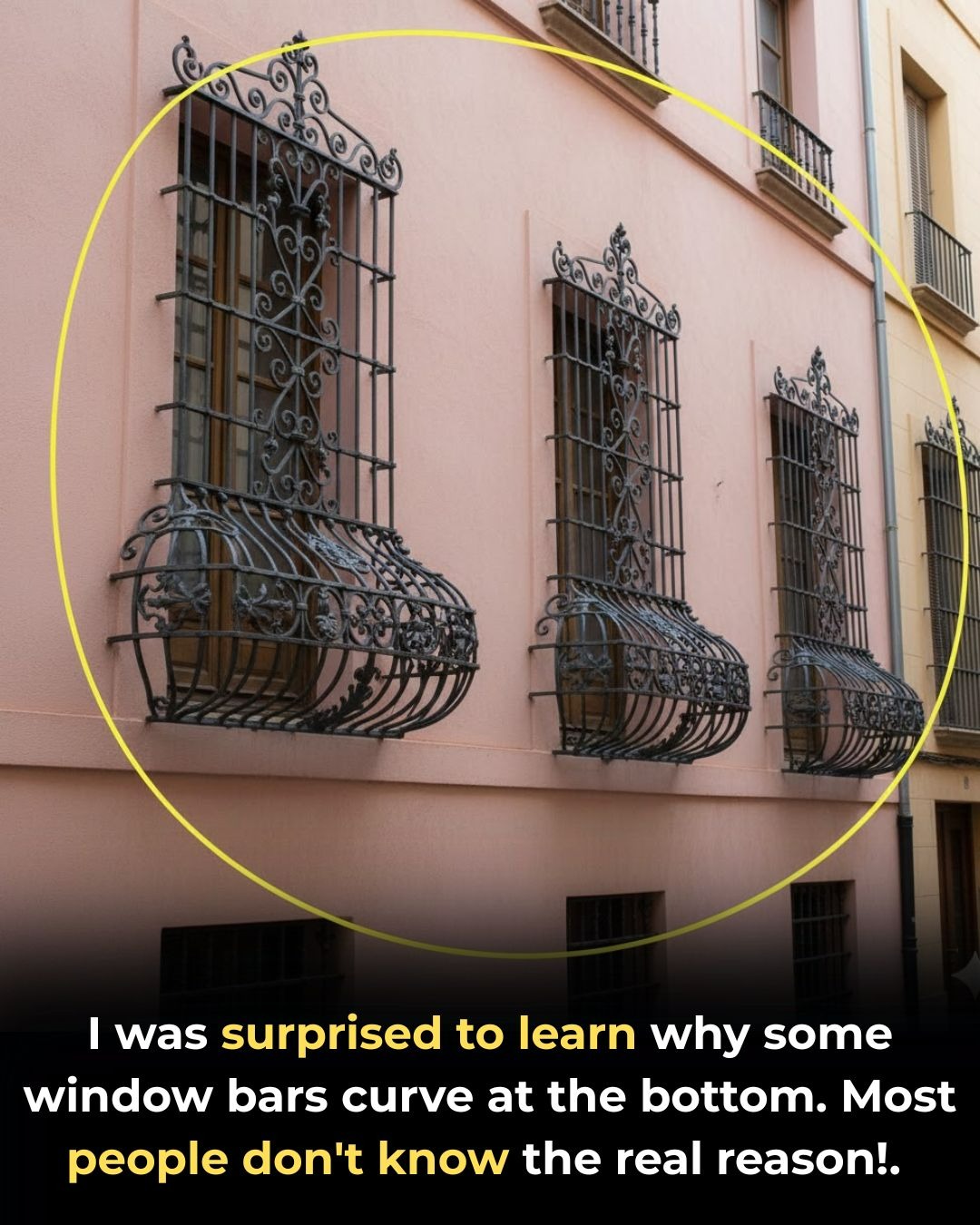
If you've ever walked past an older home or historic building, you may have noticed something interesting about the window grilles. Some of them feature a gentle outward curve at the bottom, a small bulge that gives the bars a distinctive pot-bellied shape. It's a detail that's easy to overlook but fascinating once you notice it.
These curved window bars have a name, a history, and a purpose. And like many architectural details, the real story is more interesting than the myths.
What Are They Called?
These features go by several names depending on the region:
- Pot-belly grilles or belly bars, the most common English terms, describing the rounded protrusion.
- French balcony railings or Juliet balconies, when the curve is part of a larger railing assembly in front of tall windows or French doors.
- In some contexts they're simply called curved window guards or bowed grilles.
Whatever the name, the defining feature is the same: bars that bow outward at the bottom before returning to the wall or frame.
The Practical Purpose: Flower Boxes
The most widely accepted explanation is beautifully simple: the curve creates space for flower boxes and potted plants.
A flat grille sits flush against the window, leaving no room for anything between the bars and the glass. But a grille that bows outward at the bottom creates a small shelf-like pocket, just enough space to nestle a window box full of geraniums, herbs, or trailing vines.
This was particularly important in dense urban areas where:
- Ground-level gardening was impossible. City dwellers in apartments had no yards, so windowsills became gardens.
- Every inch mattered. The curved design added planting space without extending beyond the building's footprint in a problematic way.
- Beauty had practical value. Window flowers weren't just decoration; herbs and flowers served household purposes.
Walk through older neighborhoods in cities like Paris, Barcelona, New Orleans, or Buenos Aires, and you'll see these curves doing exactly this job, cradling cascades of flowers.
Other Practical Explanations
The flower box theory is the most popular, but several other functional explanations have merit:
- Air circulation. The outward bow allows windows to open outward or permits better airflow around the lower portion of the window while maintaining security.
- Accommodating shutters. In regions with exterior shutters, the curve provides clearance for shutter hardware or for the shutters themselves when folded back.
- Easier cleaning. The gap created by the curve can make it simpler to reach the lower window and sill for washing.
- Structural strength. A curved bar can actually be stronger than a straight one against certain types of force, as the arch distributes pressure. Whether this was intentional or incidental is debated.
The Security Function
Let's not forget the primary job of window bars: security. The curve doesn't compromise this function. The bars remain firmly anchored at top and bottom, and the outward bow is far too small for a person to pass through.
In fact, some argue the design enhances security by making it harder to get leverage against the bars. A would-be intruder finds no flat surface to brace tools against. Whether this was a deliberate consideration or a happy accident of the flower-box design is lost to history.
A Brief History
Curved window grilles emerged prominently in the 18th and 19th centuries, flourishing particularly in:
- French architecture, where wrought ironwork reached extraordinary levels of artistry. The "balcon à ventre" (belly balcony) became a signature element.
- Spanish colonial cities, where rejas (window grilles) combined security with elaborate decorative ironwork.
- Victorian-era Britain and America, where cast iron made decorative grilles affordable for middle-class homes.
- Latin American cities, where the tradition blended European styles with local craftsmanship.
The craft of the blacksmith is written into every curve. Before mass production, each grille was shaped by hand, and the belly curve showcased the smith's skill as much as it served a function.
Myths and Misconceptions
Like many architectural curiosities, belly bars have attracted creative explanations. Let's address a few:
- "They were for women to… rest?" Some joking theories suggest anatomical purposes. These are modern inventions with no historical basis.
- "They mark a specific historical event." No. The design evolved gradually across regions and centuries, not from a single moment.
- "They're purely decorative." While beautiful, the near-universal explanation from architectural historians centers on the practical flower-box function.
- "All old window bars have them." Not true. The curve appears in specific architectural traditions and periods. Many security grilles are and always were flat.
How to Appreciate Them Today
Next time you're walking through a historic neighborhood, look up. Notice the variations: tight curves and generous bows, simple iron and elaborate scrollwork, empty curves and ones overflowing with flowers.
These small details are a connection to the people who lived in these buildings centuries ago: people who wanted security without sacrificing beauty, who grew flowers in the only space they had, who hired craftsmen to make even a window guard into art.
If you own an older home with these features, consider yourself a custodian of a small piece of design history. And if the curve is empty, well, you know exactly what it's for.
The Takeaway
The gentle outward curve at the bottom of some window bars isn't a mystery or a mistake. It's a thoughtful design solution, most likely created to hold flower boxes, that turned a security feature into an opportunity for beauty.
It's a reminder that the best design serves multiple purposes at once: protecting, beautifying, and delighting, all in a single curve of iron.
Frequently Asked Questions
What are curved window bars called?
They're commonly called pot-belly grilles, belly bars, or (in larger forms) Juliet balconies or French balconies. Terminology varies by region.
Why do some window bars curve outward at the bottom?
The most widely accepted explanation is to create space for flower boxes and potted plants between the grille and the window, especially valuable in dense urban areas without gardens.
Do the curved bars compromise security?
No. The bars remain firmly anchored, and the opening created by the curve is far too small for a person to pass through. The security function is fully preserved.
Where are these grilles most commonly found?
They're prominent in French architecture, Spanish colonial cities, Victorian-era buildings, and throughout Latin America, particularly in historic urban neighborhoods.
Can I add this style to my own home?
Yes. Decorative curved grilles are available from ironwork specialists and some home improvement suppliers. Check local building codes and HOA rules first, especially regarding egress requirements for bedroom windows.