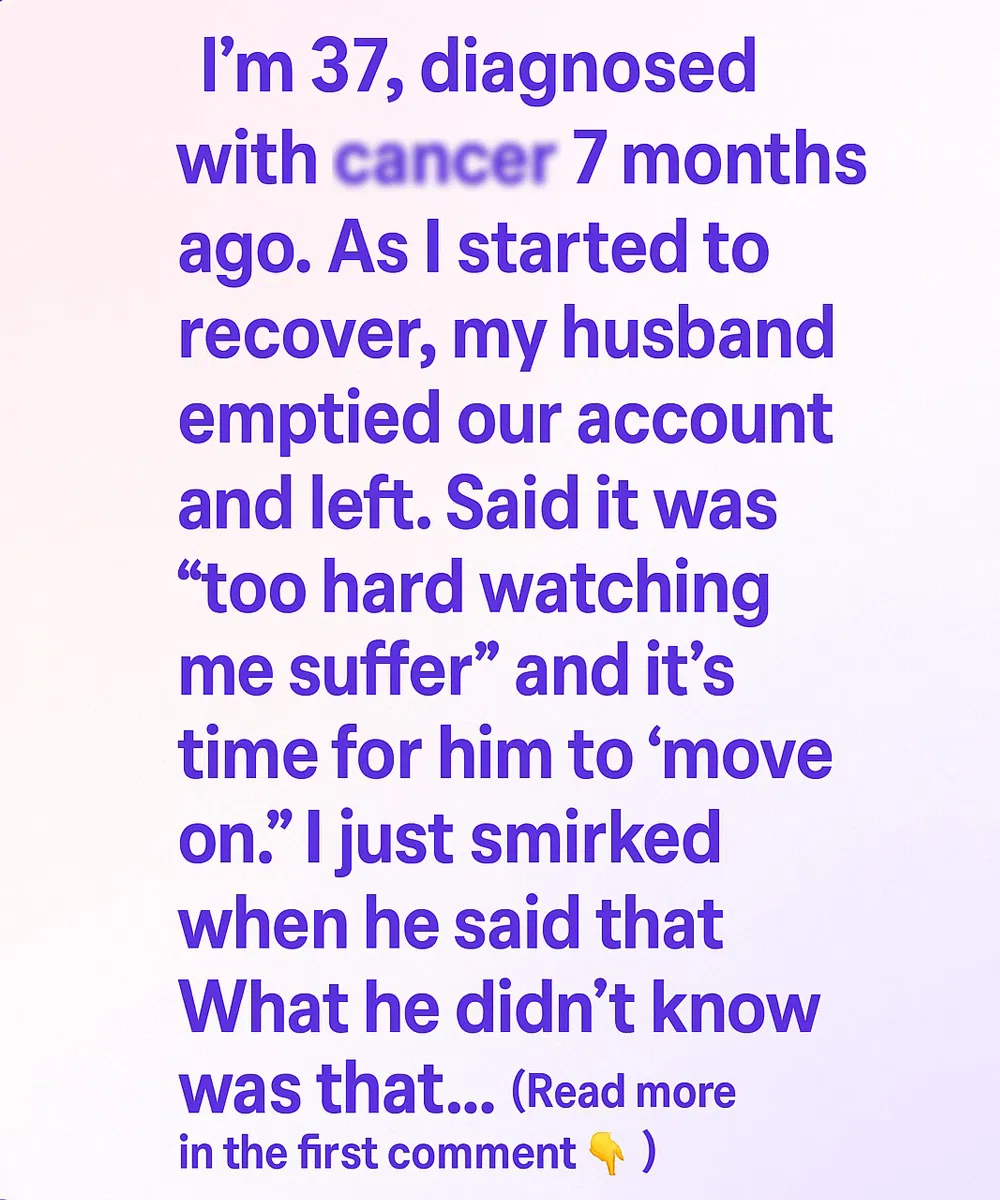
When My Husband Left, Life Gave Me a Fresh Start
There is a particular kind of shock that arrives when life hits you twice in a row. You survive something hard, you start to breathe again, and then the ground shifts under you in a completely different way. Stories of women who lived through exactly that, a serious illness followed by a partner walking out, remind us of something important: the moments that feel like the end are sometimes the beginning of a stronger chapter.
This article is written around that theme. It is not about one verified case, but about a pattern many people recognize: facing a health crisis, being left by a spouse at the lowest point, and discovering, slowly, that you are more capable than anyone, including your former partner, believed.
When Two Crises Arrive at Once
Recovering from a serious illness is exhausting in every sense. Treatment drains the body. Worry drains the mind. Just when the worst seems to be passing, many patients describe a fragile kind of hope, the first mornings where energy returns and the future feels possible again.
Now imagine that in this fragile window, your husband announces he is leaving. Imagine he empties the shared account and says staying is "too hard." That is the emotional core of this story: not just betrayal, but betrayal timed at the moment of greatest vulnerability.
If you have lived through something like this, the first thing to know is that your reaction, shock, grief, anger, numbness, sometimes all in one day, is normal. You are not weak for feeling shattered. You are a person absorbing two traumas at once, and healing does not follow a schedule.
The Money Lesson Nobody Wants to Learn the Hard Way
In this story, the husband cleared out the couple's shared account on his way out. It is a cruel move, and unfortunately not a rare one. What changed the outcome was quiet preparation: over time, the wife had set aside savings in an account of her own, helped by small investments and family support. While he assumed she was left with nothing, she still had enough to stand on her own.
There is a practical lesson here that financial counselors repeat often:
- Keep an account in your own name, even in a happy marriage. An emergency fund that only you control is not a sign of distrust. It is basic self-protection.
- Know where the money is. Keep copies of statements for joint accounts, loans, and investments, and know the login details.
- Build financial literacy early. Understanding savings, investments, and debt means no one can use confusion against you.
- If a partner empties a joint account, speak to a lawyer promptly. In many places, marital funds taken unilaterally during a separation can be addressed in a settlement.
You do not need to be wealthy to do this. Small, consistent saving, the kind that feels almost invisible month to month, is exactly what creates a safety net.
Rebuilding Your Body After It Has Been Through a Lot
Recovery does not end when treatment ends. Bodies that have been through serious illness need patient, steady rebuilding, and emotional shock can set that process back. If you are in this situation, give your physical recovery the same priority you give the legal and financial pieces.
Gentle movement helps more than people expect. In our story, morning walks became a turning point, a small daily ritual that restored energy and proved, day after day, that the body was coming back. Start where you are: a walk around the block counts. So does stretching, fresh air, and regular sleep.
Keep your medical follow-ups even when life is chaotic. It is tempting to cancel appointments when you are dealing with a separation, but continuity of care matters, especially in the first year after a serious illness. Tell your doctor what is happening at home; they have seen it before and can adjust support.
Eat regularly, even when stress kills your appetite. Grief and anxiety suppress hunger, but a recovering body needs fuel. Simple, regular meals beat ambitious diets.
Rebuilding Your Daily Life, One Ritual at a Time
When a partner leaves, the structure of daily life collapses with them. Rebuilding it is not about grand gestures. It is about small, repeatable rituals that tell your nervous system the world is steady again.
Journaling is one of the most effective tools, and it appears in this story for good reason. Writing down what happened, what you feel, and what you need turns a storm of thoughts into something you can look at and manage. You do not need to write well. You need to write honestly.
Surround yourself with people who show up. Supportive friends, family members, a support group, even one trusted neighbor, make an enormous difference. Let people help with concrete things: meals, rides to appointments, sitting with you on hard evenings. Accepting help is not weakness. It is strategy.
Consider talking to a counselor, especially one experienced in both grief and health-related trauma. Many offer sliding-scale fees, and some hospitals connect former patients with support services at no cost.
Why Some Endings Are Also Beginnings
The most striking line in this story is the realization that true strength does not come from someone else. It comes from within. That sounds like a platitude until you have lived it. Then it reads like a field report.
A partner who leaves during your illness has given you painful but useful information: this was not a person you could rely on. The clarity that follows heartbreak is real. Many people describe the months after a split like this as the first time they made decisions entirely for themselves, where to live, how to spend money, what a good day looks like, and found they liked their own answers.
Choosing healing and growth is not a single decision. It is a hundred small ones: the walk you take anyway, the account you open in your own name, the journal entry, the phone call to a friend instead of sitting alone. Each one is a vote for the life you are building.
What to Do If Your Partner Walks Out
If this is happening to you right now, here are practical first steps:
- Secure what you can. Move your share of accessible funds into your own account and change passwords on personal accounts.
- Get legal advice early. Many family lawyers offer a free or low-cost first consultation.
- Tell a few trusted people. You need witnesses to your reality and help with logistics.
- Protect your health care. Keep appointments, refill prescriptions, and tell your medical team about the added stress.
- Avoid big irreversible decisions in the first weeks. Do not sign away rights or property while in shock.
- Document everything. Save messages, note dates, keep financial records.
Frequently Asked Questions
Is it normal to feel relief and grief at the same time?
Yes. Grief for the marriage you thought you had and relief that an unreliable partner is gone can coexist. Both feelings are telling the truth.
How long does recovery take?
There is no fixed timeline. Physical recovery has its own pace, and emotional recovery another. Most people describe the first year as the hardest and notice real turning points in the second.
Should I try to get my ex to understand what he did?
You can try once, clearly and calmly. But lasting closure usually comes from your own rebuilding, not from his apology.
What if I have no savings of my own?
Start now, even with tiny amounts, and reach out: family, friends, community organizations, and legal aid services exist for exactly this situation. You are not the first person to start from zero, and there are systems built to help.
Life has a way of surprising us. Sometimes the person who was supposed to stay proves unreliable, and the strength you needed was in you all along. If you are standing at that particular crossroads, know this: you have already survived the hardest part. Everything from here is rebuilding, and rebuilding is something you can learn to be good at.
This article is for informational purposes only and is not medical advice. Please consult a qualified professional.