99% Fail This Test: Can You Spot All the Hidden Faces in This Intriguing Illustration?
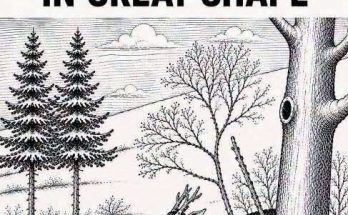
Some images invite you to look twice, and then a third time. At first glance, the artwork on this page appears to be a simple tree drawn in delicate ink lines. But a closer look reveals something far more captivating: human faces subtly blended into the leaves and branches. It is the type of optical illusion that sparks curiosity, challenges the mind, and encourages viewers to explore every detail.
This kind of drawing has attracted attention online because it functions as both art and a visual puzzle. Many viewers say they see only a few faces at first, then discover more once they slow down and examine each section carefully. It is an intriguing reminder of how our perception shifts depending on what we focus on.
A Tree With a Story Hidden in Its Branches
Trees often symbolize growth, wisdom, and resilience, and this illustration brings those ideas to life in an unexpected way. Instead of simply portraying a natural scene, the artist has intertwined human features within the organic form of the tree. Branches and leaves merge into silhouettes of faces, some serene, some thoughtful, others more expressive.
This approach creates a sense of connection between humanity and nature. It invites viewers to imagine the tree as a keeper of memories, a witness to time, or a reflection of the many emotions we experience throughout life. Each face can be interpreted differently, making the artwork feel personal to everyone who views it.
Art like this belongs to a long tradition. For centuries, artists have hidden secondary images inside primary ones: faces in landscapes, figures in foliage, skulls in still lifes. The tree is a perfect subject because its branching structure naturally suggests profiles, eyes, and expressions to a searching eye.
Why Your Brain Finds Faces Everywhere
The reason hidden-face art works so reliably is a phenomenon called pareidolia: the brain's tendency to see meaningful patterns, especially faces, in random or ambiguous shapes. We see faces in clouds, in the moon, in electrical outlets, in toast.
This is not a glitch. It is a feature. Humans are social animals, and detecting faces quickly had real survival value for our ancestors. A face spotted in the bushes could be a friend or a threat, and the brain evolved to err on the side of seeing one. Modern neuroscience has even identified a dedicated region, the fusiform face area, that lights up when we look at faces, and sometimes when we merely think we see one.
Hidden-face illustrations hijack this system deliberately. The artist plants just enough cues, a curve that suggests a brow, a gap that reads as an eye, and your face-detection machinery does the rest, assembling a face from fragments.
How to Find More Hidden Faces
If you are staring at the tree and only seeing bark, try these techniques:
Squint or blur your vision. Fine detail can hide the big shapes. Squinting reduces the image to light and dark masses, and faces often emerge from the larger patterns.
Look at it small. Shrink the image or step back from the screen. Faces hidden in the overall composition appear when the fine lines stop competing for attention.
Turn it or tilt your head. Some faces are oriented sideways or upside down. Rotating the image, or just tilting your head, can reveal profiles you walked right past.
Scan section by section. Divide the tree into the roots, trunk, main branches, outer canopy, and background. Search each zone slowly instead of sweeping the whole image at once.
Look for eyes first. Faces are easiest to spot by their eyes. Scan for pairs of dark spots, curved lines, or symmetrical marks at roughly face-width apart. Once you find the eyes, the rest of the face usually assembles itself.
Take a break and return. Like all visual puzzles, this one rewards fresh eyes. Walk away for a few minutes and look again; faces you missed will seem obvious.
Ask someone else what they see. Different people find different faces first. Comparing notes is half the fun, and someone else's discovery often unlocks faces you could not see.
Why Optical Illusions Like This Fascinate Us
Hidden-image art sits at the intersection of art and psychology, which is why it spreads so well. People enjoy these challenges because:
- They test observation skills in a way that feels like play, not work.
- They offer a genuine mental exercise, engaging attention and visual processing.
- They encourage creativity and imagination, since each viewer interprets the faces differently.
- They reveal how differently people perceive the same image, which sparks conversation.
- They deliver the "aha" moment, that little rush when a hidden face suddenly appears.
That "aha" feeling is real neuroscience. When your brain resolves ambiguity into a clear pattern, it releases a small reward signal. Puzzle creators, knowingly or not, are in the business of manufacturing those moments.
A Note on the "99% Fail" Claim
You will see captions like "99% fail this test" on many illusion posts. Treat the number as marketing, not measurement. There is no study behind it, and there is no fixed number of faces that counts as passing. Some viewers genuinely see more faces than others, influenced by eyesight, screen quality, patience, and how familiar they are with this style of art.
That does not make the challenge meaningless. Whether someone finds two faces or ten, the experience of searching is what makes the artwork memorable. The number is just bait; the looking is the reward.
The Artistic Side: Why Trees?
It is worth pausing on why this particular image works so well as art, not just as a puzzle. Trees and faces share visual DNA: both are roughly symmetrical, both have a central trunk or axis with branching features, both read as alive. An artist blending the two is not forcing an unlikely combination; they are revealing a resemblance that was already there.
The symbolism runs deep too. A tree full of faces suggests generations, ancestors, community, or the many moods of a single life. Viewers project their own meaning onto it, which is why the same drawing can feel peaceful to one person and haunting to another. Great illusion art does not just trick the eye; it gives the mind something to chew on.
Frequently Asked Questions
How many faces are hidden in the image?
That depends on the specific artwork and who is counting. Different viewers legitimately see different numbers, and artists rarely publish an official count. Focus on the search, not the score.
Why can my friend see faces I cannot?
Individual differences in vision, attention style, and experience with illusions all play a role. People who do a lot of visual puzzles tend to spot hidden images faster because they know what to look for.
Is this good for kids?
Yes. Hidden-picture art builds visual discrimination and patience, and it works well as a calm, focused activity.
Can looking at illusions improve my eyesight?
No. These are brain puzzles, not eye exercises. They train perception and attention, not vision itself. If you have vision concerns, see an eye care professional.
Take one more long look at the tree. The faces were there all along, waiting for your brain to catch up. That is the quiet magic of hidden-image art: it reminds us that seeing is never just about the eyes.