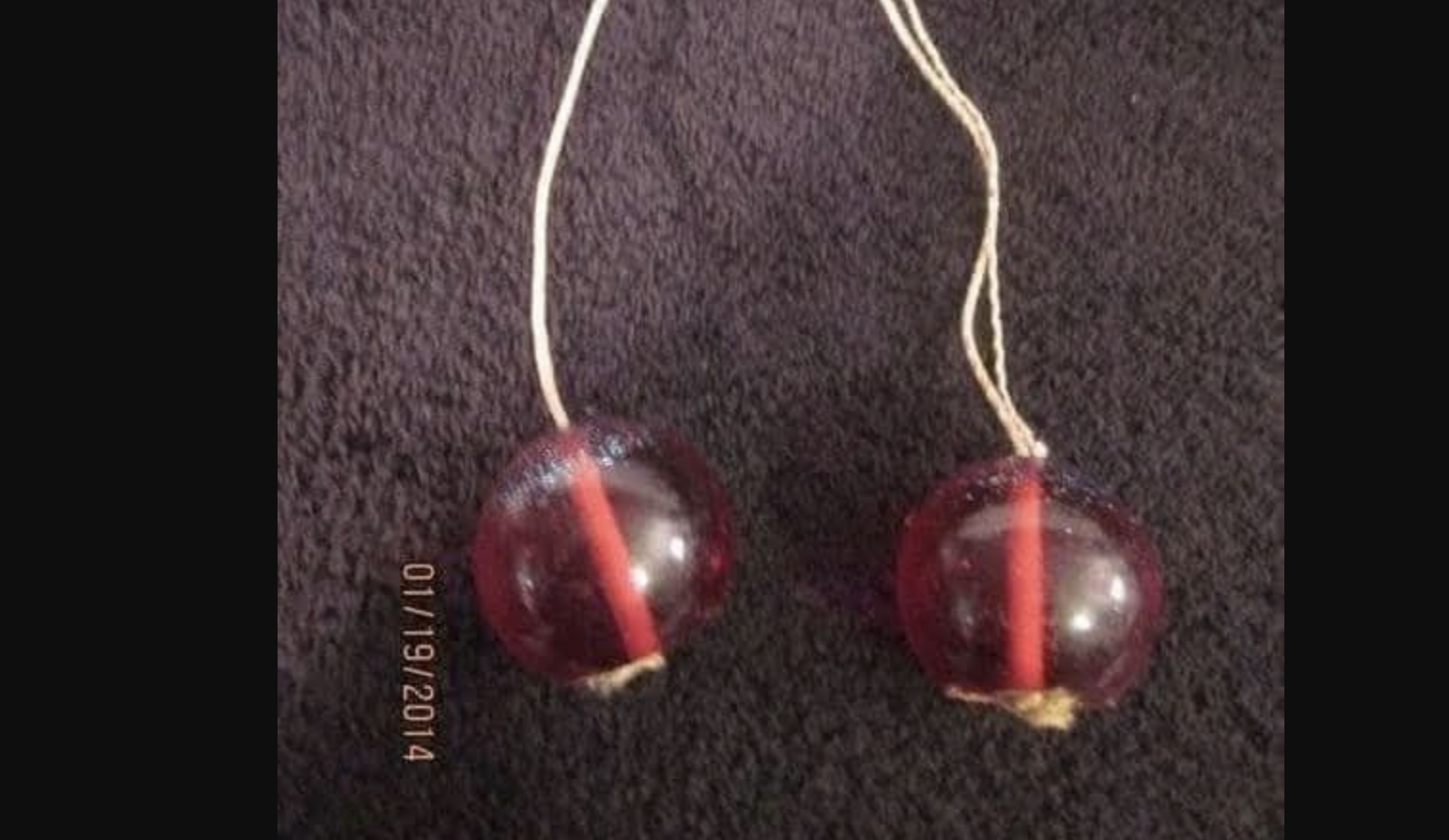
The internet loves a good mystery, and this one had people genuinely stumped. An image of a strange object began circulating online, and despite thousands of comments, guesses, and shared posts, most viewers had no idea what they were looking at. In fact, nearly 90 percent of people who encountered it for the first time couldn’t identify it at all.
The surprising truth? The object wasn’t new or unusual. It was simply unfamiliar to a younger generation. The mystery item turned out to be a classic toy from decades past known as Clackers.
Clackers, sometimes referred to as Lik Klaks, were a hugely popular toy in the early 1970s. At first glance, they appear simple: two hard plastic balls attached to the ends of a string, with a small ring or handle in the center. The toy is played by moving the hand up and down, causing the balls to swing and strike each other repeatedly, producing a loud, rhythmic clacking sound.
The toy was invented in 1969 by Wham-O, a company famous for creating some of the most iconic toys of the 20th century, including the Hula Hoop, Frisbee, and Super Ball. When Clackers hit the market, they became an instant sensation. Within a year, Wham-O reportedly sold more than ten million units, and the sound of clacking balls quickly became a familiar part of playgrounds across the country.
Part of what made Clackers so popular was the challenge. Keeping the balls moving in a steady rhythm wasn’t easy, especially for beginners. More experienced players learned to control the speed and create impressive patterns, often turning playtime into informal competitions. Mastering the toy took patience and coordination, making success especially satisfying.
However, the toy’s popularity also brought concerns. Some early versions were made from materials that could crack or shatter after repeated impact. Reports of minor injuries led many schools to ban Clackers, and some communities placed restrictions on their use. Wham-O later redesigned the toy using safer materials, but the excitement had already begun to fade.
By the mid-1970s, Clackers slowly disappeared from store shelves. Today, they are mostly found in the hands of collectors and toy enthusiasts, with original versions often considered valuable pieces of nostalgia.
For many adults, seeing a pair of Clackers instantly brings back memories of simpler times — long afternoons outdoors, friendly competition, and entertainment that didn’t rely on screens or batteries. In an era dominated by digital devices, this once-mysterious object serves as a reminder that sometimes, simple ideas can leave a lasting impression.