From optical illusions to wordplay challenges, the internet has no shortage of puzzles that test how carefully we read and think. One particular riddle has recently gained traction online, not because it is complex, but because it quietly plays on our assumptions.
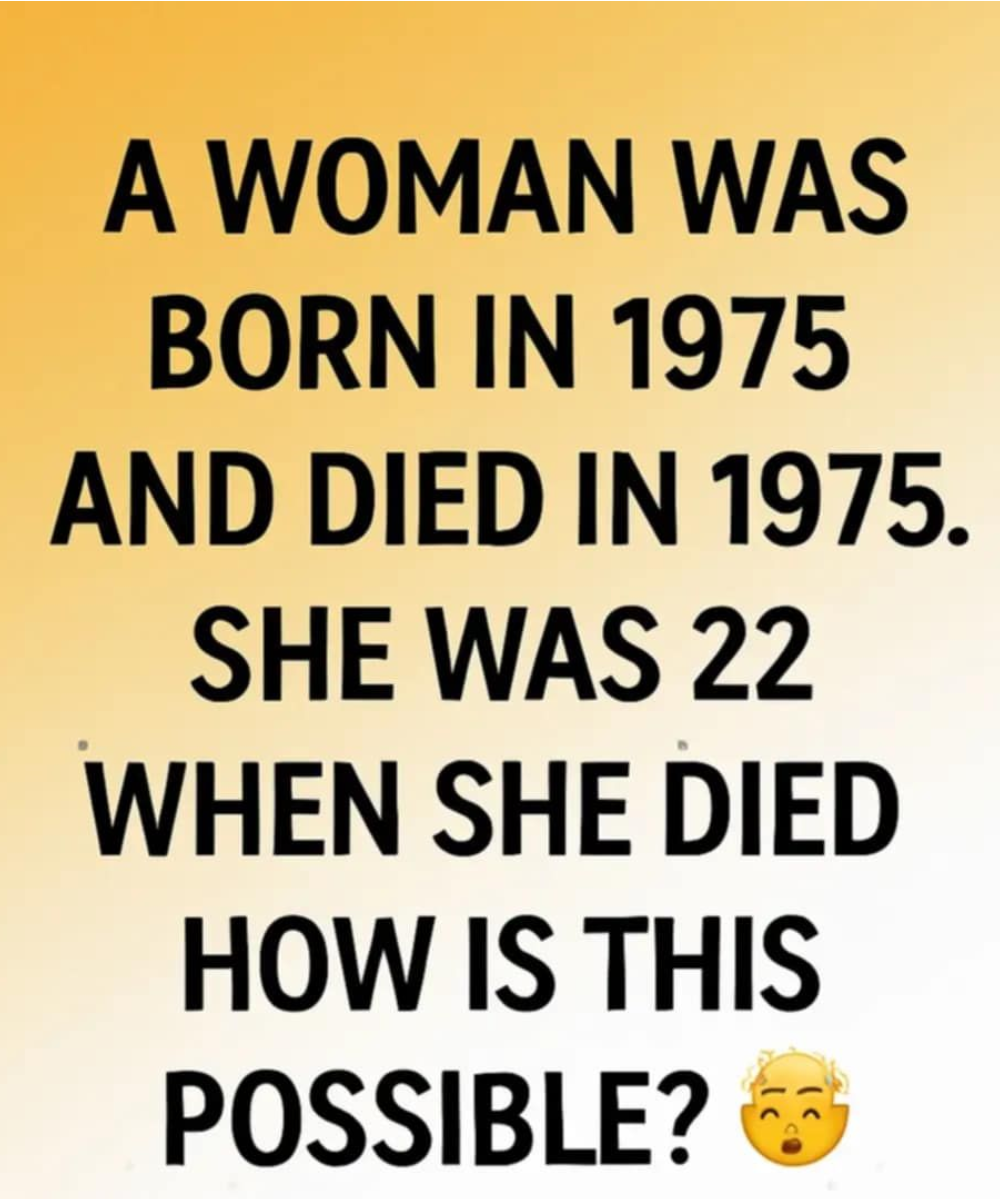
The riddle states:
A woman was born in 1975 and died in 1975. She was 22 years old when she died. How can this be true?
At first glance, the statement feels impossible. Most readers immediately assume that “1975” refers to a calendar year. If that were the case, the woman could not have lived long enough to reach adulthood, let alone the age of 22. This apparent contradiction quickly caught the attention of puzzle lovers and casual readers alike, sparking debates and countless guesses across social media platforms.
Some speculated about time zones, others wondered if it involved different calendars, and a few even suggested it was a trick question with no real answer. But the solution turns out to be much simpler—and much more clever.
The key lies in understanding that the number 1975 is not being used as a year at all. Instead, it refers to a hospital room number. The woman was born in Room 1975 and, years later, passed away in the same room at the age of 22. Once this detail is revealed, the riddle suddenly makes perfect sense.
What makes this puzzle so effective is how naturally our minds jump to conclusions. We are conditioned to associate four-digit numbers with years, especially when they appear alongside words like “born” and “died.” The riddle takes advantage of that habit, using simple wording to guide readers toward an incorrect assumption.
Beyond being entertaining, puzzles like this serve as a reminder of how important careful reading can be. A small shift in perspective—or a closer look at the details—can completely change the meaning of a statement. What initially feels confusing or impossible often becomes clear once we question our first interpretation.
In the end, this viral riddle isn’t about tricking people as much as it is about encouraging flexible thinking. Sometimes, the answer isn’t hidden behind complex logic, but right in front of us, waiting for us to slow down and look again.