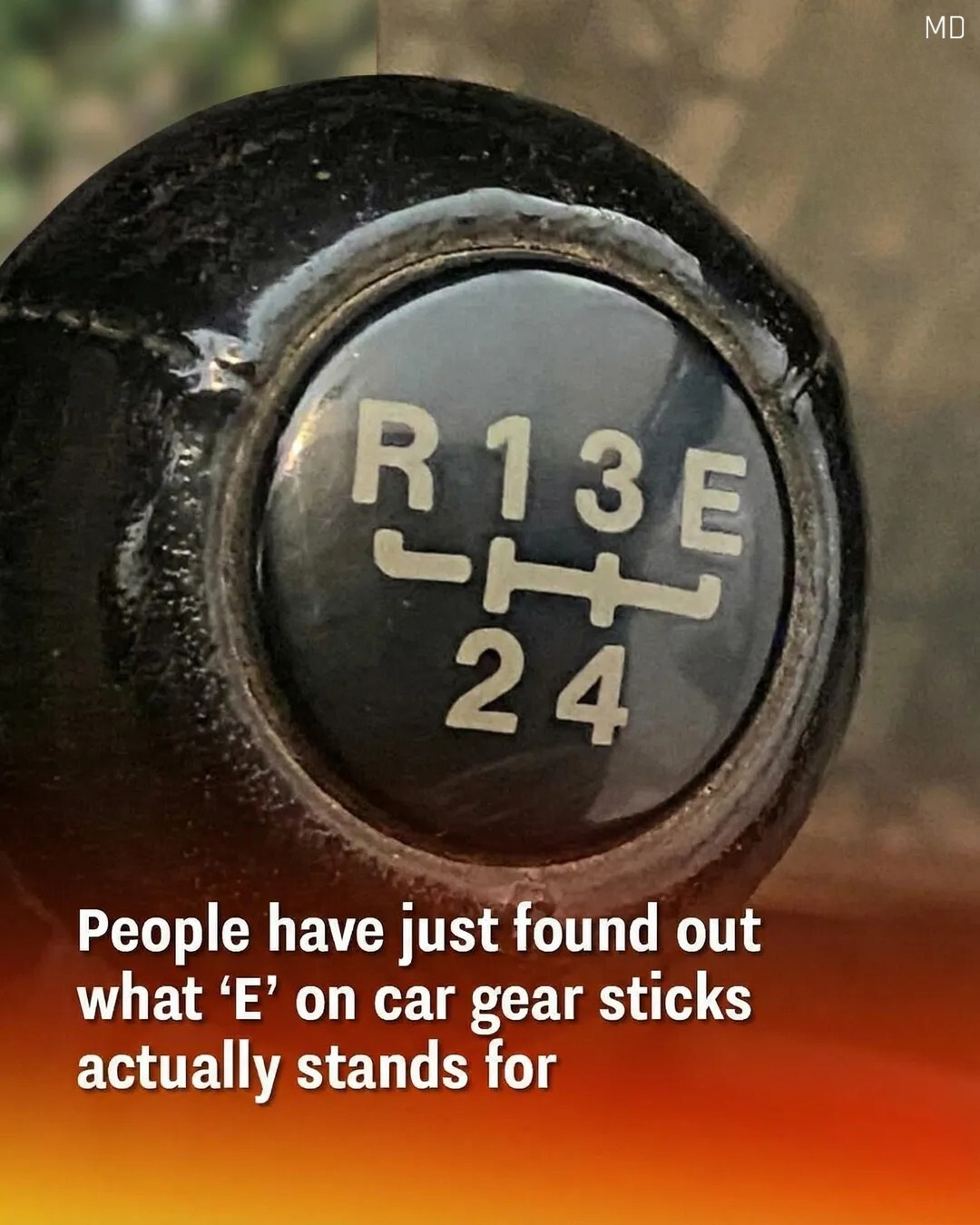
For decades, drivers have been familiar with the standard letters and numbers on gear sticks. Manual vehicles typically feature numbered gears along with “R” for reverse, while automatic cars display “P,” “N,” “D,” and “R,” representing Park, Neutral, Drive, and Reverse. Some automatic models also include “L” for Low gear.
However, in certain older vehicles, drivers may notice an additional letter: “E.” For many younger motorists, this marking is unfamiliar, which has recently sparked curiosity and conversation online.
What Does the “E” Stand For?
The “E” stands for Economy. In select older automatic models, this setting was designed to support better fuel efficiency during everyday driving.
When activated, Economy mode adjusted how the vehicle shifted gears. It typically kept the engine’s revolutions per minute (RPM) lower and encouraged smoother, earlier gear changes. By reducing engine strain and optimizing shift timing, the car could use less fuel—especially during steady city or highway cruising.
Why Was It Introduced?
As fuel prices fluctuated and efficiency became a greater priority for manufacturers and drivers alike, automakers began adding features that could help reduce consumption. Economy mode offered a simple way for drivers to make their vehicles more fuel-conscious without changing their driving habits significantly.
While modern cars often include advanced “Eco” driving modes controlled electronically through onboard computer systems, earlier versions relied on more basic mechanical or transmission-based adjustments. The “E” setting was an early example of how manufacturers responded to growing interest in fuel savings.
Is It Still Used Today?
Many newer vehicles no longer display a single “E” on the gear stick. Instead, they may offer selectable drive modes such as Eco, Sport, or Comfort through dashboard controls or touchscreen menus. Although the technology has evolved, the goal remains the same: improving efficiency while maintaining a comfortable driving experience.
For drivers who come across the “E” on an older car, it represents a practical feature from a time when simple mechanical solutions helped motorists get more out of every tank of fuel.