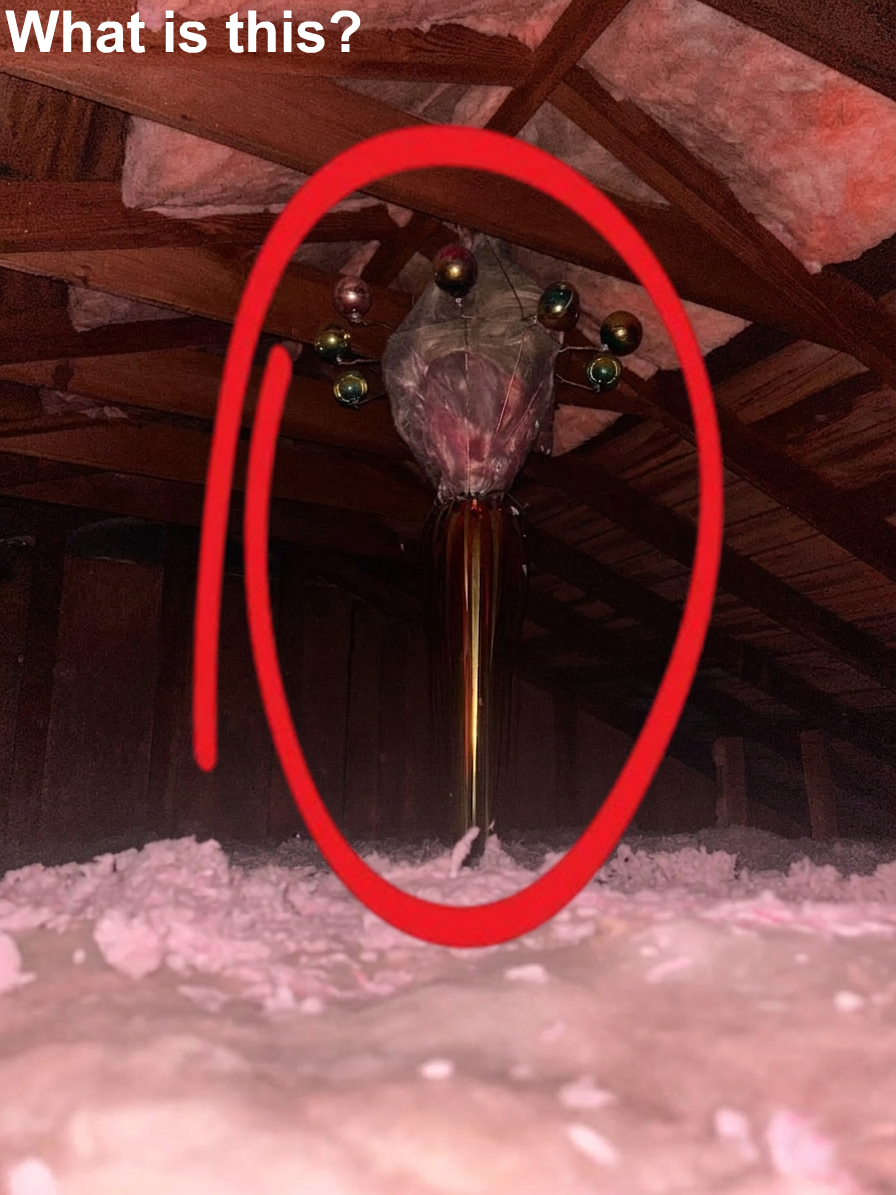
Attics are often filled with years—sometimes decades—of stored belongings. From seasonal decorations to forgotten household items, these spaces tend to collect objects that slowly fade from memory. Because of the low lighting, accumulated dust, and natural aging of materials, even the most ordinary items can begin to look unfamiliar over time. It’s not uncommon to come across something in the attic that seems strange or difficult to recognize at first glance.
When faced with an unusual discovery, the most helpful first step is to remain calm and take a closer look. Initial impressions can be misleading, especially in environments where visibility is limited. An object that appears confusing from a distance may reveal important details when viewed up close. Materials like wood, metal, or fabric, as well as visible edges, markings, or patterns, can offer useful clues about what the item might be. Taking a moment to carefully observe these details can often turn uncertainty into understanding.
Lighting also plays a significant role in how objects are perceived. Shadows and dim conditions can distort shapes, making items seem more complex or unfamiliar than they really are. If possible, bring additional light into the space or move the object to a brighter area. This simple step can make it much easier to identify features that were previously hidden or unclear.
Another important factor to consider is the effect of time. Items stored in attics are often exposed to temperature changes, humidity, and dust for long periods. These conditions can cause materials to warp, discolor, or deteriorate. For example, plastic may become brittle, fabrics can fade, and wooden objects might change shape slightly. In some cases, multiple items may become tangled together or partially damaged, creating a completely different appearance from their original form.
Context can also influence how we interpret what we see. Without knowing where an item came from or how it was used, it can be harder to recognize its purpose. Objects that were once part of a larger set or connected to other items may seem incomplete when viewed on their own. Taking a moment to think about the history of the space—who used it, what was stored there, and how long it has been untouched—can provide helpful insights.
If you’re still unsure about what you’ve found, taking photos and comparing them with similar items online can be a useful approach. Many everyday objects, even older ones, have recognizable features that can be matched with reference images. This method can help confirm your assumptions and provide additional context without requiring expert knowledge.
It’s also a good idea to handle attic items with care, especially if they appear fragile or aged. Using gloves and avoiding unnecessary force can help prevent damage. While most discoveries are harmless, being cautious ensures both your safety and the preservation of the item.
Approaching unusual attic finds with curiosity rather than assumption makes a big difference. Instead of jumping to conclusions, take the time to observe, analyze, and consider how environmental factors may have altered the object’s appearance. In many cases, what initially seems mysterious is simply a familiar item that has changed over time.
By staying patient and thoughtful, you can turn a moment of confusion into an opportunity to learn more about the items stored in your home. Attics may hold surprises, but with the right approach, those surprises are usually easy to understand and explain.