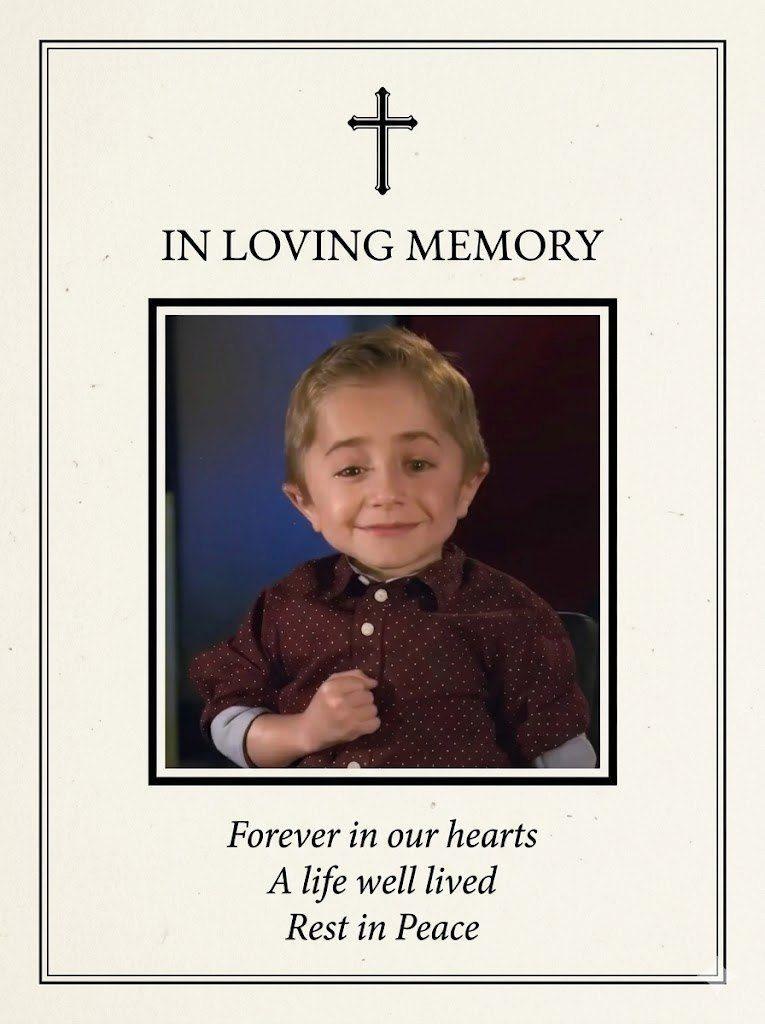
Remembering Kaleb: A Story of Strength, Courage, and Lasting Impact
The news has left many people deeply saddened, as they remember Kaleb, a young man whose radiant smile and calm confidence touched thousands across the world. Born with osteogenesis imperfecta (OI), a rare genetic condition that affects bone strength, Kaleb faced challenges that most people could hardly imagine.
A Life Defined by Courage, Not Condition
From a very early age, his life involved frequent medical care, ongoing treatments, and physical limitations that required constant strength and patience. Osteogenesis imperfecta, often called brittle bone disease, causes bones to break easily, sometimes from minor bumps or even without apparent cause. For a child, this means a childhood punctuated by fractures, surgeries, casts, and hospital stays.
Yet, what made Kaleb truly remarkable was not just what he went through, but how he chose to face it. Despite spending much of his life in hospitals and recovery, he never allowed his condition to define who he was. Instead, he built a reputation for resilience, positivity, and determination.
Those who followed his journey often spoke about his ability to stay optimistic, even during the most difficult times. That optimism was not naive. It was a choice, made repeatedly, in circumstances that would have justified despair. That is what made it so powerful.
Understanding Osteogenesis Imperfecta
To appreciate Kaleb's story, it helps to understand what he lived with every day:
- OI is a genetic disorder affecting the body's production of collagen, the protein that gives bones their strength and flexibility.
- Severity varies widely. There are several types, from mild forms with few fractures to severe forms that are life-limiting.
- Fractures can occur from minimal trauma, and sometimes spontaneously.
- Treatment focuses on management: physical therapy, mobility aids, medications to strengthen bones, and surgeries to correct deformities or place stabilizing rods.
- There is no cure, though research continues into genetic and cellular therapies.
Living with OI means living with constant calculation: every movement weighed against the risk of a break. For a child, whose instinct is to run, climb, and play, this requires extraordinary adaptation. Kaleb adapted with grace.
A Voice for the Unseen
Over the years, Kaleb became widely recognized as a spokesperson for Shriners Children's, where he helped raise awareness about osteogenesis imperfecta and inspired other children and families navigating similar challenges. Through interviews, appearances, and public messages, he gave a voice to a community that often feels unseen.
This advocacy work mattered enormously. Rare conditions like OI receive a fraction of the attention and research funding of more common diseases. Families often feel isolated, navigating complex medical systems with little public understanding of what they face. A young spokesperson who could articulate the experience with honesty and warmth was invaluable.
His presence went far beyond advocacy. For many, he became a symbol of courage, proof that strength is not measured by physical ability, but by mindset and heart.
The Message That Moved Thousands
Recently, a heartfelt message attributed to Kaleb has been shared widely across social media, reflecting his deep connection to the people who supported him throughout his journey. In it, he expressed appreciation, reflection, and the importance of community during life's most difficult moments.
The message resonated deeply, with thousands of people sharing their memories, prayers, and support. Many described how Kaleb's story had impacted their lives, whether by giving them hope, shifting their perspective, or simply reminding them to appreciate the small moments.
This is the mark of a life that mattered: strangers changed by someone they never met in person. People facing their own difficulties, illness, loss, fear, found in Kaleb's example a reason to keep going.
Tributes From Around the World
Today, tributes continue to pour in from all corners of the world. Friends, supporters, and organizations are honoring his life, remembering not only the challenges he faced, but the light he brought into the lives of others.
The tributes share common themes:
- Gratitude for the hope his story provided.
- Admiration for his courage in facing relentless medical challenges.
- Commitment to carrying forward his message of resilience and kindness.
- Sorrow for a life that touched so many and ended too soon.
A Legacy That Endures
Kaleb's legacy is one of courage, kindness, and perseverance. His story serves as a powerful reminder that even in the face of adversity, it is possible to inspire, uplift, and create lasting change.
What does that legacy look like in practice? It looks like parents of newly diagnosed children finding his story and feeling less alone. It looks like increased awareness of osteogenesis imperfecta, leading to more understanding and eventually more research. It looks like thousands of people choosing optimism on their own hard days because they remember a young man who chose it on his.
While his journey was not an easy one, the impact he leaves behind is undeniable, a lasting example of strength, hope, and humanity that will not be forgotten.
Frequently Asked Questions
What is osteogenesis imperfecta?
Osteogenesis imperfecta (OI), often called brittle bone disease, is a rare genetic disorder that affects collagen production, causing bones to break easily. Severity ranges from mild to life-limiting, and while there is no cure, treatments help manage symptoms and improve quality of life.
How is OI treated?
Treatment includes physical therapy, mobility aids, medications that strengthen bones (such as bisphosphonates), and surgeries to correct deformities or insert stabilizing rods. Care is typically coordinated through specialized centers experienced with the condition.
What was Kaleb's role with Shriners Children's?
He became widely recognized as a spokesperson, helping raise awareness about osteogenesis imperfecta through interviews, appearances, and public messages, and inspiring other children and families facing similar challenges.
Why did Kaleb's story resonate with so many people?
Because it demonstrated that courage is a choice available to anyone. His optimism in the face of relentless medical challenges, combined with his warmth and advocacy, made him a symbol of resilience that transcended his specific condition.
How can I support OI research and families?
Donate to organizations focused on OI research and family support, participate in awareness events, share accurate information about the condition, and offer practical and emotional support to families navigating rare disease journeys.
What can we learn from Kaleb's life?
That strength is measured by heart, not physical ability. That optimism can be a deliberate practice. That advocacy born from personal experience changes lives. And that even brief lives, lived with courage and kindness, leave lasting impact.