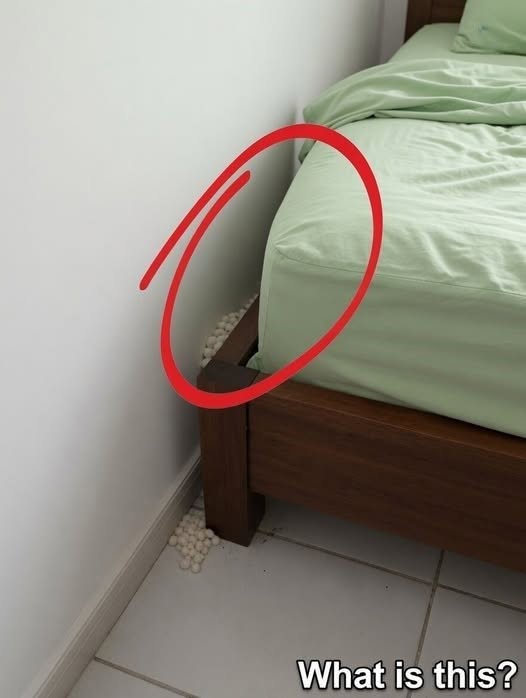
After a long and tiring day, all I wanted was a quiet evening at home. But as soon as I stepped into my bedroom, something unusual caught my attention. Near the side of my bed, I noticed several small, pale objects grouped together on the floor. They certainly hadn’t been there when I left earlier, and their appearance immediately sparked my curiosity.
At first glance, I wasn’t sure what I was looking at. The objects were smooth, tiny, and neatly clustered, making them seem almost intentionally placed. Unsure whether they were natural or man-made, I decided not to touch them. Instead, I grabbed my phone and took a few photos to examine them more closely.
As I zoomed in and compared the images online, I explored several possibilities. They resembled small seeds, decorative beads, or perhaps something from a plant. However, none of the examples I found matched perfectly. The mystery only grew, and I became increasingly determined to identify them.
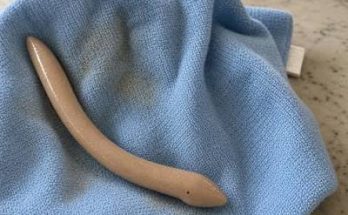
After spending some time researching, I finally found the answer. The objects were lizard eggs.
What initially felt surprising quickly became fascinating. At some point, a small lizard had quietly entered my home and selected a safe corner near my bed as a nesting spot. Without realizing it, I had become the host to a tiny piece of local wildlife.
Once I understood what they were, I carefully relocated the eggs to a protected outdoor area where they could remain safe from household activity. The experience completely changed my perspective. What began as a confusing discovery turned into a reminder of how nature can sometimes appear in the most unexpected places.
Many species of lizards search for warm, sheltered locations when it is time to lay their eggs. Areas around homes can provide the protection and stable conditions they need. Because of this, it is not unusual for lizards to choose quiet spaces such as gardens, storage areas, sheds, garages, or even hidden corners inside a home.
Most lizards are harmless and can actually be beneficial because they help control insects and other small pests. Their presence is often a sign of a healthy local environment rather than a problem.
The entire experience left me with a simple but valuable lesson. Not everything unfamiliar is a reason to worry. Sometimes, a little patience and research can turn uncertainty into understanding. What first seemed like a strange and unsettling discovery became an interesting encounter with nature, reminding me that the natural world is often much closer to us than we realize.