I Came Home Exhausted and Discovered a Surprising Visitor in My Bedroom
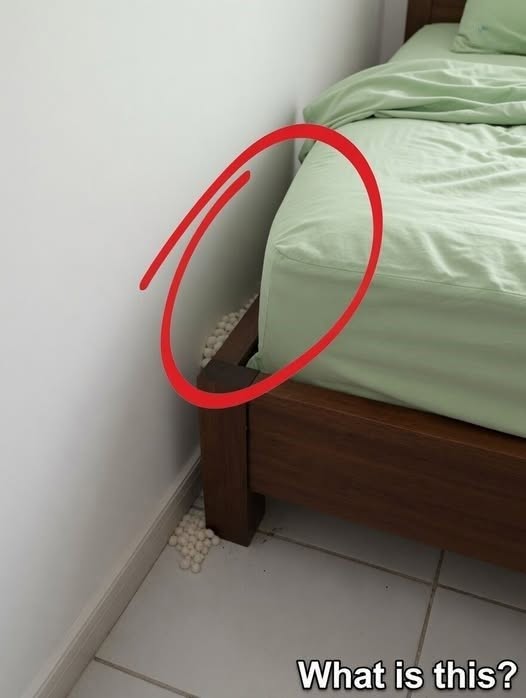
After a long and tiring day, all I wanted was a quiet evening at home. But as soon as I stepped into my bedroom, something unusual caught my attention. Near the side of my bed, I noticed several small, pale objects grouped together on the floor. They certainly hadn't been there when I left earlier, and their appearance immediately sparked my curiosity.
The Mystery Objects
At first glance, I wasn't sure what I was looking at. The objects were smooth, tiny, and neatly clustered, making them seem almost intentionally placed. Unsure whether they were natural or man-made, I decided not to touch them. Instead, I grabbed my phone and took a few photos to examine them more closely.
That instinct, photograph first, touch later, was exactly right. When you find something unidentified in your home, documentation before disturbance is always the smart move. Photos let you research, ask for help, and compare without altering the evidence.
As I zoomed in and compared the images online, I explored several possibilities. They resembled small seeds, decorative beads, or perhaps something from a plant. However, none of the examples I found matched perfectly. The mystery only grew, and I became increasingly determined to identify them.
The Answer: Lizard Eggs
After spending some time researching, I finally found the answer. The objects were lizard eggs.
What initially felt surprising quickly became fascinating. At some point, a small lizard had quietly entered my home and selected a safe corner near my bed as a nesting spot. Without realizing it, I had become the host to a tiny piece of local wildlife.
Lizard eggs are easy to misidentify because they look nothing like bird eggs. Depending on the species, they are:
- Small, often the size of a jellybean or smaller.
- Soft-shelled and leathery, rather than hard like bird eggs. (Gecko eggs are an exception; they harden.)
- Pale or translucent, white to cream colored.
- Laid in clusters, often tucked into sheltered, humid spots.
Many species of lizards search for warm, sheltered locations when it is time to lay their eggs. Areas around homes can provide the protection and stable conditions they need. A quiet bedroom corner, undisturbed, warm, and safe from predators, is prime real estate from a lizard's perspective.
Why Lizards Choose Our Homes
Because of their needs, it is not unusual for lizards to choose quiet spaces such as gardens, storage areas, sheds, garages, or even hidden corners inside a home. What makes a spot attractive to a nesting lizard:
- Warmth. Eggs need consistent warmth to develop. Heated homes provide it reliably.
- Humidity. Many species need moist conditions to prevent eggs from drying out.
- Shelter. Protection from predators, weather, and disturbance.
- Seclusion. Lizards prefer spots unlikely to be disturbed, which is why they choose behind furniture, in storage boxes, or in quiet corners.
In warm climates, small lizards like geckos, anoles, and skinks commonly live in and around houses. Most residents never notice them. They are nocturnal or secretive, emerging to hunt insects and retreating to hiding spots by day. A nesting female may have been living in the home unnoticed for weeks.
What to Do If You Find Lizard Eggs
Once I understood what they were, I carefully relocated the eggs to a protected outdoor area where they could remain safe from household activity. If you find yourself in a similar situation, here is the right approach:
1. Don't panic. Lizard eggs are harmless. There is no emergency.
2. Avoid rotating them. Reptile eggs should be kept in the same orientation. Mark the top with a soft pencil before moving if possible.
3. Move them gently. Use a spoon or soft cloth to lift them. Soft-shelled eggs are delicate.
4. Choose a suitable outdoor spot. A sheltered garden bed, under leaf litter, or in a protected corner with similar warmth and humidity.
5. Place them in a shallow depression and cover lightly with soil or leaf matter.
6. Leave them alone afterward. The mother will not return; lizards do not care for their eggs after laying. Nature takes it from here.
7. Seal entry points if you want to prevent future visits: check window screens, door gaps, and vents.
Never try to incubate wild reptile eggs indoors unless you are working with a wildlife rehabilitator. In many places, native reptiles are protected, and well-meaning interference can do more harm than good.
Lizards: Unlikely Allies
Most lizards are harmless and can actually be beneficial because they help control insects and other small pests. A single small lizard can eat dozens of insects per day: mosquitoes, flies, cockroaches, spiders, and moths. They are nature's pest control, working for free, around the clock.
Their presence is often a sign of a healthy local environment rather than a problem. Where lizards thrive, the ecosystem is functioning. They indicate sufficient insect prey, adequate shelter, and an environment free of heavy pesticide use.
Common house-visiting lizards include:
- House geckos, pale nocturnal hunters often seen near lights at night.
- Anoles, small daytime lizards common in warm regions.
- Skinks, smooth-scaled ground dwellers that love gardens and foundations.
- Fence lizards, basking daytime insect-eaters.
None of these pose any danger to humans. They don't damage homes, contaminate food, or spread disease in any significant way.
The Lesson in the Corner
The experience completely changed my perspective. What began as a confusing discovery turned into a reminder of how nature can sometimes appear in the most unexpected places.
The entire experience left me with a simple but valuable lesson. Not everything unfamiliar is a reason to worry. Sometimes, a little patience and research can turn uncertainty into understanding. What first seemed like a strange and unsettling discovery became an interesting encounter with nature, reminding me that the natural world is often much closer to us than we realize.
We share our homes with more life than we know. Most of it is invisible or unnoticed. Every once in a while, it leaves a small cluster of pale eggs by the bed to remind us.
Frequently Asked Questions
What do lizard eggs look like?
Small, pale, smooth ovals, often clustered together. Most are soft and leathery rather than hard-shelled. Size varies by species but they are typically quite tiny, similar to jellybeans or small marbles.
Are lizard eggs dangerous?
No. Lizard eggs are completely harmless. They don't hatch into anything dangerous, and handling the area poses no health risk. The main concern is handling the delicate eggs gently if you choose to move them.
Should I move lizard eggs I find in my house?
If they're in a spot where they'll be disturbed, carefully relocating them to a sheltered outdoor area is reasonable. Keep them in the same orientation, move them gently, and place them somewhere warm, humid, and protected. Then leave them alone.
Will the mother lizard come back for her eggs?
No. Lizards do not provide parental care after laying eggs. The female selects a suitable spot and leaves. The eggs develop on their own.
How do lizards get into houses?
Through tiny gaps: under doors, through window screens with tears, via vents, pipes, and cracks in foundations. Small lizards can squeeze through surprisingly small openings. Sealing entry points is the best prevention.
Are house lizards beneficial?
Yes. They consume large numbers of insects including mosquitoes, flies, and cockroaches. They don't damage property or spread significant disease. Many homeowners in warm climates welcome them as natural pest control.