
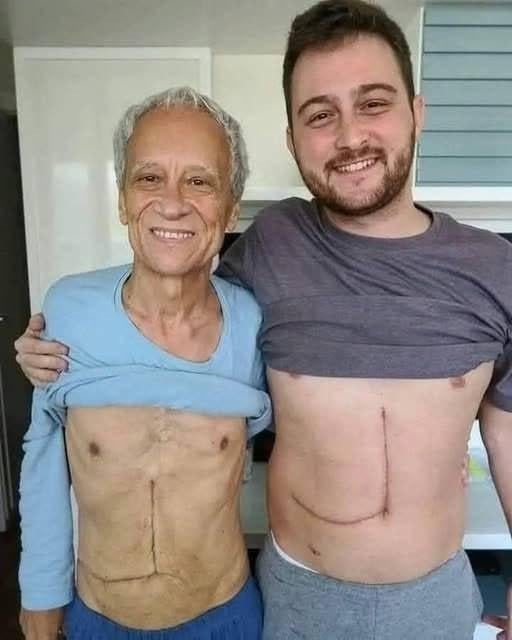
A Father-Son Transplant Story Sheds Light on the Courage and Complexity of Organ Donation
A powerful story of family love and sacrifice has captured attention, offering both inspiration and an important reminder about the realities of living organ donation. When a father steps forward to give part of himself, literally, to save his son, it reveals something profound about parenthood, medicine, and the human capacity for selflessness.
But behind the inspiration lies complexity that deserves honest examination. Living organ donation is one of medicine's greatest achievements and one of its most demanding asks.
The Story
A father's decision to become a living organ donor for his son is never made lightly. It typically follows a long medical journey: the diagnosis, the waiting, the realization that time is running out, and the moment when a parent says, "Take mine."
What makes these stories so moving is the reversal they represent. Parents spend years protecting their children from harm. In living donation, a parent voluntarily accepts harm, surgical risk, pain, and permanent physical change, to protect their child. It's the ultimate expression of a parent's instinct, made clinical and deliberate.
Understanding Living Organ Donation
Most organ transplants use organs from deceased donors. Living donation is different and remarkable:
- What can be donated while living: One kidney (we have two), a portion of the liver (which regenerates), and in rare cases, portions of lung, pancreas, or intestine.
- Why it matters: Living donor organs typically function better and last longer than deceased donor organs, partly because the surgery can be scheduled and the organ spends minimal time without blood supply.
- The need is vast. Tens of thousands of people wait for organs, and many die waiting. Living donors directly reduce that toll.
- It's more common than many realize. Thousands of living donor transplants occur each year, most commonly kidney donations between family members.
The Courage It Requires
We use the word "courage" easily, but living donation earns it:
- Major surgery. Donor nephrectomy (kidney removal) is major abdominal surgery with real risks: bleeding, infection, anesthesia complications, and in rare cases, death.
- Permanent change. The donor lives the rest of their life with one kidney or a partial liver. For most, this causes no long-term problems, but it's irreversible.
- Recovery and pain. Donors face weeks of recovery, time off work, and genuine physical suffering, all while the person they donated to also recovers.
- Emotional stakes. If the transplant fails despite the sacrifice, donors can experience profound grief and guilt, even though the outcome was never in their control.
- No take-backs. Unlike most medical decisions, donation can't be undone. The commitment is absolute.
When a father makes this choice for his son, he's accepting all of this with open eyes. That is courage in its purest form.
The Complexity Behind the Inspiration
Inspirational stories sometimes skip the harder truths. A complete picture includes:
Medical Evaluation Is Rigorous
Potential living donors undergo extensive testing: physical exams, imaging, psychological evaluation, and financial counseling. Not everyone who volunteers is approved. The evaluation protects donors from making a decision their body can't safely support, and transplant centers can decline donors for medical or psychological reasons.
Consent Must Be Truly Voluntary
Ethicists emphasize that living donation must be free of coercion, including subtle family pressure. A father may feel he has no choice, and transplant teams work hard to ensure donors have genuine space to say no. Independent donor advocates are part of the process specifically for this reason.
Financial Realities
In the U.S., the recipient's insurance typically covers the donor's medical costs, but donors may face lost wages, travel expenses, and childcare costs during recovery. Various programs help offset these, but financial strain is a real consideration that families should plan for.
Long-Term Health
Most living kidney donors live normal, healthy lives. However, research shows slightly elevated long-term risks for donors compared to equally healthy non-donors, including small increases in hypertension and kidney failure risk. Transplant centers are obligated to share these statistics honestly.
The Relationship Dimension
Donation changes family dynamics. Gratitude, guilt, obligation, and expectation can all intensify after transplant. Most families navigate this well, but it's a dimension worth acknowledging and sometimes worth discussing with a counselor.
How to Become a Living Donor
For those moved to consider donation, the path typically looks like this:
- Learn the basics from reputable sources like the Organ Procurement and Transplantation Network (OPTN) or national transplant organizations.
- Contact a transplant center to express interest. You'll be connected with a donor coordinator.
- Undergo evaluation, including medical, psychological, and financial review. This process takes weeks to months.
- Receive approval (or learn why you're not a candidate, which is also valuable information).
- Schedule surgery if donating to a specific person, or enter a paired exchange or non-directed donation program.
You can also register as a deceased organ donor, a simpler step that costs nothing and can save multiple lives.
Supporting Families Facing Transplant
If someone you know is going through this:
- Offer practical help. Meals, childcare, rides to appointments, help with medical paperwork.
- Respect the emotional complexity. Don't reduce it to a feel-good story. Acknowledge the fear and sacrifice involved.
- Give blood. Transplant surgeries require blood products; donation is a concrete way to help.
- Consider registering as an organ donor yourself. One conversation can ripple outward.
- Stay for the long haul. Recovery is measured in months. Attention fades faster than healing.
The Takeaway
A father's gift to his son is the kind of story that restores faith in people. But its real power isn't just in the inspiration. It's in what it teaches: that medicine can do extraordinary things, that love can take physical form, and that the decision to give part of yourself to another person is both simpler and harder than it looks.
If this story moves you, let it move you to action. Register as a donor. Learn about living donation. Support transplant families. The courage of one father can ripple into courage across a community.
Frequently Asked Questions
What organs can be donated by a living person?
Most commonly one kidney or a portion of the liver. In rare cases, portions of lung, pancreas, or intestine can also be donated by living donors.
Is living organ donation safe for the donor?
It carries real surgical risks, but for carefully screened healthy donors, long-term outcomes are generally excellent. Transplant centers are required to disclose all known risks during evaluation.
Who pays for a living donor's medical costs?
Typically the recipient's insurance covers the donor's evaluation, surgery, and immediate follow-up care. Lost wages and travel costs may be partially offset by assistance programs.
Can anyone become a living donor?
No. Donors must pass rigorous medical, psychological, and financial evaluation. Age, health conditions, and other factors can disqualify candidates, which protects both donor and recipient.
How do I register as an organ donor?
In the U.S., you can register through your state's DMV or online donor registries, and indicate your wishes to your family. Registration as a deceased donor is separate from the living donor evaluation process.

