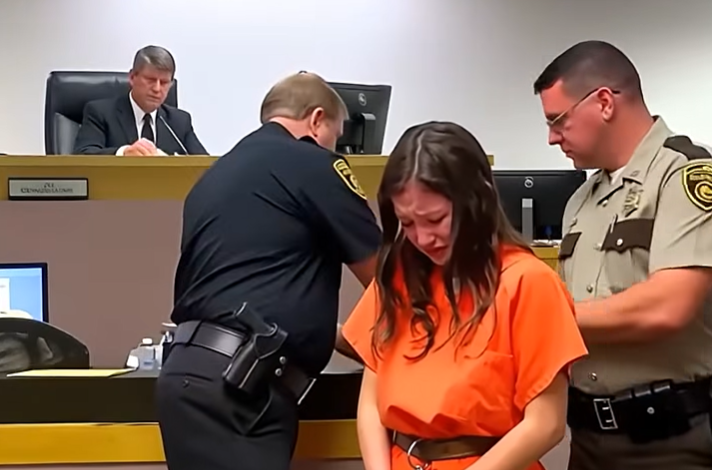
For decades, Elena was known only through newspaper reports that portrayed her as a convicted murderer. She maintained her innocence from the beginning, but every appeal to overturn her conviction was unsuccessful. After spending many years in prison, she faced what she believed would be her final night.
Instead of asking for a special meal or a final visit, Elena made a simple request. She asked for paper, an envelope, and time to write one last letter. It was addressed to her daughter, Lily, whom she had not seen since the child was an infant.
In the letter, Elena shared her version of events for the first time. She described how she believed fear, pressure, and mistakes during the investigation had led to her conviction. She admitted that she had made difficult choices throughout her life, but she continued to insist that she had never committed the crime for which she had been imprisoned.
She also explained why she had allowed Lily to be adopted. Elena believed her daughter deserved a chance to grow up without carrying the burden of her mother’s legal troubles. Along with her personal story, she included names, dates, and details about witnesses and evidence that she believed had never received proper attention during the original investigation.
When the letter arrived at Lily’s apartment, she hesitated before opening it. She had spent most of her life believing that her mother had abandoned her without explanation. Reading the letter challenged everything she thought she knew.
As she continued reading, Lily found information that appeared surprisingly detailed. The letter referenced investigators, overlooked witnesses, and a laboratory report that seemed to have disappeared from the official records.
Unable to ignore what she had learned, Lily contacted local authorities the following day. While many believed the decades-old case had already been settled, one investigator agreed to review the information with an open mind.
After comparing the letter with archived case files, the investigator noticed several inconsistencies. Some missing interview records closely matched Elena’s account, and forgotten evidence appeared to support parts of her story. An old storage box containing additional documents was eventually located, revealing materials that had not been carefully reviewed during earlier appeals.
As the findings became known, legal officials reopened the case for further examination. Prosecutors, defense attorneys, and forensic specialists worked together to review every available piece of evidence.
Modern forensic testing was applied to materials collected many years earlier. Advances in technology allowed experts to examine evidence in ways that were not possible during the original investigation. Witness statements were also reconsidered alongside the newly recovered documents.
Gradually, questions began to emerge about the original conviction. Investigators found that important information may have been overlooked, while some decisions appeared to have been influenced by the limited investigative methods available at the time.
Just hours before Elena’s scheduled execution, a court issued an emergency order delaying the sentence while the new investigation continued. The unexpected decision attracted national attention as legal experts discussed the significance of the developing case.
When Elena left the prison under official supervision, she was not immediately declared innocent. However, for the first time in decades, the legal system formally acknowledged that her conviction deserved another careful review.
Later, Elena and Lily met privately for the first time in many years. Away from cameras and public attention, they spent hours talking about the years they had lost.
Elena apologized for missing birthdays, graduations, and family milestones. Lily shared how difficult it had been growing up without knowing the full story. Although they could not recover the past, they agreed to begin building a relationship based on honesty and understanding.
Several months later, the court officially overturned Elena’s conviction after determining that important evidence had been mishandled and critical information had not been fully presented during the original trial.
While no legal decision could restore the years Elena spent in prison, her case encouraged discussions about improving evidence preservation, reviewing older cases, and ensuring greater fairness within the justice system.
Rather than focusing on resentment, Elena chose to speak publicly about accountability, hope, and the importance of seeking the truth. The letter she believed would be her final message ultimately became the key that reopened her case and changed the course of her life.
Her story serves as a reminder that new evidence can sometimes reshape long-standing beliefs and that careful review of important cases remains essential to the pursuit of justice.