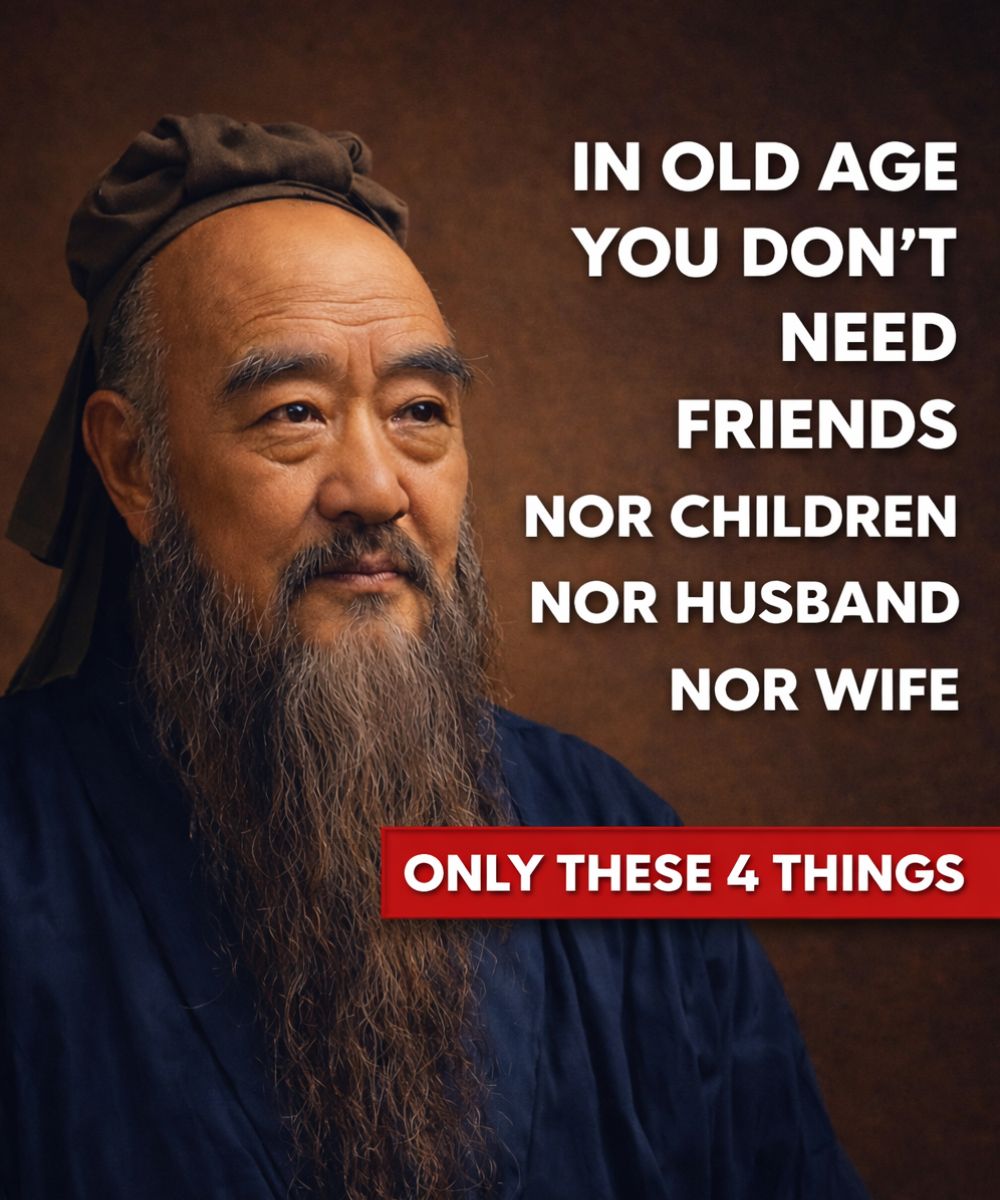
There is a quiet fear many people rarely admit. It’s not the fear of financial hardship or even death. It’s the fear of growing older and wondering whether life was lived with meaning, balance, and inner peace.
More than 2,500 years ago, the Chinese philosopher Confucius reflected on this deeply human concern. He taught that old age should not be feared, but understood as the natural result of how we live each day. Aging, in his view, is not a burden—it is a reflection of the character, values, and relationships we cultivate over time.
From his teachings, four essential principles emerge for building a fuller and more balanced old age.
Personal dignity forms the foundation of lasting peace. Confucius believed that self-respect is one of life’s greatest treasures. Throughout life, people sometimes compromise their values for convenience or approval. While those choices may seem harmless in the moment, repeatedly ignoring one’s conscience can lead to regret later. A calm and balanced old age often belongs to those who act with honesty, take responsibility for mistakes, and remain aligned with their core values. True dignity is quiet. It is not about status or pride, but about being able to reflect on life without overwhelming shame.
A healthy relationship with time is equally important. Many people spend their early years waiting for the future, their middle years rushing through responsibilities, and their later years reflecting on what was missed. Confucian wisdom encourages living fully in the present. This does not mean chasing pleasure, but appreciating daily life as it unfolds. Listening attentively, valuing simple routines, and being present with loved ones help create meaningful memories. Modern psychological research also supports the idea that mindfulness and gratitude contribute to greater emotional stability later in life.
Relationships are another key source of fulfillment. Confucius emphasized that human life is shaped within families, friendships, and communities. Many challenges in old age are not material but relational, often rooted in unresolved conflicts or long-standing misunderstandings. A harmonious later life often belongs to those who communicate respectfully, apologize when necessary, forgive when possible, and maintain healthy boundaries. Caring for relationships over time creates a strong emotional foundation that becomes increasingly valuable with age.
Finally, living with purpose gives direction to every stage of life. According to Confucius, meaning does not require fame or extraordinary achievements. It can be found in everyday contributions—offering guidance instead of confusion, creating stability instead of chaos, and sharing knowledge or kindness with others. When life feels purposeful, aging becomes less intimidating. Instead of fearing the passing years, a person becomes a steady presence and source of wisdom for others.
There is also a powerful lesson in avoiding the habit of treating life like a transaction. Some people live as if endurance today guarantees reward tomorrow. Confucian philosophy suggests a healthier mindset: live according to your values now, without constantly negotiating with the future. Personal well-being grows from inner alignment rather than external compensation.
Old age does not create character. It reveals it. Gratitude deepens. Wisdom becomes clearer. Unresolved emotions may surface. Inner peace becomes visible. This is why daily self-reflection matters at every age.
A fulfilling old age does not happen by chance. It develops gradually through thoughtful choices, meaningful relationships, steady personal growth, and a life lived with integrity. By respecting yourself, valuing your time, nurturing healthy connections, and living with purpose, each stage of life becomes a natural continuation of the one before it.