A Simple Summer Morning That Taught Me a Powerful Lesson
Life often rushes by in a blur of routines, responsibilities, and endless to-do lists. In the middle of it all, we sometimes miss the quiet gestures that mean the most, the ones that strengthen bonds and create lifelong memories. This is the story of one ordinary summer morning that opened my eyes to something extraordinary hiding inside an everyday routine.
The Morning Routine Nobody Noticed
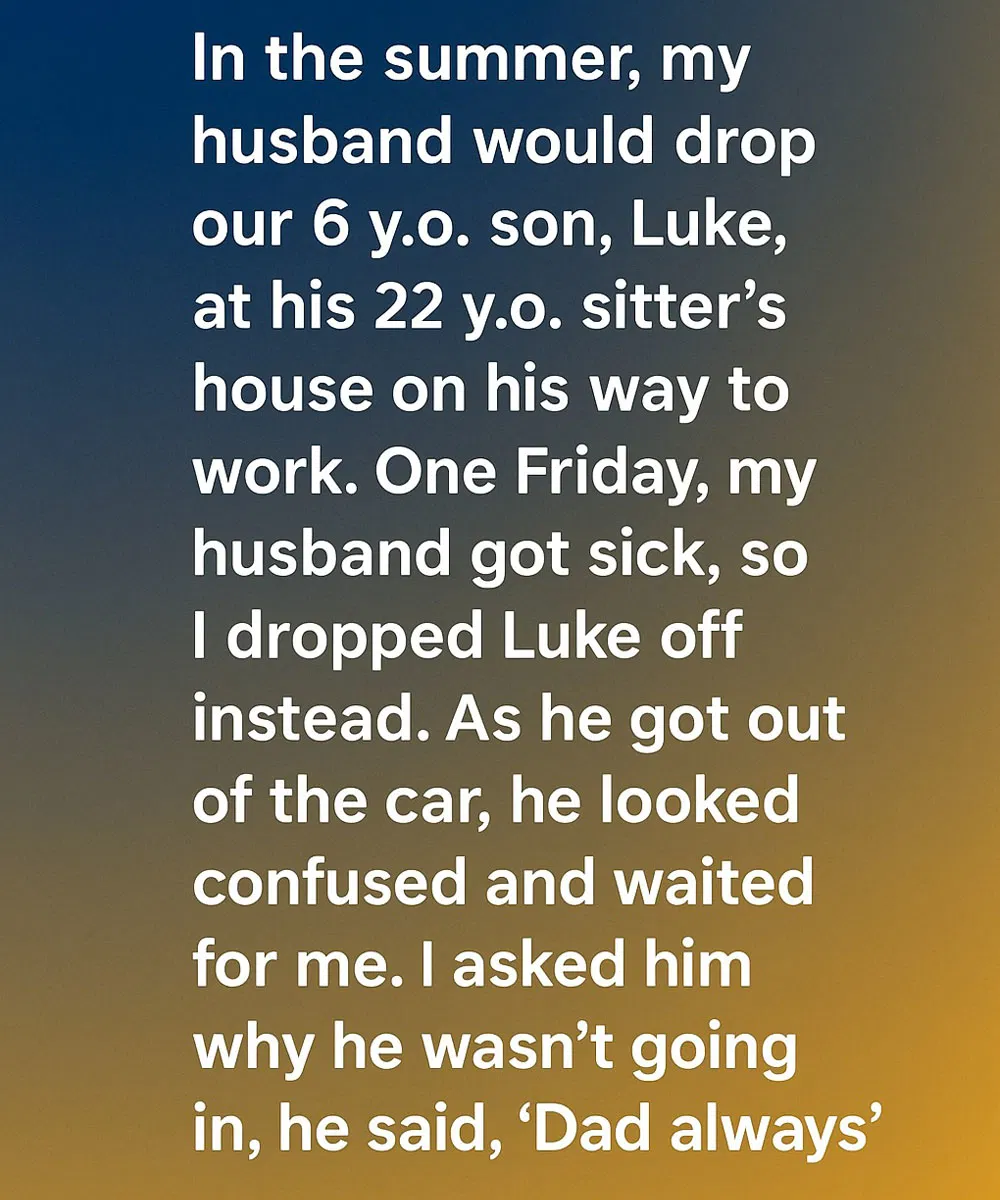
During one warm summer, our mornings had a familiar rhythm. My husband would get ready for work, and before heading out, he always took our 6-year-old son, Luke, to his babysitter's house. It was such a simple routine that I never thought much about it. Drop-off was drop-off. It barely registered as an event worth noticing.
But one Friday, my husband wasn't feeling well. I offered to take Luke instead, thinking nothing of it. It would be a quick errand, a small detour in my morning, and then on with my day.
When we arrived, I parked the car and cheerfully encouraged him to head inside like usual. To my surprise, Luke didn't move. He just stood there, staring at the door with a puzzled look on his face.
"Why aren't you going in, sweetheart?" I asked.
He turned to me and softly replied, "Dad always goes inside with me first."
The Words That Stopped Me Cold
In that moment, his words struck me deeply. My husband hadn't just been dropping Luke off. He had been walking him inside, every single morning, making sure he felt safe, secure, and loved before starting his own day. He had been kneeling to Luke's level, probably, saying goodbye properly, making sure the transition felt warm rather than abrupt.
What I had considered an ordinary task was, to my son, a special act of reassurance. It wasn't just about getting to the babysitter's house. It was about feeling supported. It was about knowing, in the small daily proof that children collect like treasures, that he mattered enough for his dad to walk through the door with him.
I stood there on that sidewalk feeling a complicated mix of emotions: tenderness toward my husband, a pang of guilt for never having noticed, and a profound gratitude for the lesson my six-year-old had just taught me without meaning to teach anything at all.
The Invisible Work of Loving Parents
That morning made me think about all the invisible work parents do, the thousand small acts of care that nobody applauds and nobody records. The parent who cuts the crusts off without being asked. The one who waits up, who checks the temperature of the bathwater, who remembers which stuffed animal is required for sleepovers.
Researchers who study child development have a name for the principle behind my husband's morning ritual: they call these "moments of connection," brief, consistent interactions that build a child's sense of security over time. The science is clear that children do not primarily remember grand gestures. They remember patterns. They remember who showed up, how it felt, and whether the adults in their lives could be counted on in small moments, because small moments are what childhood is made of.
My husband never announced his ritual. He never posted about it or expected credit. He simply did it, morning after morning, because that is who he is. And Luke absorbed it completely, so completely that its absence felt wrong to him on the very first day it didn't happen.
What Children Notice That Adults Miss
Adults tend to measure love in milestones: birthdays, holidays, big trips, achievements celebrated. Children measure it differently. They measure it in presence. Were you there when I woke up? Did you look at me when I talked? Did you walk me to the door?
Luke's confusion that morning revealed something beautiful about how children process love. He didn't have the vocabulary to explain attachment theory, but he knew exactly what felt right. Dad goes inside with me first. That was his normal, his expectation, his quiet certainty that he was safe in the world.
It made me wonder how many of our own childhood certainties were built the same way, by some adult doing something small and consistent that we never thought to thank them for until much later, if ever.
Slowing Down to See What Matters
That simple morning changed how I move through my own routines. I started paying attention to the small things: actually watching Luke's face when I say goodbye instead of calling it over my shoulder, sitting with him for the first pages of a book instead of just handing it over, being fully present for the unremarkable minutes that turn out to be the whole point.
The lesson wasn't really about drop-offs. It was about attention. Life's deepest meanings rarely announce themselves with fanfare. They hide in plain sight inside the routines we perform on autopilot, waiting for the day we finally slow down enough to see them.
My husband still walks Luke inside every morning. Now I know what those few extra minutes mean. They mean everything.
Frequently Asked Questions
Why do small routines matter so much to children?
Child development research shows that consistent, warm routines build secure attachment. Children derive their sense of safety not from occasional grand gestures but from predictable patterns of care they can count on daily.
What are "moments of connection" in parenting?
They are brief, positive interactions, eye contact, a warm greeting, undivided attention for a minute or two, that cumulatively shape a child's emotional security. Quality and consistency matter more than duration.
How can busy parents create these moments?
Build tiny rituals into existing routines: a special handshake at drop-off, two minutes of undivided attention at bedtime, or walking a child to the door instead of waving from the car. Small and repeatable beats big and rare.
Do children really remember these small things?
They may not recall specific instances, but they internalize the feeling. Adults often trace their sense of being loved back to exactly these kinds of consistent small acts, even when they cannot name a particular day.
What if I have been missing these moments?
It is never too late to start. Children are remarkably responsive to new patterns of attention. Beginning a small daily ritual today can reshape the emotional texture of your relationship within weeks.