A Vintage Kitchen Tool That Once Made Slicing Cheese Easy
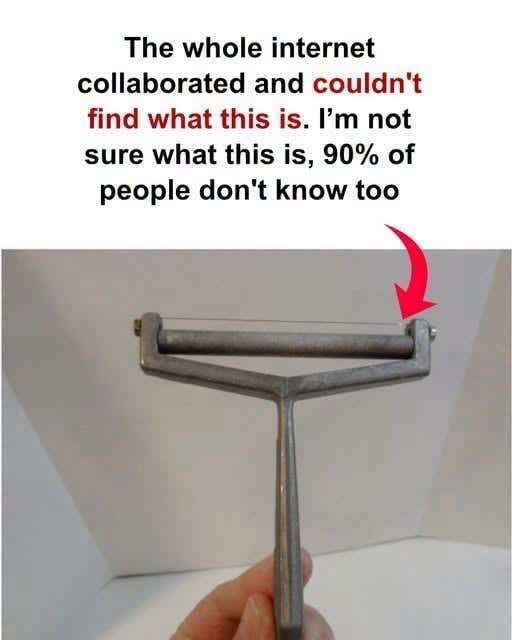
Have you ever discovered an old kitchen gadget and wondered what it was used for? Many vintage utensils may look unusual by today's standards, but they were often designed to solve everyday tasks with impressive simplicity. One such example is the Presto Aluminum Cheese Slicer, a classic kitchen tool that was once a common sight in homes across the country.
The Presto Aluminum Cheese Slicer
At first glance, its aluminum frame and distinctive shape may seem unfamiliar, but its purpose becomes clear after just one use. Designed to slice firm cheeses quickly and evenly, the Presto Cheese Slicer glides smoothly through cheese blocks to create neat, consistent slices. Whether preparing sandwiches, cheese boards, or snacks, it offered a simple way to achieve professional-looking results without the need for a knife.
Its lightweight aluminum construction made it easy to handle, while the ergonomic curved handle provided a comfortable grip. Built with durability and practicality in mind, it reflected an era when kitchen tools were created to perform one task exceptionally well.
There's a design philosophy embedded in this little tool that's worth appreciating. Mid-century kitchen gadgets were often single-purpose, built to last, and mechanically simple. No batteries, no apps, no planned obsolescence. The Presto slicer did one thing, slicing cheese, and did it so well that surviving examples still work perfectly decades later.
How It Worked
The mechanism was elegantly simple. The slicer featured a taut wire or sharp blade set into the aluminum frame at a fixed angle. You'd place the cheese block on a cutting board, position the slicer at the edge, and draw it smoothly across. The fixed angle ensured uniform thickness, something that's surprisingly hard to achieve freehand with a knife, especially for sandwiches where even slices stack neatly and melt uniformly.
Different models offered variations: some with adjustable thickness, others with a simple wire for softer cheeses. The principle remained the same, letting the tool's geometry do the work your wrist couldn't reliably do.
Why It Fell Out of Fashion
If it worked so well, why did it disappear from most kitchens? Several shifts converged:
- Pre-sliced cheese: The rise of affordable, consistently sliced packaged cheese eliminated the daily need for home slicing for many families.
- Multi-tools and minimalism: Modern kitchens trend toward fewer, more versatile tools. Single-purpose gadgets lost counter and drawer space to chef's knives and food processors.
- Changing aesthetics: The aluminum utilitarian look fell out of favor as kitchen design moved through various style eras.
- Cheese wire alternatives: Simple handheld cheese wires and plane-style slicers covered the remaining need more compactly.
None of these reflect a flaw in the tool itself. It was outcompeted by convenience, not by better slicing.
A Companion Curiosity: The Chapin Cream Dipper
Another interesting vintage kitchen accessory from the same period is the Chapin Cream Dipper. Before milk cartons became standard, fresh milk was commonly delivered in glass bottles. As the cream naturally rose to the top, this specialized utensil allowed users to lift the thick layer of cream without disturbing the milk underneath.
Featuring a small, ladle-like bowl on a long handle, often with charming decorative details, the cream dipper was a daily-use tool in an era when milk arrived unhomogenized and separating cream was part of the morning routine. Like the cheese slicer, it solved one specific problem beautifully and became obsolete when the underlying conditions changed, in this case, when homogenization made cream separation a thing of the past.
The Vintage Kitchen Tool Renaissance
Interestingly, tools like these are finding new audiences. Several trends are driving renewed interest:
- Nostalgia and aesthetics: Vintage kitchenware has become collectible, prized for its design, craftsmanship, and the stories embedded in well-worn objects.
- Sustainability: Buy-it-once tools from the mid-century era appeal to consumers tired of disposable gadgets. A 60-year-old aluminum slicer that still works is the ultimate anti-landfill statement.
- The maker movement: Home cooks rediscovering traditional techniques, from cheese boards to home dairy, find these purpose-built tools genuinely useful.
- Thrift culture: Flea markets, estate sales, and online vintage shops have made these tools accessible and affordable to curious younger buyers.
Collectors note that condition matters: intact wires or blades, undamaged frames, and original finishes command the most interest. But even well-used examples tell a story of decades of sandwiches.
What These Tools Teach Us About Design
The Presto slicer and Chapin dipper embody principles modern designers are rediscovering:
- Solve one problem completely rather than five problems poorly.
- Mechanical simplicity beats complexity for reliability and longevity.
- Ergonomics matter: The curved handle wasn't decoration; it was user-centered design before the term existed.
- Materials honestly expressed: Aluminum looks like aluminum. There's no fake wood grain or faux anything.
- Build for decades, and your product becomes an heirloom instead of waste.
In an age of kitchen gadgets with Wi-Fi, there's something refreshing about a tool whose entire user manual could be: "pull across cheese."
Frequently Asked Questions
What is a Presto Aluminum Cheese Slicer?
A vintage mid-century kitchen tool with an aluminum frame and wire or blade designed to slice firm cheeses evenly. It was a common household item prized for producing uniform slices.
Are vintage cheese slicers still usable?
Yes, if the wire or blade is intact and the frame is undamaged. Aluminum doesn't degrade significantly, so well-kept examples work as well as they did decades ago. Clean thoroughly before use.
What was a Chapin Cream Dipper used for?
It was used to lift cream from the top of unhomogenized bottled milk without disturbing the milk below, back when home milk delivery in glass bottles was standard.
Are these tools collectible?
Yes, vintage kitchen tools have an active collector market. Rarity, condition, brand markings, and original packaging all affect value. Most common examples remain affordable.
Where can I find vintage kitchen tools?
Estate sales, flea markets, thrift stores, and online vintage marketplaces are the best sources. Inspect for damage and completeness before buying, especially moving parts like wires and hinges.