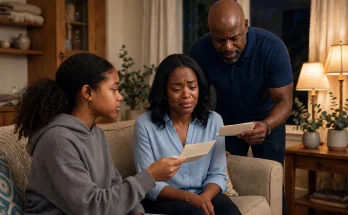
For years, I believed the hardest part of my marriage was living with the consequences of my own mistake.
After my affair came to light, everything between my husband, Michael, and me changed. The warmth that had once existed in our relationship disappeared almost overnight. He stopped reaching for my hand, stopped hugging me, and eventually stopped touching me altogether.
I knew I had broken his trust, and I never expected him to forget what I had done.
But years later, a routine medical appointment uncovered something I never expected—an old medical procedure that I had no memory of authorizing.
And suddenly, questions about my marriage went far beyond the affair.
The Appointment That Raised Questions
It started with an ultrasound.
I had gone to see Dr. Evans for what I believed would be a routine examination. I wasn’t expecting anything unusual.
But while reviewing the images, the doctor noticed something that immediately caught her attention.
There appeared to be a surgical clip and evidence of previous scarring near one of my fallopian tubes.
I was confused.
I had never knowingly undergone fertility surgery.
When I told Dr. Evans that I had no memory of such a procedure, she recommended that I request my complete medical records before drawing any conclusions.
Her advice seemed reasonable, so I agreed.
What I didn’t know was that those records would eventually force me to revisit a part of my past I had almost completely forgotten.
Searching Through Old Records
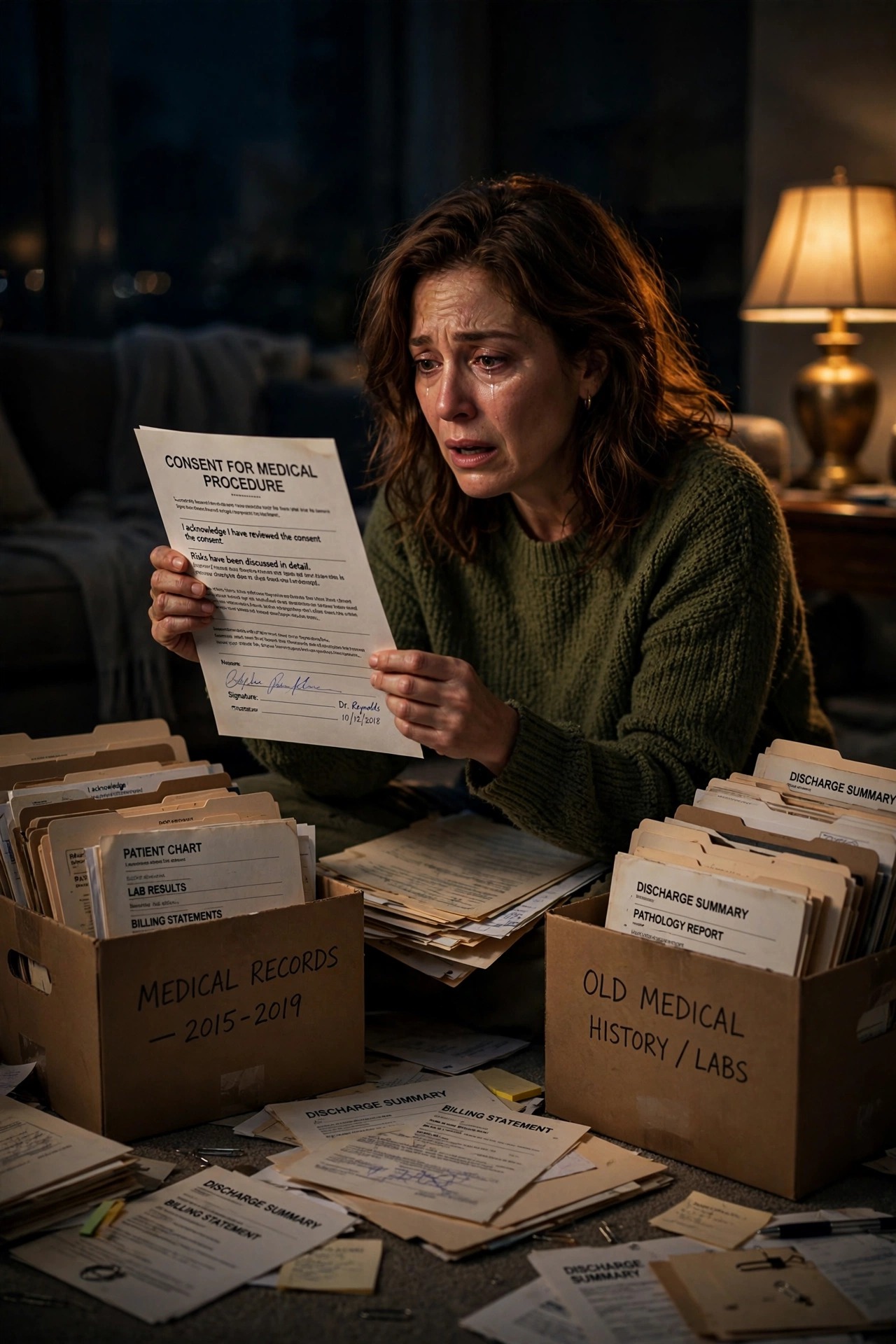
When I returned home, I began looking through boxes of old paperwork.
Some documents were easy to recognize. Others weren’t.
There were pages from hospital visits that I didn’t remember clearly, medication records that seemed unfamiliar, and references to an emergency procedure from years earlier.
The date caught my attention.
At the time, I couldn’t remember anything significant happening to me that would explain the procedure.
Then I found a consent document.
The signature on it wasn’t mine.
It appeared to have been signed by Michael.
I stared at the page for several minutes, trying to make sense of it.
When Michael later casually asked how my appointment had gone, I didn’t tell him what I had discovered.
I wasn’t ready.
What Happened in 2008?
I contacted a specialist and provided the records I had found.
After reviewing the available documentation, the specialist explained that an emergency procedure appeared to have permanently affected my fertility.
There was no simple explanation in the records that I could understand.
Some of the documentation referred to concerns about my condition at the time, but other parts raised questions about how the decision had been made and who had provided authorization.
Most importantly, I couldn’t find evidence that I had personally given consent.
I began wondering whether there was something about that night that I had never been told.
The Missing Hospital Notes
An attorney named Nora Ellis agreed to review the records with me.
She explained that before making accusations, we needed to establish exactly what had happened.
That meant obtaining archived hospital notes, identifying the medical staff involved, checking the timeline, and determining what consent procedures had been followed.
Eventually, additional records became available.
According to those documents, Michael had reportedly told medical staff that I was emotionally unstable and unable to make decisions for myself at the time.
The records also indicated that he had requested a permanent form of contraception while I was unconscious.
I was stunned.
I had spent years believing that the most painful secret in my marriage was my affair.
Now I was discovering that there was another chapter of our relationship that I had never understood.
Michael Finally Explained Himself
Eventually, I confronted Michael.
At first, he tried to avoid the subject.
Then he admitted that he had requested the procedure.
His explanation was that he believed another pregnancy would destroy our family.
He said he had been frightened and thought he was protecting everyone.
I listened quietly.
Then I told him something I had been thinking about for a long time.
Yes, I had betrayed him.
My affair was my responsibility, and I couldn’t erase the pain it had caused.
But making a terrible mistake in a marriage did not mean I had surrendered control over my own body or medical decisions.
One wrong decision did not give another person ownership over me.
An Unexpected Voice of Support
During the confrontation, Jake arrived.
He quickly realized that something serious was happening.
When Michael tried to justify his actions by pointing to my affair, Jake stopped him.
He reminded Michael that betrayal could destroy trust in a marriage, but it did not give one spouse the right to make permanent decisions about the other person’s body without proper consent.
Hearing someone say that out loud affected me more than I expected.
For years, I had carried enormous guilt.
I had convinced myself that because I had made a serious mistake, I somehow deserved whatever consequences followed.
But accountability and personal autonomy were two different things.
I could accept responsibility for my choices without accepting responsibility for decisions I had never made.
The Hospital Records Became Important
Nora continued reviewing the documentation.
She explained that determining legal responsibility would depend on several factors, including the consent procedures used at the time, what doctors knew, what Michael had communicated, what hospital policies required, and whether the archived records accurately reflected what happened.
The case eventually resulted in a settlement with the hospital after concerns were raised about whether proper consent procedures had been followed.
The settlement did not erase the past.
It couldn’t restore the years I had lost or answer every question that remained.
But it did give me something I had been missing for a long time: acknowledgment that my questions were legitimate.
The End of Our Marriage
By then, my relationship with Michael had changed beyond repair.
Our marriage eventually ended quietly.
There was no dramatic courtroom scene or public confrontation.
There was simply the realization that trust had disappeared on both sides.
Michael had never truly recovered from my affair.
And I could no longer ignore what I had learned about the decisions made during my medical crisis.
We had both spent years carrying anger, regret, and resentment.
Eventually, I understood that staying together wasn’t the same thing as healing.
Learning to Move Forward
After the divorce, I started therapy.
For the first time, I allowed myself to examine both parts of my story honestly.
I had made a serious mistake when I had the affair.
I couldn’t change that.
But I also learned that regret shouldn’t become a permanent punishment.
I began volunteering, rebuilding relationships with people I had pushed away, and having difficult conversations that I had avoided for years.
Slowly, I started rebuilding my sense of self.
The experience taught me something I wish I had understood much earlier:
Taking responsibility for your mistakes doesn’t mean giving up your right to make choices about your own life.
My affair changed my marriage.
The medical records changed my understanding of it.
And ultimately, learning to separate guilt from personal responsibility allowed me to finally move forward.
Sometimes the most difficult part of healing isn’t forgetting what happened.
It’s understanding what happened clearly enough to stop carrying responsibility for things that were never yours to carry.