After fifty years of marriage, I never imagined I would be the one questioning whether it should continue. At seventy-five, many people hold tightly to what feels familiar and safe, but I found myself feeling restless and strangely invisible. My husband, Charles, had not betrayed me or changed in any obvious way—yet something inside me had shifted.
Years of raising children, managing a home, and putting others first had slowly blurred my own sense of identity. What once felt like a warm and secure life began to feel restrictive. I mistook that quiet discomfort for a need to walk away, believing that leaving might help me rediscover myself.
From the outside, our marriage looked solid and enviable. We had built a life filled with shared memories, steady routines, and the kind of understanding that only comes with decades together. But after retirement, as days grew quieter and more predictable, the distance I felt became harder to ignore. Minor frustrations turned into frequent disagreements, even though I struggled to explain the real cause.
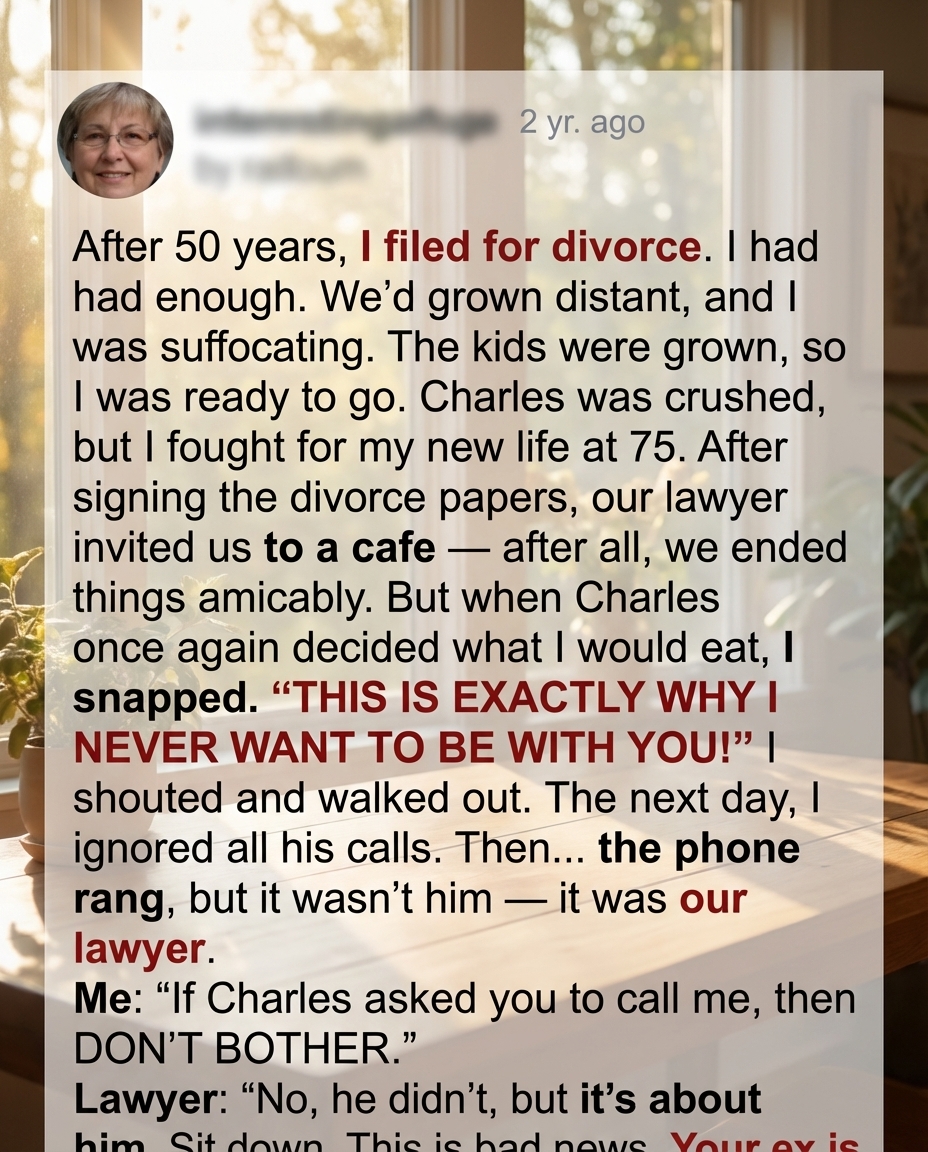
When I finally told Charles I wanted a divorce, he didn’t argue or try to persuade me otherwise. He simply said that if freedom was what I needed, he would not stand in my way. His calm acceptance unsettled me far more than anger ever could.
We completed the process quietly, and later that same day went out to dinner—more out of habit than intention. When he adjusted the lighting at our table, mentioning it would be easier on my eyes, I misread his thoughtfulness as control. Emotions I had held back for years suddenly spilled out in sharp, unfair words. I left the restaurant convinced I was finally choosing myself. That night, I ignored his calls.
By morning, everything changed. A neighbor knocked on my door with news that Charles had collapsed and was taken to the hospital. Shaken, I returned home and found a note he had written. It was filled with patience, affection, and simple explanations of the many small ways he had tried to care for me throughout our life together.
By the time I reached his hospital room, regret had replaced every ounce of certainty I once felt. Charles survived, though his recovery would be slow. Sitting beside him, I finally understood what I had missed all those years. His love was never a cage—it was a quiet shelter, built from countless unnoticed acts of care.
Now, whatever time we have left, I choose to spend it seeing him clearly. Sometimes what we think of as freedom isn’t found by leaving everything behind, but by finally understanding and appreciating what was there all along.