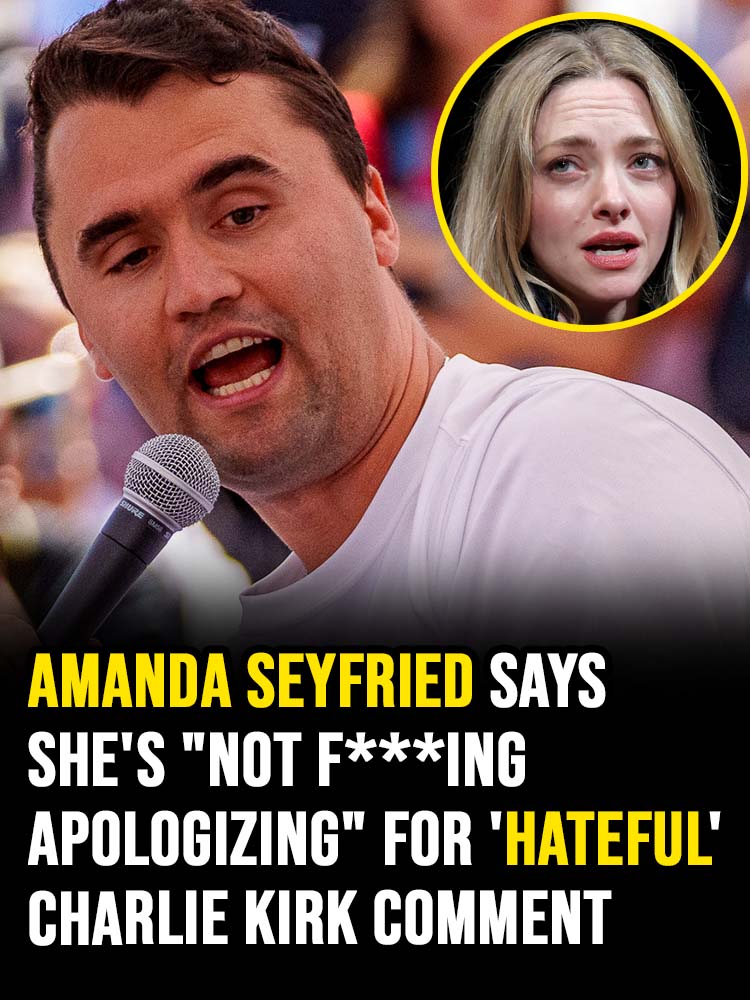
Actress Amanda Seyfried has addressed ongoing criticism surrounding a social media comment she made following the death of conservative political commentator Charlie Kirk in September 2025. In recent interviews, Seyfried made clear that she does not regret her statement and does not believe she owes an apology, while also emphasizing that she strongly condemns violence of any kind.
Public Reaction After Charlie Kirk’s Death
Charlie Kirk, the founder of the conservative organization Turning Point USA and a well-known political voice, was killed on September 10, 2025, during an outdoor speaking event at Utah Valley University in Orem, Utah. He was 31 years old.
News of his death prompted widespread reactions across the political spectrum. Supporters mourned his loss and highlighted his influence on conservative youth activism, while critics revisited debates surrounding his public statements and ideological positions. The tragedy also reignited broader conversations about political polarization and public safety in the United States.
The Instagram Comment That Sparked Controversy
Shortly after Kirk’s death, Seyfried commented on an Instagram post that compiled several of his past remarks on issues such as abortion, immigration, and race. Her brief comment described him as “hateful,” a statement that quickly drew intense attention online.
Some readers interpreted the remark as insensitive given the timing, while others viewed it as an expression of her personal opinion about his public rhetoric. The comment circulated widely, leading to criticism, heated discussions, and, in some cases, hostile messages directed at the actress.
Clarifying Her Position
Days later, Seyfried issued a longer statement on her own social media account to clarify her intent. She explained that criticizing rhetoric and condemning violence are not mutually exclusive.
In her post, she emphasized that she found certain public statements made by Kirk troubling, while also stating clearly that his killing was disturbing and unjustifiable. She expressed concern about the ongoing prevalence of violent acts and urged people to acknowledge shared humanity even amid disagreement.
Addressing the Issue in a Recent Interview
In December 2025, during a promotional interview for her upcoming film The Testament of Ann Lee, Seyfried was asked directly about the controversy. She reiterated that she does not regret her original comment and does not plan to apologize for expressing her opinion.
Seyfried explained that her view was based on publicly available speeches and interviews, and that she believes individuals have the right to form opinions about influential public figures. At the same time, she reaffirmed that she does not support or excuse violence in any form.
Social Media and Context
Seyfried also reflected on how quickly brief statements can be taken out of context online. She noted that once her comment spread beyond its original setting, interpretations multiplied in ways that did not reflect her intent.
She said that being able to clarify her position publicly helped her regain a sense of control over the narrative and allowed her to more fully explain her perspective.
Mixed Public Response
Public reaction to Seyfried’s comments has remained divided. Supporters have praised her for standing by her views and speaking candidly about rhetoric they consider harmful. Others have criticized the timing and tone of her original comment, arguing that public criticism immediately following a death can feel inappropriate regardless of intent.
The discussion has extended beyond Seyfried herself, reflecting broader tensions around free speech, public accountability, and the role of celebrities in political conversations.
Broader Celebrity Reactions
Seyfried was not the only public figure to comment on Kirk’s death. Several other celebrities and media personalities shared their thoughts online, some of which also prompted debate or required clarification. These reactions underscored how high-profile events involving political figures often lead to rapid and emotionally charged responses in the public sphere.
Where Things Stand Now
As of late 2025, Seyfried has remained consistent in her position. She has repeatedly stated that she never intended to suggest that violence was justified, while also maintaining that she is entitled to voice criticism of public rhetoric she finds troubling.
Her experience highlights the challenges of expressing nuanced opinions in a digital environment where short statements can quickly escalate into widespread controversy.
Final Thoughts
Amanda Seyfried’s situation illustrates the complexities celebrities face when engaging with politically sensitive topics, especially in the aftermath of tragedy. Her refusal to apologize reflects her personal convictions, while the public response demonstrates how deeply divided reactions can be when entertainment, politics, and social media intersect.
As conversations about free expression and responsibility continue, the episode serves as a reminder of the importance of context, clarity, and careful communication in an increasingly reactive online landscape.