For 63 years, my husband never missed a single Valentine’s Day. Not once.
After he passed away, I prepared myself for the silence. I thought the tradition had ended.
But on that first Valentine’s Day without him, a bouquet of roses appeared at my door — along with a key that led me to a secret he had kept for decades.
What I found still brings tears to my eyes.
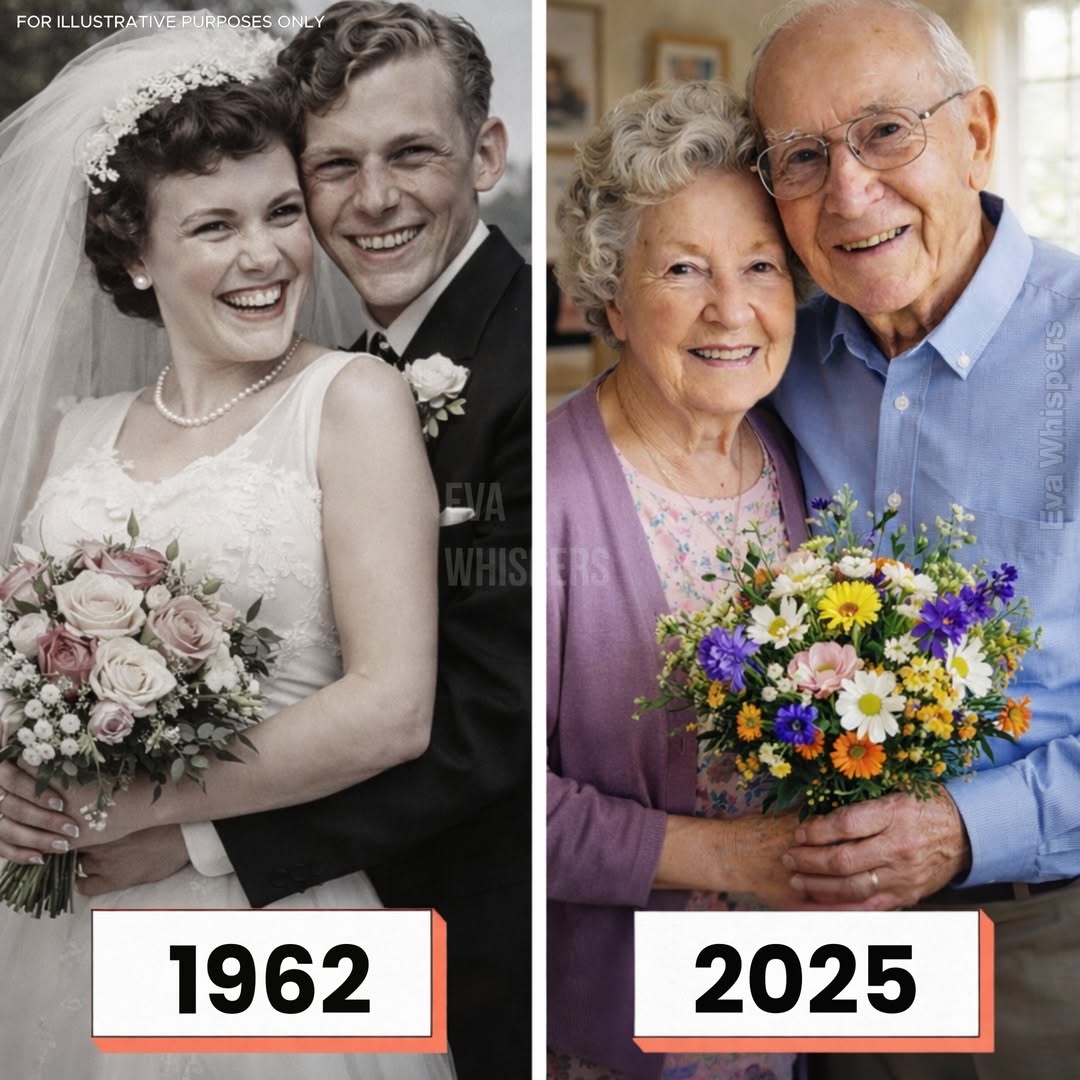
My name is Daisy. I’m 83 years old, and I’ve been a widow for four months.
Robert proposed to me on Valentine’s Day in 1962. We were still in college. He cooked dinner in our tiny dorm kitchen — spaghetti with jarred sauce and slightly burnt garlic bread. He handed me a small bouquet of roses wrapped in newspaper and a simple silver ring he had worked two weeks to afford.
From that moment on, we built a life together.
And every single Valentine’s Day after that, he brought me flowers.
When we were young and struggling financially, he picked wildflowers.
When he earned promotions, he brought long-stemmed roses.
During one especially painful year when we faced heartbreaking loss, he brought me daisies — my favorite.
He held me and said, “Even in the hard years, I’m here.”
The flowers weren’t just romantic gestures. They were reassurance. They were consistency. They were proof that no matter what life brought — arguments, sleepless nights, illness, grief — he would always show up.
Robert passed away in the fall from a heart attack. The doctors said he went peacefully.
But the house felt unbearably quiet afterward.
His slippers were still by the bed. His coffee mug still hung in the kitchen. For weeks, I poured two cups of tea each morning out of habit.
Then Valentine’s Day arrived — the first one in 63 years without him.
I expected nothing.
But that morning, there was a knock at the door.
On the doormat sat a bouquet of roses wrapped in brown paper, tied with twine — just like the ones he gave me in 1962. Beside them was an envelope.
Inside was a letter in Robert’s handwriting… and a key.
He explained that the key belonged to an apartment across town. He wrote that there was something he had kept from me for many years, and that I needed to see it.
My heart raced. I didn’t know what to expect. Questions flooded my mind. But I needed answers.
So I went.
The address led to a modest brick building with a green door. I stood outside for several minutes before unlocking it.
When I stepped inside, I was overwhelmed by the scent of polished wood and old sheet music.
It was a music studio.
In the center stood a beautiful upright piano. The shelves were filled with sheet music, recordings, and books. On the bench were carefully stacked pages — including Clair de Lune, my favorite piece.
Next to the piano were recordings labeled:
“For Daisy – December 2018.”
“For Daisy – March 2020.”
There were dozens of them.
Then I found medical documents showing that Robert had been living with a serious heart condition. He had known his time might be limited.
There was also an agreement with the building caretaker, instructing him to deliver the flowers and key to me on the first Valentine’s Day after Robert’s passing.
He had planned everything.
Finally, I found a journal.
The first entry was dated 25 years earlier.
It described a day when I had mentioned, almost casually, that I once dreamed of becoming a pianist before life took me in another direction.
I had forgotten that conversation.
Robert had not.
He wrote that he had decided to secretly take piano lessons — to one day give me back the dream I set aside for our family.
The journal chronicled years of practice, frustration, determination, and quiet perseverance.
He wrote about feeling too old to start.
He wrote about struggling with scales.
He wrote about finally being able to play a recognizable melody.
And he recorded every milestone — for me.
Near the end, the entries grew shorter. He mentioned his health declining. His hands shaking while playing. But he kept practicing.
“For her,” he wrote.
His final entry said he was trying to finish one last composition for me but feared he was running out of time.
On the piano stand sat handwritten sheet music titled:
“For My Daisy.”
It was unfinished.
I sat at the piano. At first my hands hesitated. But muscle memory returned. I played his melody — tender and full of feeling.
When the written notes ended, I continued. I completed the piece the only way I knew how — with love.
When I finished, I found one last letter tucked behind the stand.
He told me the studio was mine.
The piano was mine.
And that even though he was gone, he would always be present in the music.
He reminded me that he had loved me at 20, at 80, and at every age in between.
Now I visit the studio twice a week.
Sometimes I play. Sometimes I listen to his recordings. Recently, I recorded my first piece in 60 years. It wasn’t perfect — my fingers aren’t as quick as they once were — but I finished it.
I labeled it “For Robert” and placed it beside his recordings.
For 63 years, he gave me flowers.
And in the end, he gave me something even greater — the dream I thought I had lost.
Love doesn’t always end when life does.
Sometimes, it simply changes form.