
From Childhood Snapshot to Global Spotlight: The Photo That Sparked Online Debate
A childhood photograph recently captured widespread attention online, as social media users began sharing it with one simple question: Who is this boy today?
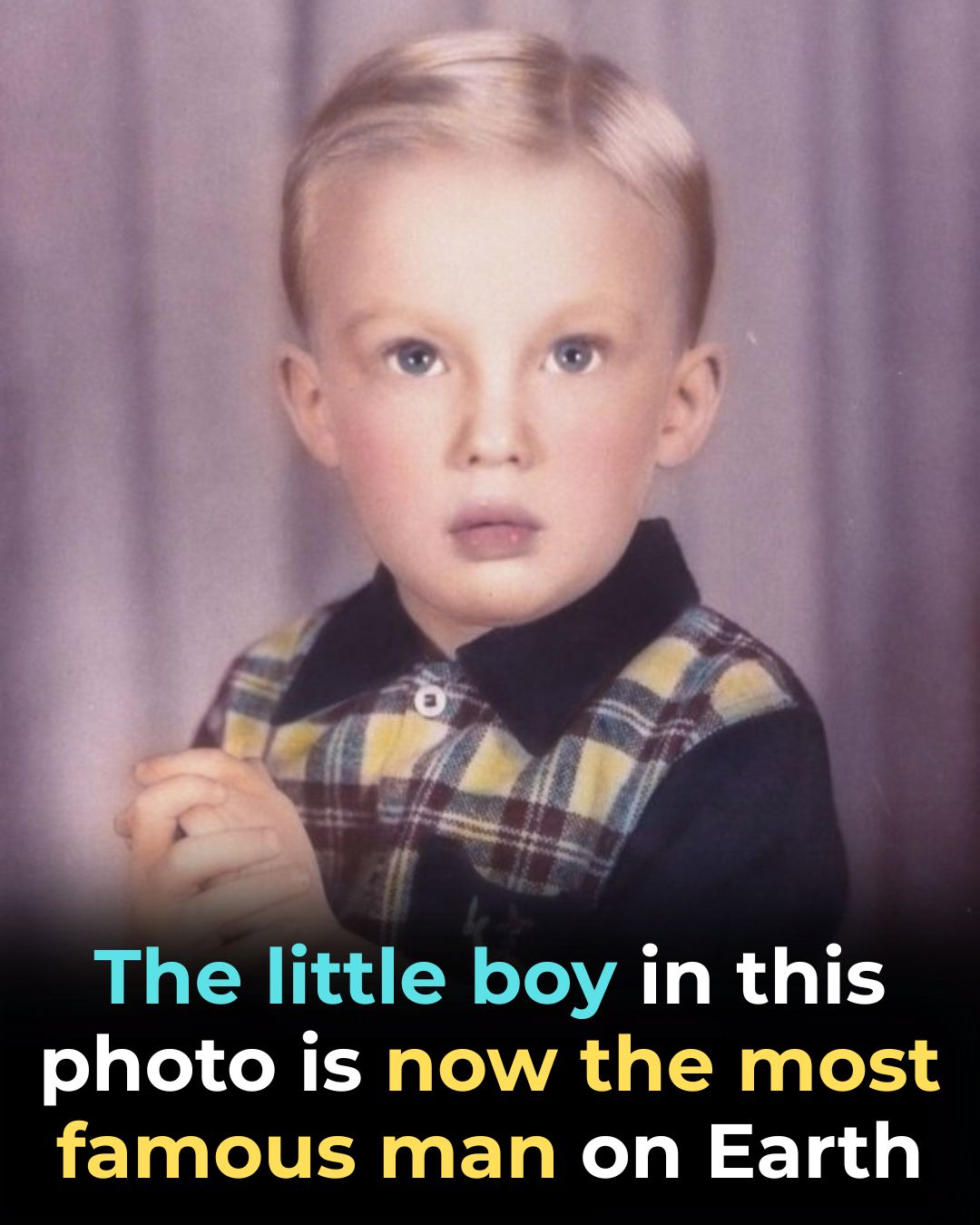
In the image, a young boy stands in front of a neutral beige background, dressed in a black button-up shirt with yellow tartan details. With his hands gently held together and a calm, curious expression, he looks directly into the camera. The photo appears to come from an earlier era, likely taken long before the rise of smartphones, adding to its nostalgic charm.
The boy's blonde hair and blue eyes, combined with the vintage quality of the picture, made it even more intriguing to viewers. There was something about his direct gaze and composed posture that felt familiar, even before anyone named him.
The Internet Plays Detective
As the image spread across platforms, guesses quickly started pouring in. Social media users love a good mystery, and identifying a childhood photo of a famous person combines nostalgia, puzzle-solving, and celebrity culture into one irresistible package.
Commenters zoomed in on facial features, compared the boy's expression to known public figures, and debated timelines. Some were certain immediately. Others needed convincing. The discussion itself became part of the entertainment, with each new theory generating more engagement.
It didn't take long for many to identify the child as Donald Trump, one of the most recognizable public figures in the world today. The distinctive blonde hair, the confident posture even as a young boy, and the familiar facial structure convinced a large portion of viewers.
Why Childhood Photos Go Viral
This isn't the first childhood photo to capture the internet's imagination, and it won't be the last. There's something deeply compelling about seeing a powerful figure as an ordinary child. It humanizes them, reminding us that every public figure was once just a kid in front of a camera, unaware of what the future held.
Childhood photos also invite us to play a game of recognition. We study the young face for traces of the adult we know, looking for the moment when identity becomes visible. It's a form of visual time travel that feels both intimate and universal.
The vintage quality of this particular photo added to its appeal. Taken long before smartphones, it carries the texture and warmth of an earlier era of photography. In a feed full of polished digital images, a genuine vintage photograph stands out.
The Figure in the Photo
Donald Trump, known for his career in business and politics, returned to office after winning the 2024 U.S. presidential election. He was inaugurated for a second term on January 20, 2025.
As with many high-profile figures, public reactions remain mixed. While some individuals expressed strong criticism of his policies and leadership style, others voiced their continued support. The photo itself became a Rorschach test: viewers projected their existing opinions onto the image of the boy, seeing either innocence or early signs of the controversial figure he would become.
This is one of the fascinating aspects of viral historical images. The photo doesn't change, but what people see in it depends entirely on what they already believe. Supporters saw a charming child. Critics saw something else. The boy in the photo, of course, was neither: just a kid, decades away from the political storms to come.
How a Single Image Becomes a Global Conversation
The post quickly became a trending topic, highlighting how easily a single image can spark widespread engagement. But what exactly makes a photo go viral in this way?
Several factors converged here. First, the mystery element: the "who is this?" question invites participation. Everyone can guess, and guessing is fun. Second, the subject's fame guarantees interest: a childhood photo of one of the world's most discussed figures will always draw attention. Third, the image's nostalgic quality makes it shareable: people love passing along things that feel authentic and evocative.
Social media algorithms amplify all of this. Engagement breeds visibility, visibility breeds more engagement, and within hours a single photograph can travel around the world. The platforms are designed to reward exactly this kind of participatory content.
The Power and Limits of Viral Moments
This viral moment serves as a reminder of how digital platforms can bring past and present together, turning a simple childhood photo into a global conversation. It's a remarkable capability: billions of people can simultaneously examine, discuss, and react to a single image from decades ago.
But it's worth remembering what these moments are and aren't. They're entertainment, not history. They're conversation starters, not deep analysis. The photo tells us what a boy looked like on one day long ago. Everything else, the debates, the projections, the hot takes, says more about us than about him.
Still, there's something genuinely valuable in these shared moments of curiosity. In a fragmented media landscape, a viral photo can briefly unite millions of strangers in a common activity: looking, wondering, and talking. That shared curiosity is one of the internet's better instincts.
Frequently Asked Questions
What was in the viral childhood photo?
The photo showed a young blonde boy with blue eyes standing before a neutral beige background, wearing a black button-up shirt with yellow tartan details. He held his hands together and looked directly at the camera with a calm, curious expression.
Who did viewers identify as the boy?
Many social media users identified the child as Donald Trump, citing the distinctive blonde hair, facial features, and confident posture as matching the well-known public figure.
Why do childhood photos of famous people go viral?
They combine mystery, nostalgia, and celebrity fascination. Viewers enjoy the puzzle of recognition, the humanizing glimpse of a powerful figure as an ordinary child, and the visual time travel of connecting past and present.
What makes a photo go viral on social media?
Participatory elements (like guessing games), famous subjects, emotional or nostalgic appeal, and shareability all contribute. Algorithms then amplify engaging content, spreading it rapidly across platforms.
What does the reaction to the photo reveal?
That viewers project existing opinions onto images. Supporters and critics of the identified figure saw very different things in the same photo, showing how our beliefs shape what we perceive.



