The energy inside Levi’s Stadium shifted instantly when the lights dimmed for the Super Bowl LX halftime show. From the opening moments, Bad Bunny turned the field into a fully immersive stage experience, blending sharp choreography, striking visuals, and fluid transitions between chart-topping songs. It quickly became clear to viewers that this performance was designed to be more than a standard concert segment.
As the show unfolded, fans watching at home and in the stadium began picking up on subtle details woven into the production. Every movement, visual cue, and staging choice seemed intentional, sparking widespread discussion online. By the final moments, the halftime show had already secured its place as one of the most talked-about performances in recent Super Bowl history.
One of the earliest moments to draw attention involved a stylish couple who appeared repeatedly as part of the choreography. Initially, many viewers assumed they were simply performers supporting the narrative of the show. However, midway through the performance, it was revealed that the couple was actually being married live during the halftime event. Later reports explained that the couple had once invited Bad Bunny to perform at their wedding, only to be surprised when he instead helped turn their ceremony into a once-in-a-lifetime moment broadcast to millions.
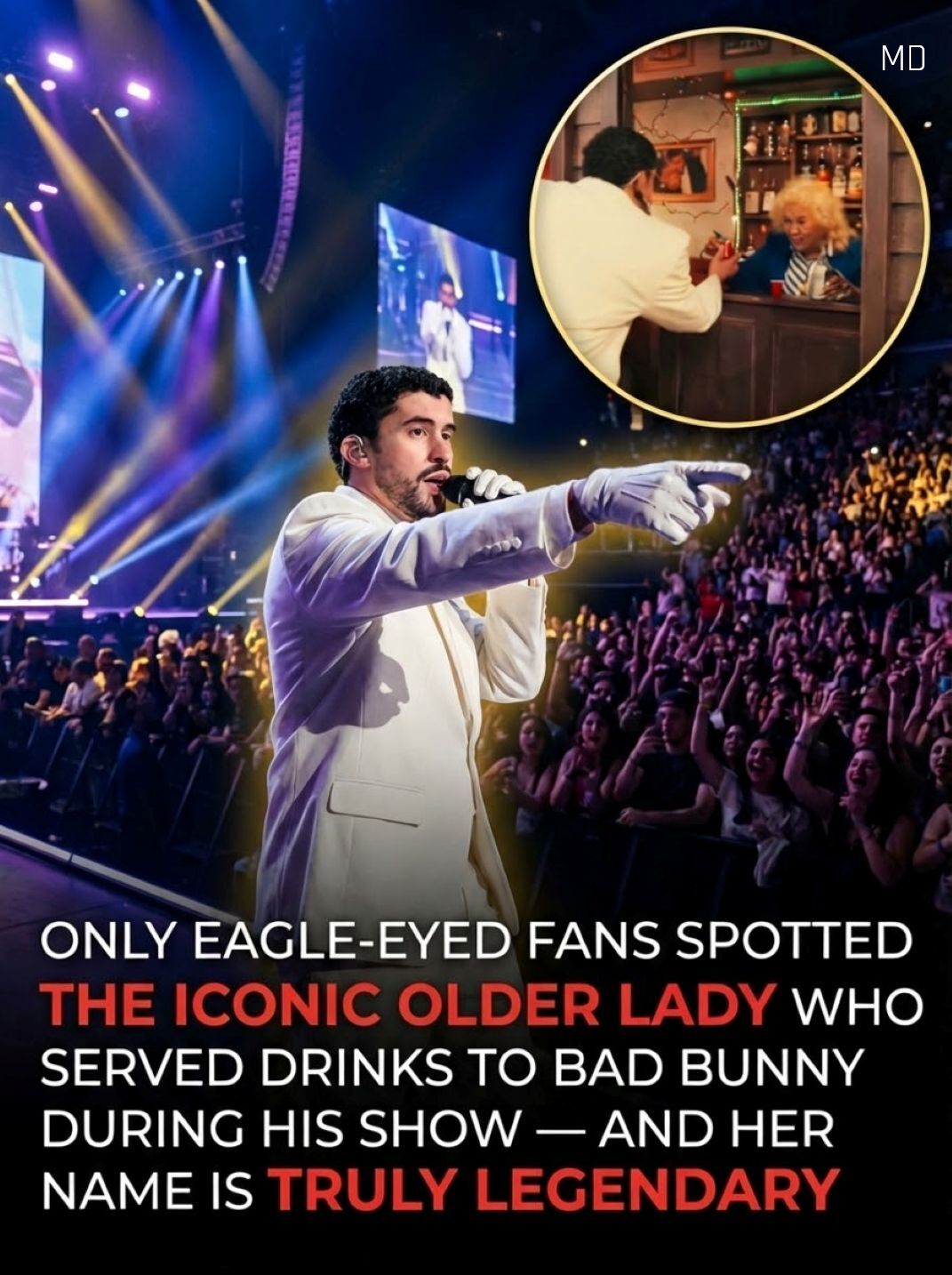
The surprises didn’t stop there. Guest appearances from Lady Gaga and Ricky Martin added excitement and drew enthusiastic reactions from fans across social media. Several well-known figures were also spotted throughout the performance, contributing to the celebratory atmosphere. Another widely shared moment featured legendary performer Toñita stepping onto the stage to serve Bad Bunny a drink, offering a brief, lighthearted break that audiences quickly embraced.
Toward the end of the show, Bad Bunny handed his Grammy Award to a young boy standing onstage, prompting online speculation about the meaning behind the gesture. While some viewers debated possible symbolism, later clarification revealed that the child represented a younger version of the artist himself—highlighting themes of ambition, growth, and believing in one’s dreams.
The performance concluded with a bold visual message displayed across the stage, emphasizing unity and positive connection. As with most halftime shows, reactions varied, but this year’s event sparked especially active discussion across entertainment news outlets and social platforms. Commentators, fans, and public figures all weighed in, extending the conversation well beyond the stadium.
Regardless of differing opinions, Bad Bunny’s halftime show demonstrated how music and performance can create moments that resonate on a global scale. By combining storytelling, spectacle, and unexpected surprises, the artist delivered a performance that continues to generate discussion long after the final whistle.