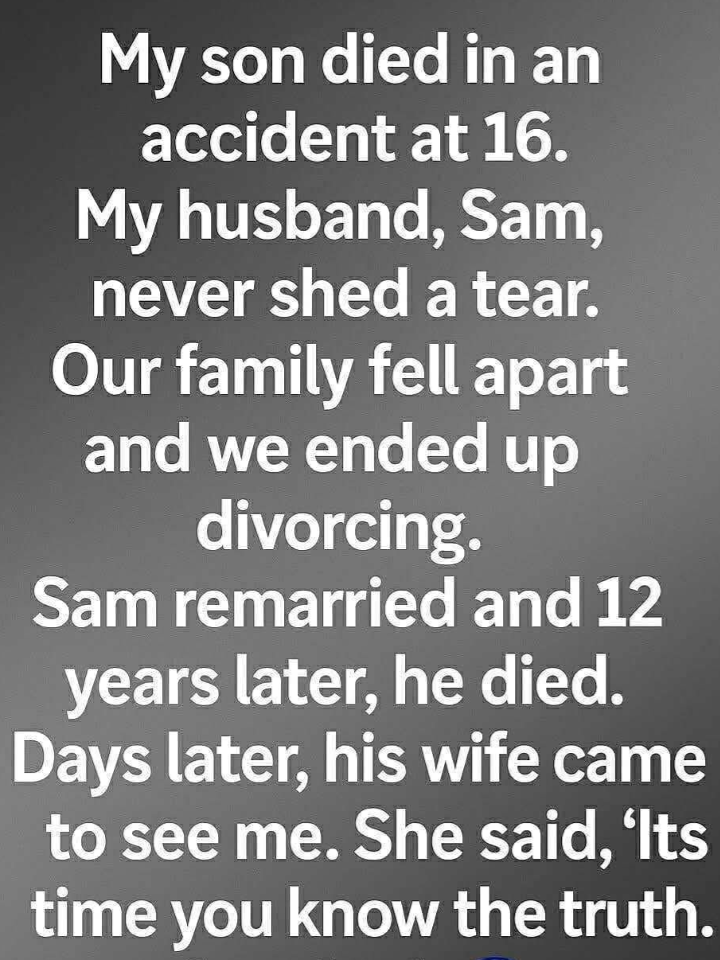
For most of our marriage, I believed my husband struggled to express emotion. Sam moved through life quietly, with a calm exterior that often made his feelings hard to read. I was expressive by nature, while he preferred silence and structure. I assumed that meant he felt things less deeply.
Then tragedy changed everything.
When our sixteen-year-old son died suddenly in an accident, my world collapsed. I cried constantly, struggled to get through each day, and felt completely unanchored. Sam’s response was very different. At the hospital, he stood still and composed. At the funeral, he spoke little. When we returned home to a house that felt painfully empty, he focused on routines, work, and long periods of silence.
I interpreted his stillness as distance.
Grief is isolating on its own, but feeling emotionally alone within a marriage made it even harder. Over time, misunderstanding turned into resentment. We stopped talking the way we once had. Comfort became rare. Eventually, what remained between us was not conflict, but emotional separation.
I moved away, believing that distance might help me heal. Sam stayed behind. Years later, he remarried. We lived separate lives, connected only by a loss we no longer discussed.
Twelve years later, Sam passed away suddenly—just as unexpectedly as our son had.
I thought I had made peace with the past, but grief has a way of resurfacing when you least expect it. His death reopened feelings I believed time had softened.
A few days after his funeral, there was a knock at my door.
It was his second wife.
She looked tired, holding a cup of tea as if it steadied her. After a brief pause, she said there was something I should know.
She told me about a lake.
A quiet place Sam used to visit with our son. A place where they talked, skipped stones, and shared moments without needing many words. On the night our son passed away, Sam drove there alone. And he continued to return—sometimes weekly, sometimes more often—throughout the years.
He rarely spoke about it.
That was when I began to understand something I hadn’t before: Sam hadn’t been distant. He had been grieving privately.
She told me that on that first night, he sat by the water until morning, speaking softly as if our son could hear him. He cried there, away from everyone.
“He didn’t want you to see him broken,” she said gently. “He believed being strong was his way of protecting you.”
Later that day, I visited the lake myself. I didn’t know what I expected to find—only that I wanted to feel closer to the past we shared. Near the water, beneath a tree, I noticed a small wooden box.
Inside were letters.
There was one for every birthday our son never had.
Each ended the same way: Love, Dad.
I sat quietly, reading words written across years—filled with memories, hope, and love that had never been spoken aloud. In those letters, I finally saw my husband’s grief, not through tears, but through care and devotion.
A Quiet Understanding
Grief does not look the same for everyone. Sometimes it is loud and visible. Other times, it is silent and deeply internal.
I once believed that love had to be openly expressed to be real. Over time, I learned that some forms of love are quiet—carried privately, shaped by protection rather than expression.
Sam’s silence was not emotional absence. It was love, held carefully, expressed in the only way he knew how.
In finally understanding that, I found something I had been missing for a long time: acceptance—and peace.