
A Graduation Day Surprise and a Moment That Changed Everything
The Walk Across the Stage
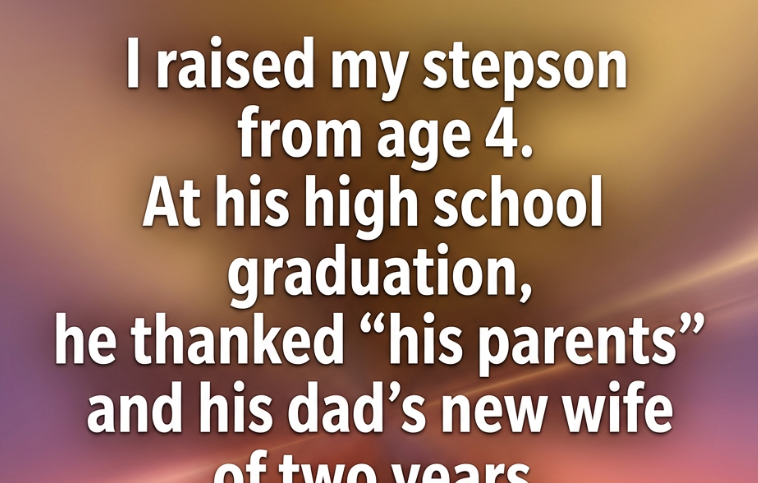
When my stepson's name was announced in the packed auditorium, the sound of applause seemed to spread instantly through the room. I stood with everyone else, clapping as he crossed the stage in his cap and gown. He looked different somehow, more confident, more grounded. The years of growing, learning, and persevering were visible in the way he carried himself.
Graduation ceremonies are emotional for every family, but blended families carry their own unique currents of feeling. As a stepparent, you occupy a complicated space: deeply invested, yet sometimes unsure of your place. You have poured love, time, and effort into a child who may or may not publicly acknowledge the role you played. And on graduation day, all of those quiet complexities rise to the surface.
As he returned to his seat, he scanned the audience, taking in the faces of friends and family. When his eyes passed over me, I felt no disappointment. Love does not need public acknowledgment to be real. What I felt instead was a quiet sense of pride and understanding. This moment was about his achievement, not about recognition.
That mindset, that the day belonged to him and not to my ego, shaped everything that followed.
An Unplanned Decision
As the ceremony continued, that feeling stayed with me. Without planning it in advance, I stood and walked toward the aisle. A few people nearby looked surprised, but I calmly approached the principal and asked a brief question. After a moment, he nodded.
It is worth pausing here to acknowledge how unusual this was. Graduation ceremonies run on tight scripts. Interrupting one is not something anyone plans lightly. But sometimes a moment arrives with such clarity that planning becomes irrelevant. I knew what I needed to do, and I knew it needed to happen now, while the emotion of the day was still alive in the room.
The room gradually grew quiet. Standing at the microphone, I knew exactly what I did not want to do. I was not there to take credit or shift attention. That distinction mattered enormously. A stepparent seizing a microphone at graduation could easily look like ego. I was determined that it would be the opposite: an act of love, directed entirely at him.
What I Said at the Microphone
Instead, I spoke about resilience and growth. I talked about the unseen efforts behind every graduation: the teachers who give extra time, the relatives who support quietly, and the adults who show up consistently without fanfare.
I spoke about what it takes to reach that stage, not just academically, but personally. The early mornings. The self-doubt. The moments of wanting to quit. The people who believed in him when he struggled to believe in himself. I kept the focus where it belonged: on his journey, his perseverance, his achievement.
And then I said what I had come to say. I told him, in front of everyone, how proud I was. Not as a claim of credit, but as a witness to his growth. I told him that being part of his life had been one of the greatest privileges of mine. I told him that the love of a stepparent is a choice, made every day, and that I would keep choosing him.
The room was silent in the way that means people are truly listening. When I finished, the applause that followed felt different from the ceremonial kind. It felt personal.
Why It Changed Everything
That brief moment at the microphone changed the dynamic between us in ways I could not have predicted. Stepparent-stepchild relationships often carry unspoken tensions: loyalty conflicts, undefined roles, love that exists but goes unnamed. Speaking openly, with vulnerability and without agenda, cut through all of that.
Several things shifted in that moment:
- The unspoken became spoken. Years of quiet love were finally named out loud, in front of witnesses.
- Vulnerability built trust. Standing before a crowd to express love is risky. That risk demonstrated sincerity no private conversation could match.
- The relationship was redefined. I was no longer just the person in the background. I was someone who had publicly claimed my love for him, without claiming his achievement.
- Permission was granted. My openness gave him permission to express his own feelings more freely going forward.
- The family narrative changed. Our story was no longer just about the challenges of blending. It included this moment of chosen, declared love.
The Unique Challenges of Stepparenting
To understand why this moment mattered so much, it helps to understand the stepparent's journey. Stepparents navigate a role with no clear script:
- Love without biology: The bond is built entirely through choice and effort, which makes it profound but also fragile.
- Authority without history: Discipline and guidance feel different when you were not there from the beginning.
- Loyalty binds: Children often feel that closeness with a stepparent betrays their biological parent.
- Invisible labor: Much of a stepparent's contribution goes unrecognized, by the child, by extended family, sometimes by the partner.
- Uncertain place: At events like graduations, stepparents wonder: Do I belong in the front row or the back? In the photos or out of them?
These challenges make moments of open acknowledgment especially powerful. When the unsaid is finally said, it validates years of quiet effort.
What Graduation Represents for Blended Families
Graduation is a milestone that belongs to the graduate, but it also marks something for the family: proof that the village worked. Every diploma represents countless contributions from teachers, parents, stepparents, grandparents, coaches, and friends. For blended families, it is tangible evidence that love, in all its complicated forms, was enough.
The ceremony itself is a ritual of transition. The graduate crosses a stage and enters a new phase of life. For stepparents, it can also be a transition: from the active daily work of raising a child to a new relationship with an adult. Speaking at that microphone was, in its way, my own graduation: a marking of everything we had been through together and a blessing on whatever comes next.
Lessons From the Microphone
That graduation day taught me lessons I carry still:
- Love does not need permission to be expressed. I did not need an invitation to speak from the heart.
- Vulnerability is strength. The risk of embarrassment was real, but the reward of honesty was greater.
- Timing matters. The emotion of the day created an opening that an ordinary Tuesday never could.
- Keep the focus on them. The moment worked because it was about him, not me. Any hint of self-congratulation would have poisoned it.
- Say it now. Do not wait for the perfect moment or assume there will be another chance. The people you love need to hear it today.
A New Chapter
Our relationship was not magically perfected by one speech. Real life does not work that way. But something fundamental shifted that day. A wall I had not fully recognized came down. Conversations became easier. Affection became more natural. The love that had always been there finally had room to breathe.
He still had to navigate his own path into adulthood, with all its stumbles and triumphs. But he did it knowing, without any doubt, that he had someone in his corner who had chosen him, who would keep choosing him, and who was not afraid to say so in front of the whole world.
That is what the moment changed. Not the past, which needed no changing. The future, which suddenly looked warmer, closer, and more honest than before.
Sometimes the most important things we do are unplanned. Sometimes love needs a microphone.
Frequently Asked Questions
What happened at the graduation ceremony?
During the stepson's graduation ceremony, the stepparent spontaneously approached the principal, received permission to speak, and addressed the audience at the microphone, speaking about resilience, growth, and pride in the graduate's achievement.
Why was the stepparent's speech significant?
It publicly named years of quiet stepparent love that had gone unspoken, demonstrated vulnerability, redefined the relationship, and gave the graduate permission to express feelings more openly, shifting the family dynamic.
What are the unique challenges stepparents face?
Stepparents navigate love built through choice rather than biology, authority without shared history, children's loyalty conflicts, largely invisible labor, and uncertainty about their place at family milestones.
Why did the speech work instead of seeming self-serving?
Because the focus remained entirely on the graduate's achievement rather than the speaker's contribution. The stepparent explicitly avoided taking credit, speaking instead as a witness to the young person's growth and perseverance.
What can others learn from this story?
Express love without waiting for permission, embrace vulnerability, pay attention to timing, keep the focus on the other person, and say important things now rather than assuming there will be a better moment later.



