
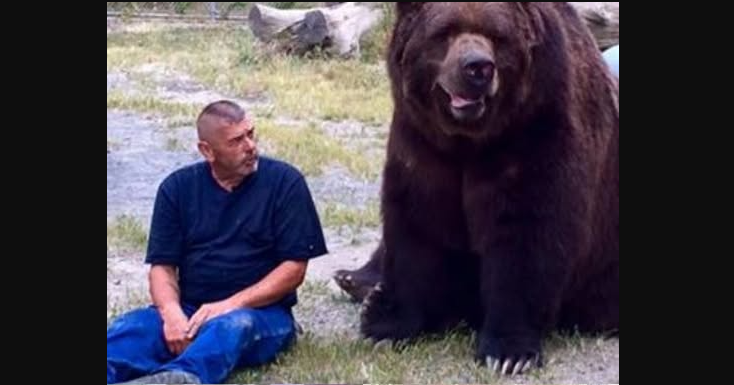
Jimmy the Bear The Gentle Giant Who Captures Every Heart
At the Orphaned Wildlife Center in Middletown, New York, Marty and Debbie Kowalczik have dedicated their lives to caring for animals that cannot survive on their own. For decades, the couple has provided a safe haven for injured and orphaned wildlife across their 100 acre sanctuary, a peaceful landscape filled with trees, natural water sources, and quiet spaces designed for recovery and comfort.
Over the years, many species have passed through the center's care, but the bears have become its most recognizable residents. Among them is Jimmy, a bear whose calm presence and remarkable story have made him especially memorable.
A Bear Like No Other
Jimmy is now 21 years old and has lived at the sanctuary since birth. Born in captivity, he never developed the survival skills needed to live in the wild, making release impossible. Instead, he grew up under the careful guidance of experienced caregivers who focused on providing stability, enrichment, and respect. That upbringing shaped Jimmy into a gentle, trusting bear known for his relaxed demeanor and strong bond with those who care for him.
Despite his calm nature, Jimmy's size is striking. Standing more than nine feet tall and weighing over 1,500 pounds, he is an impressive sight. Yet the sanctuary has never asked him to perform or entertain. In a social media post, the center explained that Jimmy is not a performer but a resident, living as naturally as possible within the safety of the sanctuary.
That distinction matters. There is a profound difference between an animal exploited for entertainment and an animal cared for with dignity. Jimmy's life represents the latter: a bear allowed simply to be a bear.
The People Behind the Sanctuary
The Orphaned Wildlife Center exists because of Marty and Debbie Kowalczik's lifelong commitment. Caring for wildlife, especially large predators, is not a hobby. It is a vocation demanding knowledge, resources, physical courage, and emotional resilience.
Their 100 acre property is designed around the animals' needs: natural landscapes, water sources, and quiet areas where recovering animals can feel secure. The couple has spent decades learning the behavior, nutrition, and medical needs of species most people only see in documentaries.
What drives someone to dedicate their life this way? For the Kowalcziks, the answer seems simple: these animals have nowhere else to go. Injured, orphaned, or captive born wildlife cannot simply be released. Without sanctuaries, their options are bleak. The center fills a gap that neither the wild nor the zoo system can fully address.
Why Jimmy Cannot Live in the Wild
Jimmy's story illustrates an important reality of wildlife rescue. Animals born in captivity miss critical learning windows. Wild bear cubs spend years with their mothers, learning what to eat, how to den, when to hibernate, and how to navigate dangers. A captive born bear like Jimmy never received that education.
Release would be a death sentence, not freedom. He would not know how to find food through winter, how to avoid human conflict, or how to establish territory. The sanctuary is not his cage. It is his home, the only one he has ever known, designed to give him the best possible life within the constraints of his history.
This is true for many sanctuary residents across the country: former pets, roadside zoo survivors, and animals injured too severely for release. Sanctuaries exist for the animals that fall through every other crack.
The Gentle Giant Phenomenon
Jimmy's fame rests on a contrast that never fails to move people: enormous size paired with gentle temperament. A 1,500 pound bear that is calm, trusting, and relaxed challenges our assumptions about wild animals.
That gentleness is not an accident. It is the product of:
- Consistent, respectful handling: Jimmy has known only patient caregivers, never punishment or fear based training.
- Enrichment: Toys, puzzles, varied foods, and environmental stimulation keep his mind engaged.
- Routine and stability: Predictable daily rhythms reduce stress and build trust.
- Space: 100 acres means Jimmy is not confined to a small enclosure. He has room to roam, explore, and choose solitude.
- No performance pressure: Never being asked to entertain means never associating humans with demands.
The result is a bear who approaches his caregivers with what can only be described as affection. Videos of Jimmy's calm interactions have touched millions, reminding viewers that even the most powerful creatures respond to kindness.
What Sanctuaries Need
Facilities like the Orphaned Wildlife Center run on dedication and donations. Caring for large animals is enormously expensive: food, veterinary care, habitat maintenance, and staffing add up quickly.
Ways to support wildlife sanctuaries include:
- Donating: Even small contributions help cover food and medical costs.
- Visiting responsibly: Some sanctuaries offer educational visits that fund operations.
- Volunteering: Many centers need help with maintenance, fundraising, and outreach.
- Spreading awareness: Sharing stories like Jimmy's builds the public support sanctuaries depend on.
- Supporting legislation: Stronger wildlife protection laws reduce the number of animals needing rescue.
Crucially, legitimate sanctuaries do not breed animals, do not allow direct public contact with dangerous wildlife, and do not operate as entertainment venues. These standards distinguish true sanctuaries from facilities that exploit animals under a rescue label.
Lessons From Jimmy
Jimmy's story carries quiet wisdom:
- Gentleness is strength: The most powerful creature in the sanctuary is also the calmest. True strength does not need to prove itself.
- Care transforms: Given patience and respect, even a 1,500 pound predator becomes a trusting companion.
- Dedication matters: The Kowalcziks' decades of commitment created a haven that did not exist before them. One couple's devotion changed hundreds of animals' lives.
- Every animal deserves dignity: Jimmy is not a performer or a prop. He is a resident, a distinction that honors his intrinsic worth.
Frequently Asked Questions
Who is Jimmy the Bear?
Jimmy is a 21 year old bear living at the Orphaned Wildlife Center in Middletown, New York. Born in captivity, he has spent his entire life at the sanctuary under the care of Marty and Debbie Kowalczik.
How big is Jimmy?
He stands over nine feet tall and weighs more than 1,500 pounds, making him an impressive sight despite his famously calm demeanor.
Why can't Jimmy be released into the wild?
Born in captivity, he never learned the survival skills wild bears acquire from their mothers, such as foraging, denning, and avoiding danger. Release would endanger his life.
What is the Orphaned Wildlife Center?
It is a 100 acre sanctuary in Middletown, New York, run by Marty and Debbie Kowalczik, dedicated to caring for injured and orphaned wildlife that cannot survive on their own.
How can I help sanctuaries like this one?
Donations, responsible visits, volunteering, spreading awareness, and supporting wildlife protection legislation all help legitimate sanctuaries continue their work.
Jimmy the bear will never know how many hearts he has touched. He will simply continue his days at the sanctuary: roaming his acres, enjoying his meals, and greeting his caregivers with the calm trust of an animal who has only ever known kindness. In a world that often feels harsh, the gentle giant of Middletown stands as proof that compassion, given consistently over decades, can tame even the wildest circumstances into something beautiful.

