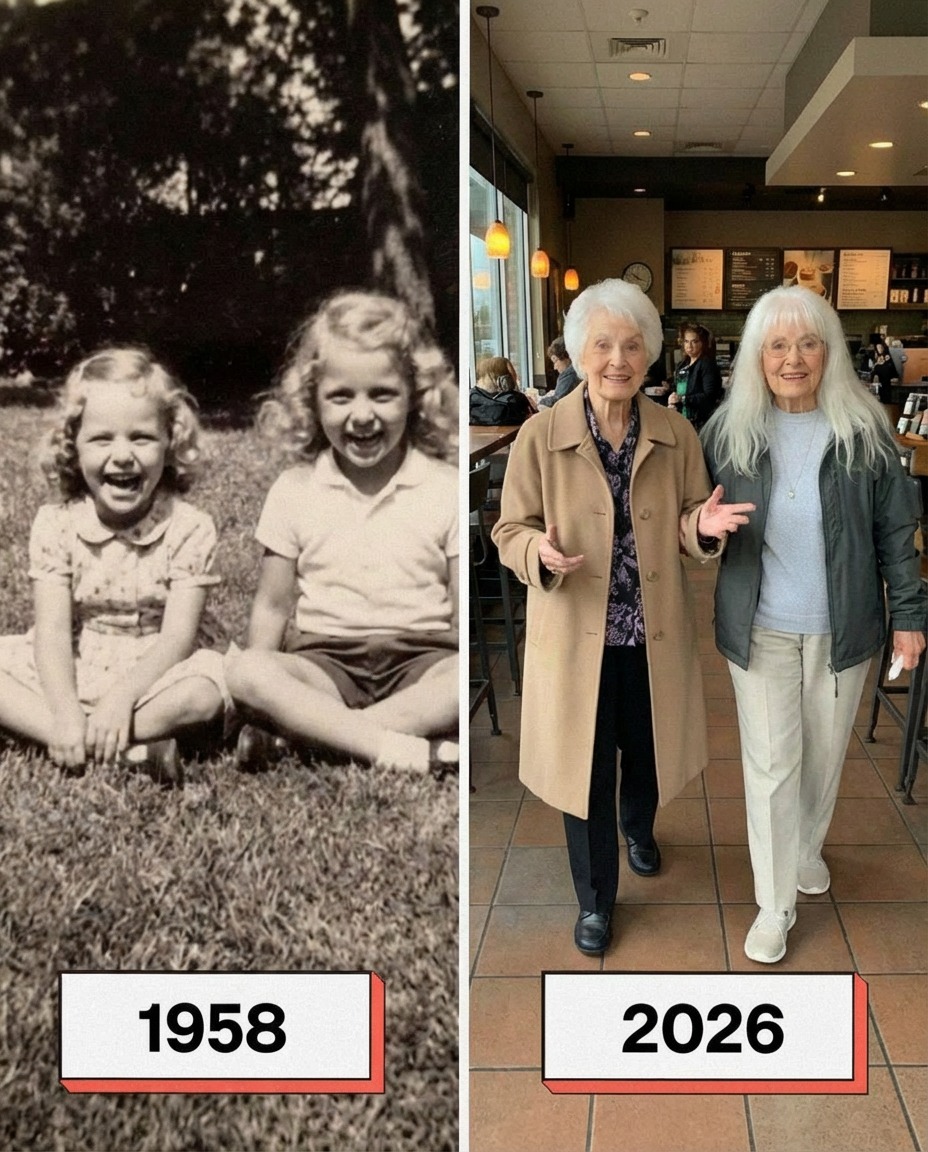
When I was five years old, my childhood was quietly divided into two parts: before and after my twin sister disappeared. Until then, she was simply part of my world. We shared a bed, shared toys, shared secrets only children understand. I don’t remember a day when she wasn’t there—until suddenly, she wasn’t.
My parents told me the police had found her near the woods behind our home. I was too young to understand what that truly meant, but I understood enough to feel the sudden emptiness. After that day, her name stopped being spoken in our house. There was no service I remember, no grave I was taken to see, no photographs brought out to honor her. The house simply became quieter, as if a door had closed and no one dared to open it again.
As I grew older, I realized that silence had rules. Every time I asked about my sister, my parents’ faces would tighten with pain, and the conversation would end before it began. Eventually, I learned not to ask. I carried the loss quietly, even though I never truly understood it. It was the kind of grief that had no shape and no place to rest.
Life went on, as it always does. I became a teenager, then an adult. I married, raised children, and later held my grandchildren in my arms. From the outside, my life looked full and complete. But there were moments when something felt unfinished. Sometimes I would set out two plates without thinking. Other times, I would wake from dreams where I could hear a familiar laugh or voice I couldn’t quite place. When I looked in the mirror, I often wondered who my sister would have been, how life might have shaped her face alongside mine.
My parents passed away without ever sharing more of the story. With them went the possibility of answers. Over time, I accepted that the truth might never come. I told myself that some chapters of life remain closed forever, and that learning to live without answers was part of growing older.
Then, at 73 years old, everything changed on an ordinary morning.
I was visiting my granddaughter and stopped at a small café for breakfast. As I sat there, sipping coffee and watching the room, I heard a woman speaking nearby. Something about her voice caught my attention. I looked up—and my breath stopped. Sitting only a few feet away was a woman who looked exactly like me. Not just similar. Identical. The same eyes, the same expressions, even the same lines etched by time and experience.
We both noticed the resemblance at the same moment. Conversation followed, hesitant at first, then urgent. She told me she had been adopted as a child. She said questions about her birth were always met with avoidance, as if the past was something best left untouched. The more we spoke, the more our stories began to align in unsettling ways. What started as disbelief slowly turned into cautious hope.
Later, while sorting through old belongings my parents had left behind, I found the answers they never gave me. Tucked away in worn papers was the truth: my mother had been forced to give up a daughter years earlier. A daughter I was never told existed. The realization was painful, but it also explained decades of silence.
DNA testing confirmed what our hearts already knew. We were sisters.
There was no dramatic moment that erased the lost years. No way to recover childhood memories or shared milestones that never happened. But there was something just as powerful—understanding. The silence that shaped my life finally made sense. Pain doesn’t excuse secrecy, but it can explain it.
After nearly seventy years, the missing piece of my life was no longer a question. She wasn’t a memory or a mystery anymore. She was real, living, and sitting across from me—not as a ghost from the past, but as a truth finally found.