
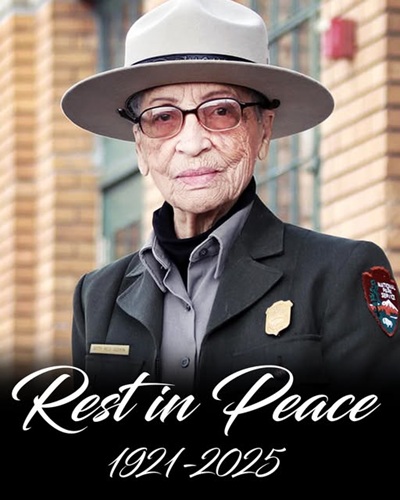
Remembering the Life and Legacy of Ranger Betty Reid Soskin
Ranger Betty Reid Soskin was more than a public servant; she was a living bridge between history and the present. Her life, which spanned more than a century, reflected profound changes in American society, and her work ensured that those changes would be remembered honestly.
When she became a National Park Service ranger at the age of 85, she didn't just take a job. She took on a mission: to make sure the stories that history books left out would be told by someone who had lived them.
A Century of American Life
Born in 1921, Betty Reid Soskin lived through chapters of American history that most people only read about:
- The Great Depression, which shaped her generation's relationship with work, saving, and resilience.
- World War II, during which she worked as a file clerk for the Boilermakers Union, an experience that later informed her historical perspective.
- The Civil Rights Movement, which she witnessed and participated in from her home in the San Francisco Bay Area.
- The turn of the millennium and beyond, as she became one of the most beloved figures in the National Park Service.
To live 100-plus years is remarkable. To spend those years observing, questioning, and eventually teaching American history is extraordinary.
Challenging the Official Story
Soskin's most significant contribution was her insistence on telling the full story of World War II's home front, including the parts that made people uncomfortable.
At the Rosie the Riveter/World War II Home Front National Historical Park in Richmond, California, she drew massive crowds. But she didn't offer a simple celebration of wartime unity. Instead, she spoke honestly about segregation, discrimination, and the gap between America's democratic ideals and its practices, particularly for Black Americans who served and sacrificed while being denied basic rights.
Her perspective was shaped by personal experience. As a young Black woman working in a wartime union hall, she had seen firsthand how opportunity and exclusion operated side by side. Decades later, she used that memory to deepen the public's understanding of history.
Why Her Voice Mattered
Official histories tend to smooth rough edges. Soskin roughened them back up, and that was precisely her value:
- She spoke from lived experience. This wasn't academic history; it was memory, which carries a different and irreplaceable authority.
- She centered marginalized voices. The home front story had long focused on white women's contributions. Soskin insisted on including Black workers, and the complexity of their experience.
- She modeled intellectual honesty. She was willing to say that the history she was employed to interpret was incomplete, and then to complete it.
- She proved it's never too late. Becoming a park ranger at 85, she demolished every assumption about what older adults can contribute.
The Power of the Park Ranger
There's something fitting about Soskin's role. Park rangers are among the most trusted voices in American public life, and for good reason: they teach without preaching, they welcome questions, and they connect abstract history to physical places.
Soskin elevated that role. Visitors didn't just learn about Richmond's shipyards; they encountered a woman who had been there, who remembered, and who refused to let comfort replace truth. Her programs regularly filled to capacity, with people traveling from across the country to hear her speak.
Lessons From a Life Well Examined
- Truth is a form of respect. Soskin believed audiences deserved the whole story, not just the flattering parts. That respect built her enormous following.
- Age is not an expiration date. Her most influential work began at an age when most people have been retired for two decades.
- Memory is a civic resource. Personal recollection, shared generously, becomes public history. Everyone who remembers has something to contribute.
- Comfort is not the goal of history. The purpose of remembering is understanding, and understanding sometimes requires discomfort.
- One voice can shift a narrative. A single ranger, speaking plainly, changed how thousands of people understood World War II.
Honoring Her Legacy Today
The best way to honor Betty Reid Soskin is to do what she did: tell the fuller story.
- Visit the Rosie the Riveter park in Richmond, California, where her work continues through the programs she shaped.
- Support the National Park Service and the rangers who carry on interpretive work nationwide.
- Record your own family's stories. Interview older relatives. Write down what they remember. Memory fades; recordings endure.
- Seek out complete histories. When learning about any era, ask whose voices are missing and go find them.
- Speak plainly about the past. Comfort and truth are sometimes in tension. Choose truth.
The Takeaway
Ranger Betty Reid Soskin lived more than a century, and she spent her final working decades making sure America remembered itself honestly. She was a file clerk, a mother, a community member, and eventually, one of the most beloved rangers in the history of the National Park Service.
Her life is proof that history isn't just something that happens to us. It's something we carry, something we interpret, and, if we're brave enough, something we tell truthfully. She was brave enough. The rest is up to us.
Frequently Asked Questions
Who was Betty Reid Soskin?
She was a National Park Service ranger at the Rosie the Riveter/World War II Home Front National Historical Park in Richmond, California, known for her candid, inclusive interpretation of wartime history. She began the role at age 85.
What made her historical talks distinctive?
She insisted on telling the complete story of the WWII home front, including segregation and discrimination faced by Black Americans, rather than offering only a celebratory narrative.
How long did she live?
Her life spanned more than a century, from 1921 into the 2020s, giving her firsthand perspective on the Depression, WWII, the Civil Rights Movement, and the modern era.
Where can I learn more about the history she interpreted?
The Rosie the Riveter/World War II Home Front National Historical Park in Richmond, California, continues to offer programs on the home front experience.
How can I preserve my own family's history?
Interview older relatives with a recorder or phone, label old photographs, write down family stories, and consider donating significant materials to local historical societies or archives.



