
She Barked Softly at Dawn, Hoping Someone Would Finally Hear Her Cry. And Then, Everything Changed
At first light, when most of the world was still asleep, a faint bark echoed from the edge of a quiet yard. It was not loud or demanding. It was soft, almost like a whisper, as if the one making it was not sure anyone would ever listen.
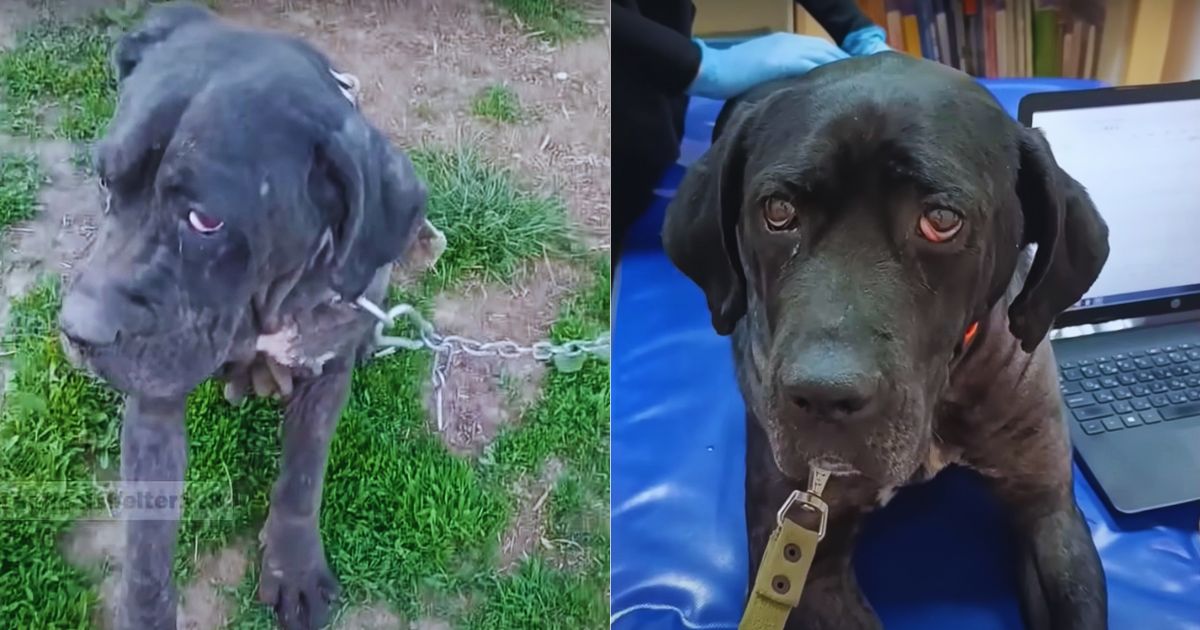
There she stood, a thin chain pulling taut against her neck. When she saw us, her eyes widened in both surprise and desperate hope. She tried to step forward, but the chain held her back. Her fur was tangled and dirty, her ribs clearly visible beneath her frail frame. Days had passed without proper food, and the collar around her neck had rubbed her skin raw. She lifted one paw gently, almost like a plea for help.
We knelt beside her. No wagging tail. No spark of joy. Just silence and stillness. From the porch, a man's voice cut through the morning air: "Take her far away." And so we did.
The Moment Everything Changed
The moment the chain came loose, she did not run. She did not even look back. She simply stared down the empty road as if wondering what would come next. In the car, she lay quietly, head down, body trembling.
When we arrived at the shelter, she was given warmth, food, and a soft bed for the first time in years. Yet she remained motionless, eyes open but guarded. That night, I sat with her, holding her paw. "Trust me," I whispered. She did not blink, but she did not pull away either.
The next morning, she sniffed the air and took a few hesitant steps. Around her, other dogs barked happily and chased toys. She stayed close to the wall, watching. She was learning, slowly, that the world could be different from the one she had known.
Why Rescue Stories Like Hers Matter
Her story is one of thousands that play out every year. Dogs are surrendered, abandoned, or neglected for reasons that often have nothing to do with the animal: financial hardship, housing changes, or simple indifference. What makes her story resonate is how clearly it shows both the depth of suffering and the possibility of recovery.
Neglected dogs often arrive at shelters in a state of shutdown. They have learned that hoping leads to disappointment, so they stop hoping. The stillness she showed, the lack of tail wagging, the guarded eyes, are classic signs of a dog that has given up expecting kindness.
But dogs are remarkably resilient. With patience, consistent care, and gentle handling, even the most shut down animals can learn to trust again. Her hesitant steps the next morning were the first small signs of that resilience waking up.
The Long Road From Survival to Trust
Rehabilitating a neglected dog is not a single moment. It is a slow process with milestones that might seem tiny to an outsider but feel enormous to everyone involved.
- Safety first: A warm bed, regular meals, and clean water establish the foundation. For a dog that has known hunger and cold, consistency is revolutionary.
- Medical care: Malnourished dogs need veterinary assessment, proper refeeding, treatment for skin and coat damage, and vaccinations.
- Patience over pressure: Forcing interaction can set a fearful dog back. Letting her approach on her own terms builds genuine confidence.
- Positive experiences: Gentle touch, calm voices, and predictable routines teach her that people can be safe.
- Social learning: Watching happy, confident dogs play shows a shut down dog what joy looks like. She stayed near the wall at first, but observation is itself a form of learning.
- Celebrating small wins: A sniffed hand, a few steps forward, a moment of relaxed posture. Each one is progress worth noting.
The night spent sitting with her, holding her paw, was not wasted time. For a dog learning to trust, quiet companionship is one of the most powerful tools there is.
The Bigger Picture: Neglect and What We Can Do
Her thin frame, raw skin, and tangled fur tell a story of prolonged neglect. Situations like hers often go unnoticed because they happen behind fences and closed doors. The soft bark at dawn was, in a real sense, her asking for help the only way she knew how.
There are practical ways to help dogs in similar situations:
- Report suspected neglect: Animal control agencies depend on community reports. A thin, chained, or unsheltered dog is worth a phone call.
- Support local shelters: Donations of money, food, blankets, and time keep rescue operations running.
- Foster: Fostering gives a shut down dog a home environment where trust can grow faster than in a kennel.
- Adopt, don't shop, when you can: Every adopted dog opens a kennel space for the next rescue.
- Spay and neuter: Reducing unwanted litters prevents countless cases of neglect before they start.
- Speak up kindly: Sometimes neglect comes from ignorance rather than cruelty. Offering resources or help can change an outcome.
What Her Eyes Were Really Saying
When she looked at us with widened eyes, full of surprise and desperate hope, she was doing something brave. After years of disappointment, she was still willing to try one more time. That soft bark was not just sound. It was a question: is anyone out there?
The answer, that morning, was yes. And her life changed because someone listened.
Her journey from a chain in a quiet yard to a soft bed in a shelter is not finished. Trust takes time, and healing is rarely a straight line. But the hardest step, the first one, is behind her. She took it the moment she lifted her paw and asked for help.
Frequently Asked Questions
What are the signs of a neglected dog?
Visible ribs, tangled or matted fur, untreated wounds, raw skin from collars, fearfulness, and extreme thinness are common signs. A dog that is always chained or left outside without shelter may also be neglected.
How long does it take a rescued dog to trust people?
It varies widely. Some dogs warm up in days, while severely neglected dogs may need weeks or months. Patience, routine, and gentle handling are the most important factors.
What should I do if I suspect a neighbor is neglecting their dog?
Contact your local animal control agency or humane society. Provide specific observations, such as lack of food, water, shelter, or visible health problems. You can usually report anonymously.
Is fostering a shut down dog difficult?
It requires patience, but many fosters describe it as deeply rewarding. Shelters typically provide guidance, veterinary support, and supplies to help fosters succeed.
Why do some rescued dogs freeze instead of showing happiness?
Freezing or shutdown is a stress response. Dogs that have learned that excitement or neediness brings no relief may suppress all emotion as a coping strategy. With safety and time, their personality usually re emerges.
She barked softly at dawn, not knowing if anyone would hear. Someone did. And in that small, quiet moment, everything changed, for her and for everyone who witnessed what a little compassion can do.



