Starving Dog Covered in Quills Makes Eye Contact and Her Life Changes Forever
In Sweetwater, Texas, an ordinary drive home from work turned into a rescue that would change two lives. Bri Burnett received a message from a friend who had spotted a dog wandering near Lake Trammell, along with a photograph that stopped her cold. The image showed a visibly starving dog, her eyes full of pain, silently begging for help. Bri did not continue home. She turned around and rushed to the scene. What she found there was worse than the picture had suggested, and what happened next is a testament to what one person's compassion can do.
A Dog in Critical Condition
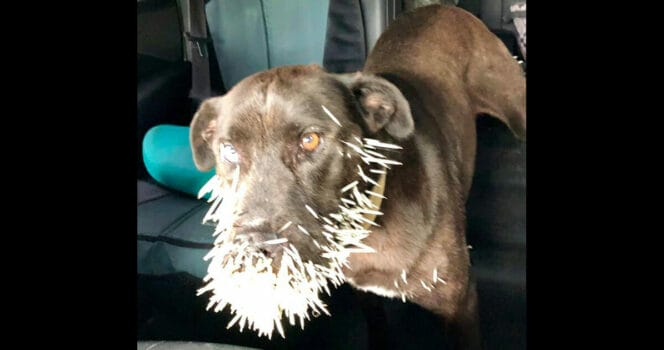
The dog, who would later be named JoJo, was in a desperate state. She was severely malnourished, her body showing the unmistakable signs of a dog who had gone without adequate food for a long time. But starvation was only part of her suffering. Her mouth and face were covered in porcupine quills, the painful aftermath of an encounter with a porcupine that she had clearly lost.
It was obvious she had been suffering for some time, and without intervention she might not have survived much longer. Yet even in that condition, something in JoJo reached out. Bri gently approached her, earning just enough trust to lift her into the car. Then she drove straight to the veterinarian, wasting no time.
Why Porcupine Quills Are So Dangerous
To understand what JoJo was enduring, it helps to know what porcupine quills do. Quills are barbed, which means they slide in easily but resist coming back out. Worse, they can migrate deeper into tissue over time, moving inward with the dog's muscle movements. Quills embedded around the mouth and face, where JoJo's were concentrated, are especially serious: they make eating and drinking excruciating, they can work their way toward eyes, nasal passages, and even deeper structures, and every broken or retained quill fragment invites infection.
This is why veterinarians strongly advise against pulling quills out at home. Improper removal can snap quills, leaving barbed fragments buried under the skin, and a dog in that much pain may bite even the most trusted person. The standard veterinary approach is exactly what JoJo received: sedation, so the dog feels nothing and stays perfectly still, followed by careful, complete removal of every quill, often with follow up checks for fragments and infection.
For JoJo, that painstaking process took over 45 minutes. She stayed overnight at the clinic for observation, and by the next day she was on the road to recovery.
The Road Back From Starvation
Quill removal was only the first battle. JoJo was also severely malnourished, and bringing a starving dog back to health is a careful medical process, not simply a matter of offering a big meal. Veterinarians typically reintroduce food gradually, with small, frequent meals of easily digestible food, because a starved body's systems need time to adjust. Too much food too fast can cause dangerous complications.
Rehabilitation also means addressing everything starvation has weakened: dehydration, possible parasite loads, depleted muscle, and a compromised immune system. Each of those gets evaluated and treated step by step. JoJo's overnight observation gave the veterinary team the chance to monitor her closely through the riskiest part of that process, and her steady improvement the next day was the first real sign that she was going to make it.
Just as important was the emotional side of recovery. A dog who has survived alone, hungry and in pain, needs to learn that human hands bring comfort now. Bri's gentle approach at the lakeside, lifting a terrified, hurting dog with care rather than grabbing, set the tone for everything that followed.
No Owner to Be Found
As JoJo stabilized, efforts began to find where she had come from. She had a microchip, which should have been the fastest route home. But the contact information on the chip was outdated, and the trail went cold. There would be no reunion with a previous owner. JoJo's old life, whatever it had been, was over.
This is one of the most practical lessons in her story, and it applies to every pet owner reading it: a microchip is only as useful as the information attached to it. Chips migrate, registries change, phone numbers change, people move. Checking your pet's chip registration once a year, and updating it immediately after any move or phone number change, takes minutes and can be the difference between a lost dog coming home and a lost dog never being identified. JoJo's outdated chip meant her past stayed a mystery, but it also cleared the way for her future.
A Facebook Post and an Instant Connection
With no owner to claim her, Bri turned to Facebook, sharing JoJo's journey in the hope of finding her a new, loving home. The post worked exactly as hoped. Haylee Stewart saw it and felt an instant connection, the kind of pull that experienced rescuers recognize immediately.
When Haylee met JoJo in person, the bond was undeniable. JoJo walked up to her and gently licked her hand. Anyone who has watched a previously terrified rescue dog choose a person knows what that small gesture means. It was trust, offered freely by a dog who had every reason to withhold it. It was clear to everyone watching: they belonged together.
A Bright Future
Today, JoJo is living her best life. She enjoys sunny days by the lake, the warmth of a loving family, and the simple, daily pleasures that were denied to her for so long: regular meals, soft places to sleep, and people who adore her. Her transformation from a painful, lonely existence to a joyful, playful companion is nothing short of remarkable.
JoJo's story is a beautiful reminder of the power of compassion and the difference one person can make. Bri could have kept driving. Instead, she turned around, and that single decision set off a chain of events: a 45 minute surgery, a night of careful monitoring, a Facebook post, and finally a hand-lick that sealed a forever bond. In a world where so many animals are left behind, one act of kindness can create an entirely new beginning.
What To Do If You Find a Distressed Stray Dog
JoJo's rescue went well because Bri did several things right. If you ever encounter a stray dog in distress, these general guidelines help keep both you and the dog safe:
Approach slowly and calmly. A frightened, injured dog may bite out of pain or fear. Move gently, speak softly, avoid direct staring, and let the dog come to you if possible.
Do not attempt medical treatment yourself. As JoJo's case shows, things like embedded quills require sedation and professional removal. Your job is transport, not treatment.
Get the dog to a vet or shelter promptly. Time matters with injuries, dehydration, and starvation. If you cannot safely contain the dog, call animal control and stay nearby if it is safe to do so.
Check for identification. Look for tags, and ask any vet or shelter to scan for a microchip. It is free and takes seconds.
Spread the word responsibly. Social media posts with a clear photo, location found, and your contact information help reunite lost dogs with owners or find them new homes, just as Bri's post did for JoJo.
How You Can Help
JoJo's story had a happy ending because a network of compassion surrounded her. Here are general ways you can be part of that network:
Adopt. Dogs recovering from hardship need patient, loving homes. Ask rescues about a dog's medical background so you know what to expect.
Foster. A calm home environment is where injured and malnourished dogs heal fastest. Fosters literally save lives by freeing up space and providing recovery care.
Donate. Emergency veterinary care, like JoJo's 45 minute quill removal surgery and overnight hospitalization, is expensive. Donations keep rescues able to say yes to the next critical case.
Volunteer. Transport help, fundraising, socialization, and administrative support all keep rescue organizations running.
Spay and neuter. Fewer unwanted litters means fewer dogs facing life on the streets, where encounters with porcupines, hunger, and injury await.
Keep your pet's microchip current. Verify the registration details every year. It is one of the simplest, cheapest protections you can give your dog.
This article is for informational purposes only. If your pet shows concerning symptoms, please consult a licensed veterinarian.