Legs are often seen as the body’s steady support system—helping us walk, climb stairs, and move through everyday life. Yet in conversations about fashion, posture, and personal style, they’re also viewed as subtle indicators of how someone carries themselves. From runway looks to fitness routines, leg shape has long influenced the way people dress, pose, and express their individuality.
While these observations are fun to explore, they’re not based on medical science. Instead, they offer a lighthearted way to appreciate how posture and movement make each person’s silhouette unique. When viewed with curiosity rather than comparison, leg shapes simply highlight natural variations in balance and rhythm.
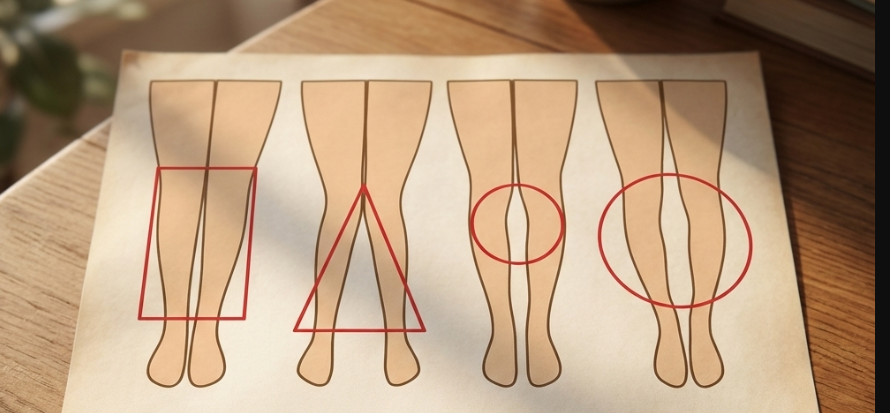
Much of what shapes the legs comes down to familiar factors such as genetics, bone alignment, muscle distribution, and natural body structure. Some people notice their legs meet more at the knees, others at the thighs or ankles—all of which are normal. Straight, parallel legs often give an impression of alignment and easy movement.
The commonly mentioned “diamond gap,” created by space around the knees, is a natural variation many people have without realizing it. The widely discussed “thigh gap” also relates mostly to pelvic width rather than fitness, something experts often point out to emphasize that it is neither universal nor a measure of health. Slight inward angles or gentle curves are simply the result of joint positioning and can influence how someone stands or walks.
These differences can subtly affect gait, which is why people sometimes associate leg shapes with certain styles or characteristics—always in a fun, non-serious way. Straight legs might be linked to confident posture, inward angles to a soft, flowing movement, and curved legs to an energetic stride.
Fashion trends often play off these natural variations. Wide-leg trousers, fitted jeans, athletic wear, and flowing skirts all highlight different lines and shapes, allowing people to choose what feels most comfortable and expressive. Fitness activities—whether yoga, cycling, running, or dance—also influence how someone moves, adding muscle tone or flexibility that enhances natural posture.
At the heart of it, leg shape doesn’t define beauty, worth, or identity. It’s simply one aspect of human diversity, shaped by heritage, growth, posture, and everyday habits. While some enjoy exploring personality-based interpretations or style suggestions, most leg shapes are completely normal and harmless. Strength exercises can build muscle, stretching can increase flexibility, and regular activity supports better balance—but underlying alignment is mostly determined by bone structure.
What truly stands out is individuality. Each person’s alignment, proportions, and movement patterns create a signature presence that cannot be copied. Embracing that diversity reminds us that comfort, strength, and confidence matter far more than symmetry or trends. Our bodies support us through every step, and leg shape is just one natural expression of that remarkable design.