
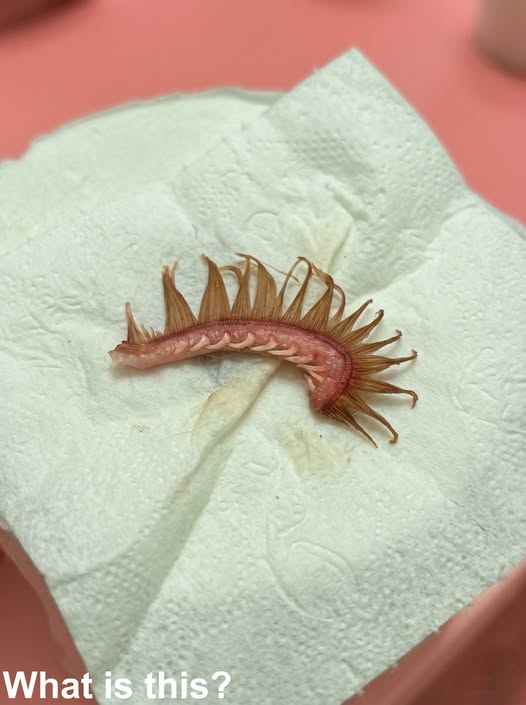
What We Thought Was Stuck in Our Dog's Fur Turned Out to Be Something Completely Unexpected
Fear has a way of turning ordinary moments into stressful situations almost instantly. One evening, my girlfriend came home after walking our dog, and everything seemed completely normal at first. But within minutes, we noticed something unusual tangled deep in his fur. It was pale, oddly shaped, and slightly translucent. At first glance, it didn't look like anything familiar.
Naturally, our minds started jumping to uncomfortable conclusions. Was it some kind of insect? A strange plant? Something harmful he had picked up outside? The uncertainty alone was enough to make us nervous.
We carefully moved his fur aside to get a closer look. Meanwhile, our dog seemed completely relaxed, wagging his tail and acting as cheerful as ever. That contrast only made the situation more confusing. If something was wrong, why did he seem perfectly fine?
Still, curiosity and concern quickly took over. We started discussing whether we might need to call the vet or schedule an appointment just to be safe. Like many people in unexpected situations, we let our imaginations race ahead before knowing the full story.
After a few minutes, we decided to gently rinse the object with water under brighter lighting so we could examine it more clearly. Almost immediately, the mystery disappeared. What had looked so alarming turned out to be nothing more than a pair of fake eyelashes that had somehow become stuck in our dog's fur during the walk. Once the water loosened them, the shape became obvious.
For a brief moment, nobody said anything. Then the relief kicked in, followed by laughter that we honestly could not control. The entire situation had gone from stressful to hilarious in seconds.
Looking back, the experience became a funny reminder of how easily uncertainty can create panic. Sometimes the things we fear most turn out to be completely harmless, just everyday objects appearing strange in the wrong moment.
Why Our Brains Jump to the Worst Conclusion
What happened to us is something almost every pet owner recognizes. Psychologists call it catastrophic thinking: when faced with an unknown, the mind skips past the boring explanations and lands on the scariest one. It is an old survival instinct. Thousands of years ago, assuming the rustle in the grass was a predator kept our ancestors alive. Today, that same wiring turns a pair of fake eyelashes into a suspected parasite.
Add love to the equation and the effect multiplies. Our dog couldn't tell us what happened, so we filled the silence with worry. The fact that he was wagging his tail and completely unbothered should have been our biggest clue, but concern is louder than logic when someone you love might be in trouble.
The takeaway is not to stop caring. It is to build a small pause between noticing something and panicking about it. Observe first, investigate calmly, and escalate only if the evidence points that way.
What Actually Gets Tangled in Dog Fur
Our mystery object turned out to be harmless litter, but dogs do pick up all kinds of things on walks. Knowing the usual suspects makes the next surprise easier to identify:
- Burrs and foxtails. These barbed seeds cling to fur and can work their way into skin, ears, or paws. Foxtails in particular can cause real problems and should be removed promptly.
- Ticks. Small, dark, and firmly attached to the skin rather than tangled in fur. These deserve a vet's attention if you are unsure how to remove them safely.
- Sap, tar, or chewing gum. Sticky substances mat the fur and can irritate skin. Coconut oil or peanut butter can help loosen gum; never use harsh solvents.
- Litter and debris. Plastic strips, paper, elastic bands, and yes, discarded fake eyelashes. Urban walks are full of strange human leftovers.
- Mats and tangles. Sometimes the "foreign object" is just the dog's own fur, matted into a strange shape, especially in long-coated breeds.
A calm, methodical check is almost always better than a frantic one. Good lighting, which solved our mystery, is genuinely half the battle.
How to Check Your Dog After Every Walk
Making a quick post-walk check part of your routine takes two minutes and prevents most surprises from becoming problems:
- Run your hands over the whole body. Feel for lumps, tangles, sticky spots, or anything attached to the skin. Dogs usually enjoy this as bonus petting.
- Look between the toes and paw pads. Thorns, seeds, and small stones hide here and can cause limping later.
- Check the ears. Lift the flaps and peek inside. Seeds and ticks love warm, sheltered ears.
- Part the fur in a few spots. Especially around the belly, armpits, and behind the ears, where mats form fastest.
- Keep a small grooming kit handy. A fine comb, blunt-tipped scissors for mats (cutting away from the skin, never toward it), and pet-safe wipes cover most situations.
If you find something you cannot identify or that seems embedded in the skin, take a photo and call your vet for advice before pulling at it.
When to Actually Call the Vet
Our story ended with laughter, but it is worth knowing the line between "funny mystery" and "real problem." Contact your vet if you notice any of the following after finding something in your dog's fur or on a walk:
- Redness, swelling, or a wound where the object was attached
- Persistent scratching, licking, or head shaking focused on one spot
- Limping or reluctance to walk
- Lethargy, loss of appetite, or behavior changes in the hours after the walk
- Anything deeply embedded in skin, eyes, ears, or nose
When in doubt, a quick call costs nothing. Vets would much rather reassure you about fake eyelashes than treat a foxtail that migrated for a week.
The Lesson Hidden in the Laughter
We still laugh about the eyelash incident, and our dog, oblivious to the drama, just enjoyed the extra attention and the rinse. But the evening taught us something useful: most scares with our pets resolve into nothing, and the calm approach we eventually stumbled into (better light, gentle water, a closer look) is the right first move every time.
So the next time you spot something strange in your dog's fur, take a breath, grab a flashlight, and investigate before you catastrophize. There is a good chance the culprit is far funnier than you fear. And if it does turn out to be something serious, you will have caught it early, which is exactly what good pet parenting looks like.
Sometimes the things we fear most turn out to be completely harmless. And sometimes they give us the best story to tell at dinner.



