I wasn’t searching for anything special when I stopped at a small neighborhood yard sale one quiet Saturday morning.
Like most weekend sales, it was filled with a little bit of everything — old books, mismatched dishes, faded picture frames, and tools that looked like they had not been touched in years. I almost walked past without noticing it.
Then I saw the vintage laundry wringer sitting quietly on the corner of a folding table.
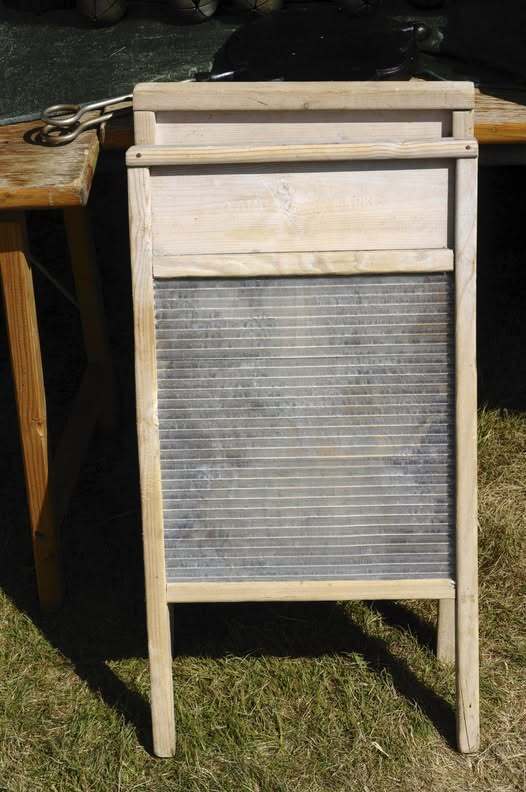
Its weathered wooden frame and heavy iron rollers immediately caught my attention. The surface showed years of wear, with scratches, faded paint, and rusted metal details that hinted at decades of use. Even surrounded by piles of forgotten household items, it stood out as something meaningful.
At first, I viewed it as an interesting antique. But the longer I looked at it, the more I realized it represented far more than a simple household tool.
Before electric washing machines became common in homes, laundry was a demanding chore that required time, energy, and patience. Families often spent entire days washing clothes by hand. Water had to be carried, heated, and carefully reused. Clothing was scrubbed manually, rinsed repeatedly, and finally passed through wringers like this one to remove excess water before being hung outside to dry.
For many households, these weekly routines were physically exhausting but essential. Everyday tools such as laundry wringers played an important role in helping families manage daily life more efficiently.
The wringer’s iron rollers were designed to squeeze water from heavy fabrics, reducing drying time and making laundry easier to handle. Though simple by modern standards, it was once considered a practical innovation that saved both labor and effort.
Holding the wooden handle in my hand, I could not help imagining how many people may have used it over the years. Perhaps it stood in a busy family kitchen decades ago while conversations filled the room. Maybe children played nearby while parents worked through baskets of freshly washed clothing. It may have been passed down through generations before eventually finding its way onto that yard sale table.
Objects like this often carry quiet reminders of everyday history.
Unlike rare museum artifacts or expensive collectibles, household tools tell stories about ordinary people and daily routines. They reveal how families adapted to the challenges of their time using creativity, hard work, and durable craftsmanship.
Today, most people complete laundry in minutes using modern appliances. Washing machines and dryers have transformed one of the most labor-intensive household chores into something convenient and automatic. While modern technology has improved comfort and efficiency, seeing this vintage wringer offered a powerful reminder of how different daily life once looked.
It also highlighted the remarkable durability of older tools. Despite its age, the wringer still appeared functional. The sturdy construction reflected a time when many household items were built to last for years rather than replaced quickly.
As interest in vintage décor and historical collectibles continues to grow, pieces like antique laundry wringers have become popular among collectors, homeowners, and history enthusiasts alike. Some people display them as decorative conversation pieces, while others appreciate the glimpse they provide into life before modern appliances.
After bringing the wringer home, I placed it on a shelf in my living room where it immediately became a topic of conversation. Friends and family members often stop to examine it, sharing stories about grandparents or relatives who once used similar tools.
What surprised me most was how such a simple object could inspire reflection about everyday life, family traditions, and changing technology.
In many ways, the laundry wringer serves as a reminder that history is not only found in famous events or grand landmarks. Sometimes it lives quietly inside ordinary household objects that once played a meaningful role in people’s daily routines.
In a world increasingly focused on speed and convenience, this vintage find offers something different — a connection to craftsmanship, resilience, and the simple routines that shaped generations before us.
And somehow, that old laundry wringer sitting on a yard sale table became much more than an antique. It became a small window into the past.