“Not everyone will understand your playing,” my son’s former music teacher once told him. At the time, it sounded like a limitation. Looking back now, it feels more like a misunderstanding.
My son has Down syndrome, and he experiences the world through a lens that is entirely his own. He notices small details others often miss—tones, pauses, emotions hidden between moments. Music, for him, has never been about perfection or rules. It has always been about connection.
When he first picked up a saxophone, he wasn’t drawn to reading sheet music or memorizing scales. Instead, he listened. He explored sound the way some people explore language—slowly, intuitively, and with intention. His teacher worried that he wasn’t staying “inside the lines,” encouraging him to follow the structure more closely. But my son was hearing something deeper. He wasn’t trying to perform; he was trying to express.
Jazz, after all, thrives on freedom. It lives in interpretation, emotion, and trust. And that’s where my son felt most at home.
He practiced constantly—after school, in quiet classrooms, empty hallways, and anywhere else that allowed him space to listen and experiment. He learned by trusting his ears and following what felt right. Watching him play was like watching a conversation unfold, one note at a time. Even when he didn’t realize it, he was learning how to improvise—not just in music, but in life.
Over time, his confidence grew. His sound became softer, richer, and more intentional. Music became his way of reaching people when words weren’t enough.
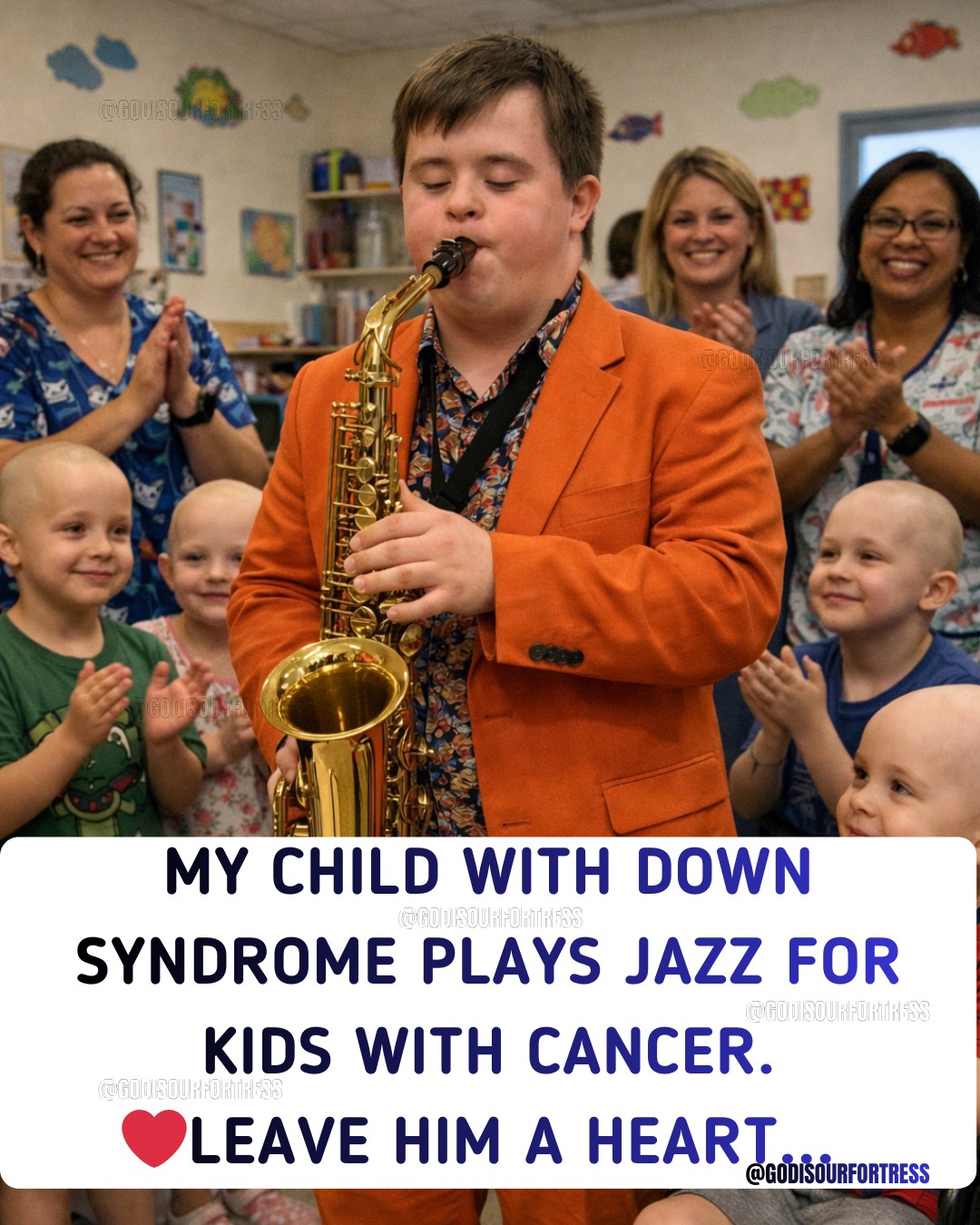
Today, he plays his saxophone in hospitals for children receiving long-term medical care. He walks into their rooms gently, carrying his instrument with care. He begins to play quietly, letting the music fill the space little by little. The usual noise fades. The rooms grow still.
Some children smile. Some close their eyes. Others simply listen, wrapped in the moment.
No one asks him to explain the music. They don’t need to. They understand it in the way that matters most—through feeling.
Not everyone may understand my son’s playing, and that’s okay. What matters is the peace it brings, the comfort it offers, and the reminder that beauty often comes in unexpected forms. Sometimes, the most meaningful connections are made without words—through patience, creativity, and quiet acts of kindness.