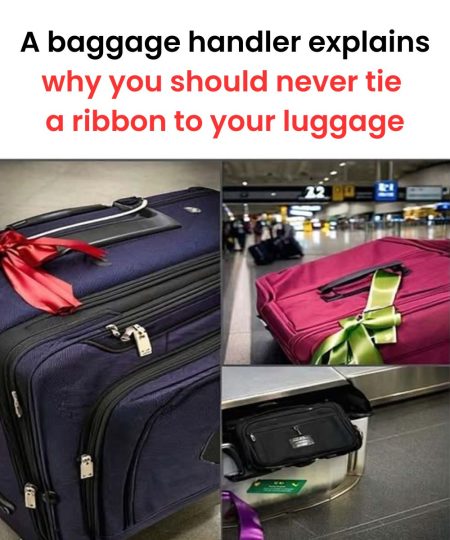
Many travelers add ribbons, straps, or extra tags to their suitcases to make them easier to spot at the airport. At first, this seems like a simple and practical idea. However, behind the scenes, these additions can create unexpected challenges. Airline staff and airport operators often discourage the use of loose accessories because they can interfere with how luggage is handled.
How modern baggage systems really work
Today’s airports rely on advanced automated baggage handling systems. Once a suitcase is checked in, it moves quickly through a network of conveyor belts, scanners, and sorting machines. These systems are carefully designed to read a single barcode and move bags efficiently toward the correct aircraft.
Loose items such as ribbons, straps, or dangling tags can interfere with this process. If an accessory gets caught or disrupts the smooth movement of the bag, the system may slow down or divert the suitcase for manual inspection. In some cases, this can delay the bag’s journey or prevent it from reaching the plane on time.
Why ribbons and straps can cause delays
Ribbons tied to luggage handles may help travelers recognize their bags, but automated scanners often interpret them as irregular shapes. When a bag cannot be scanned properly, it may be set aside for manual handling.
While manual checks are routine, they take more time. During busy travel periods or short layovers, this extra step can increase the chance of a bag arriving late or being placed on a later flight.
Straps wrapped around suitcases can also shift or loosen during transport. If this happens, they may interfere with conveyor belts or safety sensors, prompting staff to stop the system and address the issue.
Extra tags can lead to confusion
One of the most common issues airline staff notice is old or unused luggage tags left on suitcases. Previous airline barcodes, hotel tags, or cruise labels can confuse scanning systems.
Because baggage systems are designed to read one active barcode, multiple tags increase the risk of misrouting. A scanner may pick up an outdated tag and send the bag in the wrong direction. Removing old tags before each trip is a simple step that can help prevent this problem.
Decorative items are not built for airport conditions
Many decorative accessories are not designed to handle the conditions inside baggage systems. Suitcases are exposed to speed, pressure, friction, and frequent movement. Items added at home may come loose during transport.
When accessories break off, they can create delays, damage other luggage, or require staff to stop equipment to resolve the issue. What seems like a small personal choice can affect the efficiency of the entire system.
Safer ways to identify your luggage
Airline staff generally recommend these alternatives for easy identification:
-
Choose a suitcase with a distinctive color or pattern
-
Use a flat, durable luggage tag with clear contact information
-
Select bags with built-in features, such as colored wheels or a patterned shell
-
Place a copy of your contact details inside the suitcase
These options are compatible with baggage systems and reduce the risk of delays.
A simple habit that helps everyone
Most travelers add ribbons or straps with good intentions, hoping to avoid lost luggage. However, these accessories can unintentionally increase the risk they are meant to prevent.
Keeping your suitcase streamlined and easy to scan helps airport systems work efficiently and improves the chances that your bag arrives with you. Sometimes, the best way to protect your luggage is to keep it simple.