
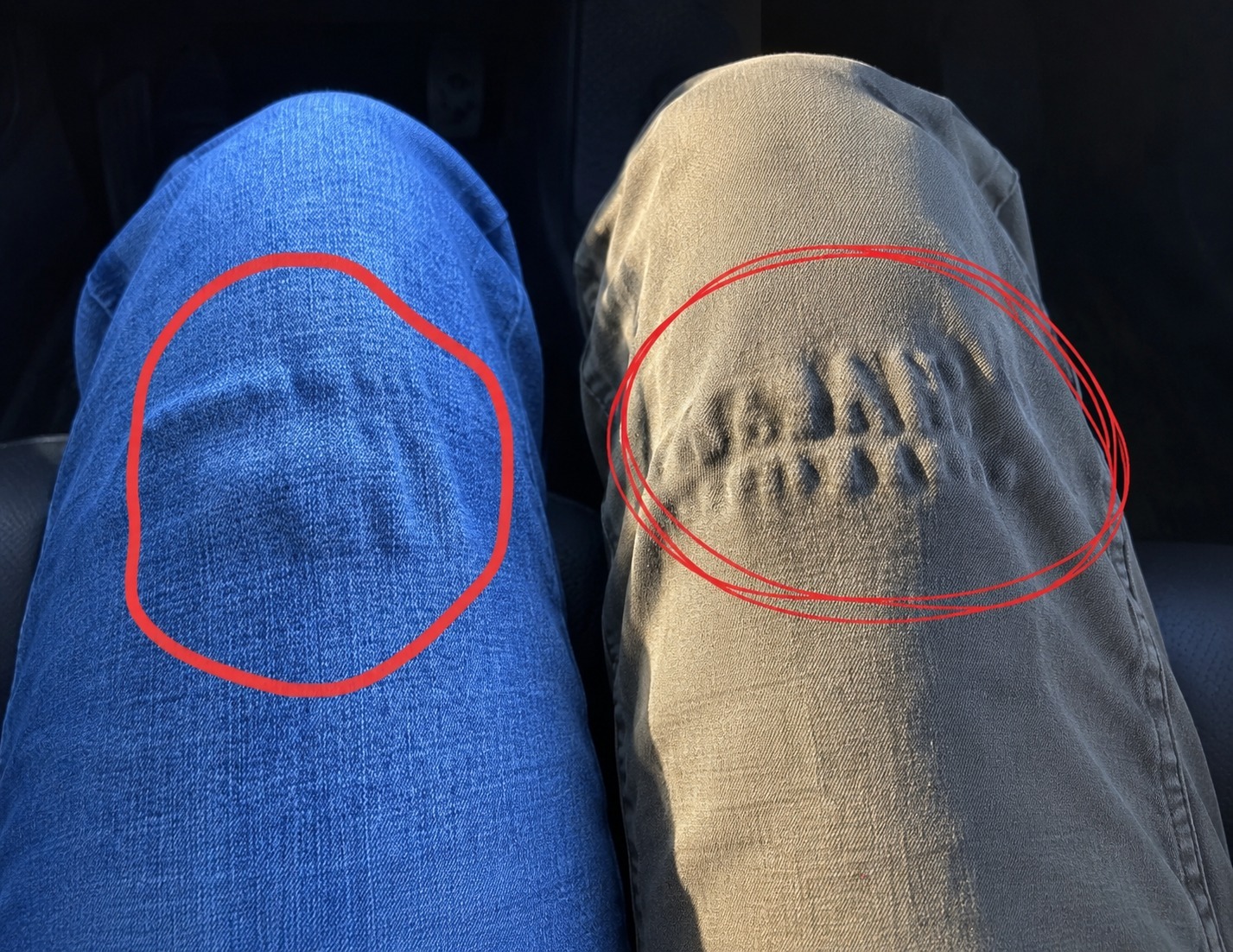
Why Your Jeans Get Those Weird Ripples After Washing
If you have ever noticed strange ripples, puckering, or wavy wrinkles appearing on your jeans after washing them, you are not alone. This common issue often happens because modern denim fabrics are made with a mix of cotton and stretch materials such as elastane. Understanding why it happens is the first step to preventing it.
The Stretch Fabric Factor
One of the biggest causes is heat exposure. Hot water and high dryer temperatures can weaken stretch fibers over time. Elastane, the fiber that gives jeans their stretch, is sensitive to heat. When exposed repeatedly to high temperatures, it loses elasticity unevenly: some areas retain their snap while others go slack.
When this happens, the surrounding denim may lose its original shape, creating uneven waves or wrinkles across the fabric. The cotton portion of the blend and the elastane portion respond differently to heat and moisture, and that differential response is what you see as rippling. Two fibers, two behaviors, one visible conflict.
Washing Too Often
Washing jeans too often can also contribute to the problem. Frequent washing gradually wears down fibers and may cause certain areas of the denim to shrink differently than others, especially in stretch-fit jeans. The knees, seat, and thighs experience the most stress during wear, and repeated wash cycles amplify the unevenness.
Denim enthusiasts have long advocated for less frequent washing, and the ripple problem is one more argument in their favor. Jeans do not need washing after every wear. Spot cleaning, airing out, and occasional full washes keep them fresh with far less fiber stress.
The Washing Machine's Role
Another factor is movement inside the washing machine. During a wash cycle, jeans can twist, bunch up, or stretch unevenly, particularly when the machine is overloaded. This uneven tension can leave visible puckering once the fabric dries.
Front-loaders are generally gentler than top-loaders with central agitators, which twist garments aggressively. But any machine can mangle jeans if the load is unbalanced or overstuffed. The jeans emerge having been stretched in directions they were never designed to go, and the stretch fibers remember.
Water Absorption and Uneven Drying
Water absorption also affects how denim looks after washing. Some sections of the fabric absorb more moisture than others, causing parts of the jeans to expand and shrink at different rates during drying. Thick seams, pockets, and waistbands dry at different speeds than flat panels, creating tension differentials that manifest as waves.
Crowded washers and dryers make the issue worse. Jeans that dry while folded, twisted, or tightly pressed against other clothing may develop creases and ripples that become difficult to smooth out later. The dryer, for all its convenience, is where most ripple damage is finalized: heat sets the unevenness into the fibers.
How to Prevent the Ripples
To help keep jeans looking their best, a few adjustments to your laundry routine make a large difference:
- Wash in cold water. Cold is kinder to elastane and reduces differential shrinkage between fibers.
- Turn jeans inside out. This protects the outer surface and reduces friction on the visible denim.
- Use a gentle cycle. Less agitation means less twisting and uneven stretching.
- Do not overload. Give jeans room to move freely rather than winding around other garments.
- Skip the dryer or use low heat. Air drying is the single best prevention. If you must use a dryer, low heat and prompt removal help.
- Reshape while damp. Smooth the jeans flat and gently pull them into shape before drying.
- Wash less often. Every skipped wash is fiber stress avoided.
Fixing Jeans That Already Ripple
If the damage is done, all is not lost:
- Rewash correctly (cold, gentle, inside out) and air dry flat, reshaping carefully. Often one proper cycle substantially reduces rippling.
- Steam them. A garment steamer or a hot shower's steam can relax fibers enough to smooth minor waves.
- Iron on low with a press cloth. Direct heat risks further elastane damage, but gentle pressing through cloth can flatten puckering.
- Wear them. Body heat and movement gradually relax minor rippling over a day of wear.
Severely heat-damaged elastane may not fully recover, but most rippling is at least partially reversible.
Choosing Jeans That Resist Rippling
If you are shopping, construction matters:
- Higher cotton content with modest elastane (1 to 2 percent) ripples less than high-stretch blends.
- Quality denim uses better elastane that withstands heat and washing more gracefully.
- Raw or rigid denim (100 percent cotton, no stretch) never ripples from elastane damage, though it has its own breaking-in demands.
- Reinforced stitching at stress points distributes tension more evenly.
The Denim Industry's Quiet Shift
It is worth noting that the ripple problem is partly a consequence of how jeans are made today. Decades ago, most jeans were 100 percent cotton rigid denim. They were stiff, they took weeks to break in, and they never rippled from heat damage because there was no elastane to damage. The trade-off was comfort: rigid denim restricts movement in ways modern wearers will not tolerate.
The industry's shift toward stretch blends was driven by consumer demand for comfort, and it succeeded wildly. But every engineering choice has consequences. Stretch denim trades long-term shape stability for immediate wearability. Understanding that trade-off helps set expectations: your comfortable jeans need gentler care than your grandfather's rigid pair did, because they are built from more delicate chemistry.
Some premium manufacturers are now experimenting with better elastane alternatives and heat-resistant stretch fibers specifically to address this weakness. Until those become standard, careful laundering remains the owner's best defense.
Frequently Asked Questions
What causes ripples in jeans after washing?
Heat damage to elastane stretch fibers, uneven shrinkage between cotton and elastane, twisting in the washer, and uneven drying. The fibers respond differently to heat and moisture, creating visible waves.
Does hot water cause the problem?
Yes, hot water and high dryer heat are the primary culprits. They weaken elastane unevenly, causing the surrounding denim to pucker.
How can I prevent jean rippling?
Wash cold and inside out on gentle, avoid overloading, skip the high-heat dryer in favor of air drying, reshape while damp, and wash less frequently.
Can rippled jeans be fixed?
Often yes. A proper cold wash with careful reshaping and flat air drying, plus steaming or gentle pressing, usually reduces rippling significantly.



