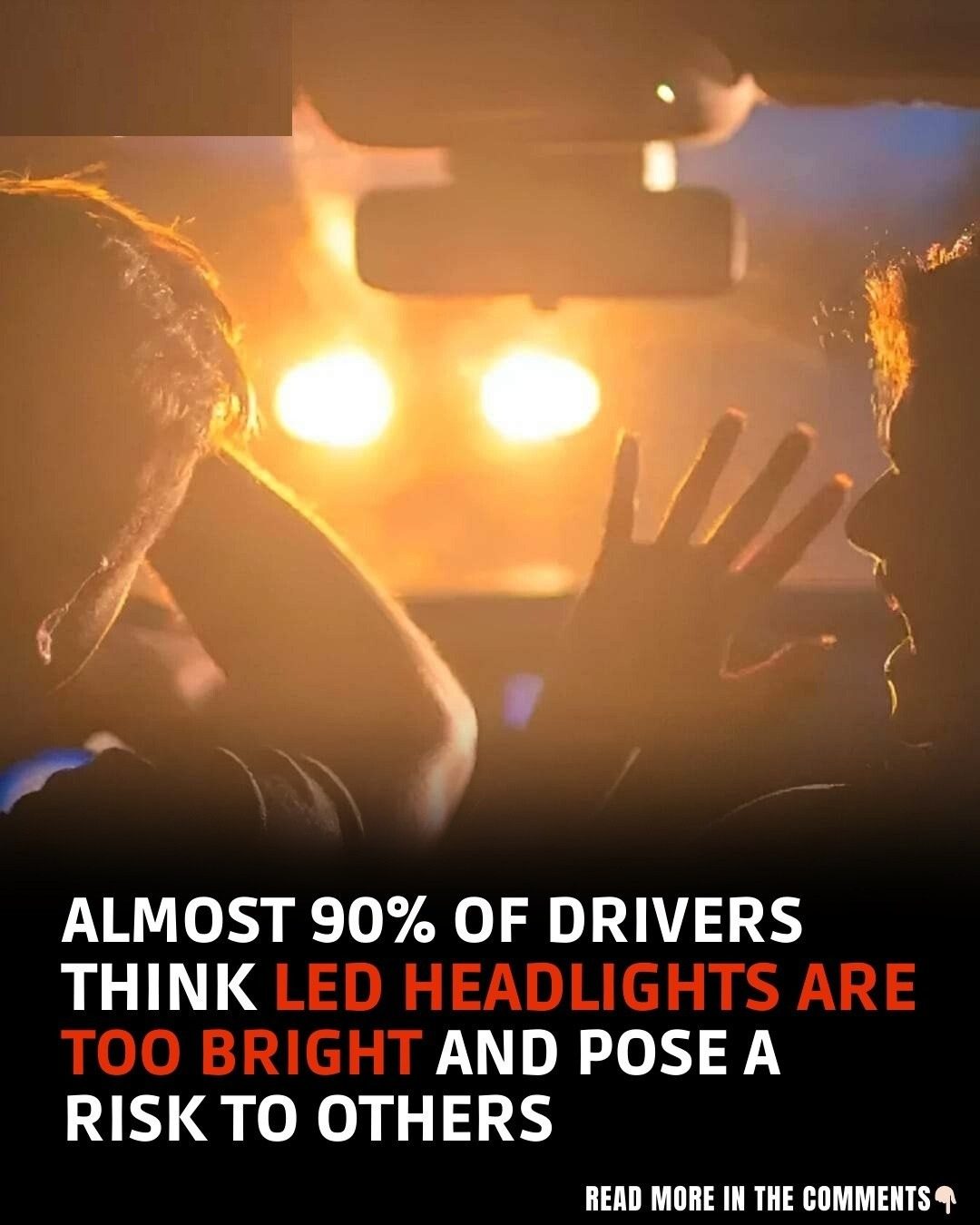
Many drivers are becoming familiar with an uncomfortable experience on the road: a sudden burst of bright light from an approaching vehicle that momentarily disrupts their vision. This glare often appears before the car itself is fully visible, creating a brief but unsettling loss of clarity while driving at night.
Across different countries and road conditions, motorists report similar reactions. The intense brightness can cause drivers to blink repeatedly, tighten their grip on the steering wheel, or momentarily struggle to stay focused on the roadway. While these moments are usually brief, they can feel alarming, especially at higher speeds.
Modern vehicles increasingly rely on LED and high-intensity discharge (HID) headlights. These lighting systems were designed to improve nighttime visibility, offering longer lifespans, better energy efficiency, and illumination that closely resembles daylight. When first introduced, they were widely praised for helping drivers see farther and more clearly after dark.
However, the same qualities that make LED headlights effective can also create challenges. Compared to traditional halogen bulbs, LED lights produce a more concentrated and intense beam. Under certain conditions, this focused brightness can overwhelm the vision of oncoming drivers rather than assist them.
Vehicle design plays a significant role in this issue. SUVs, pickup trucks, and crossover vehicles—now common on many roads—sit higher off the ground than smaller cars. As a result, their headlights are positioned closer to eye level for other drivers. When combined with powerful LED output, this height difference can increase glare through windshields and mirrors.
Even minor headlight misalignment can worsen the problem. A beam angled slightly upward may shine directly into the eyes of approaching motorists, causing temporary visual discomfort or reduced night vision. Some drivers report seeing light streaks or lingering afterimages that take several seconds to fade.
Safety researchers and transportation experts are paying closer attention to how brighter headlights affect driving behavior. Studies and public discussions have raised questions about whether current regulations and testing standards adequately address glare concerns. In response, some manufacturers are exploring adaptive lighting technologies that automatically adjust beam angle or intensity based on traffic conditions.
The ongoing conversation highlights an important balance. While brighter headlights aim to improve safety, their real-world impact can vary depending on vehicle design, road conditions, and proper alignment. As automotive technology continues to evolve, regular evaluation of lighting standards and increased public awareness may help reduce discomfort and improve nighttime driving experiences for everyone.
Until clearer guidelines and broader solutions are implemented, many drivers will continue navigating roads where visibility can change in an instant—reminding us that safer driving is not only about seeing more, but also about ensuring others can see safely too.