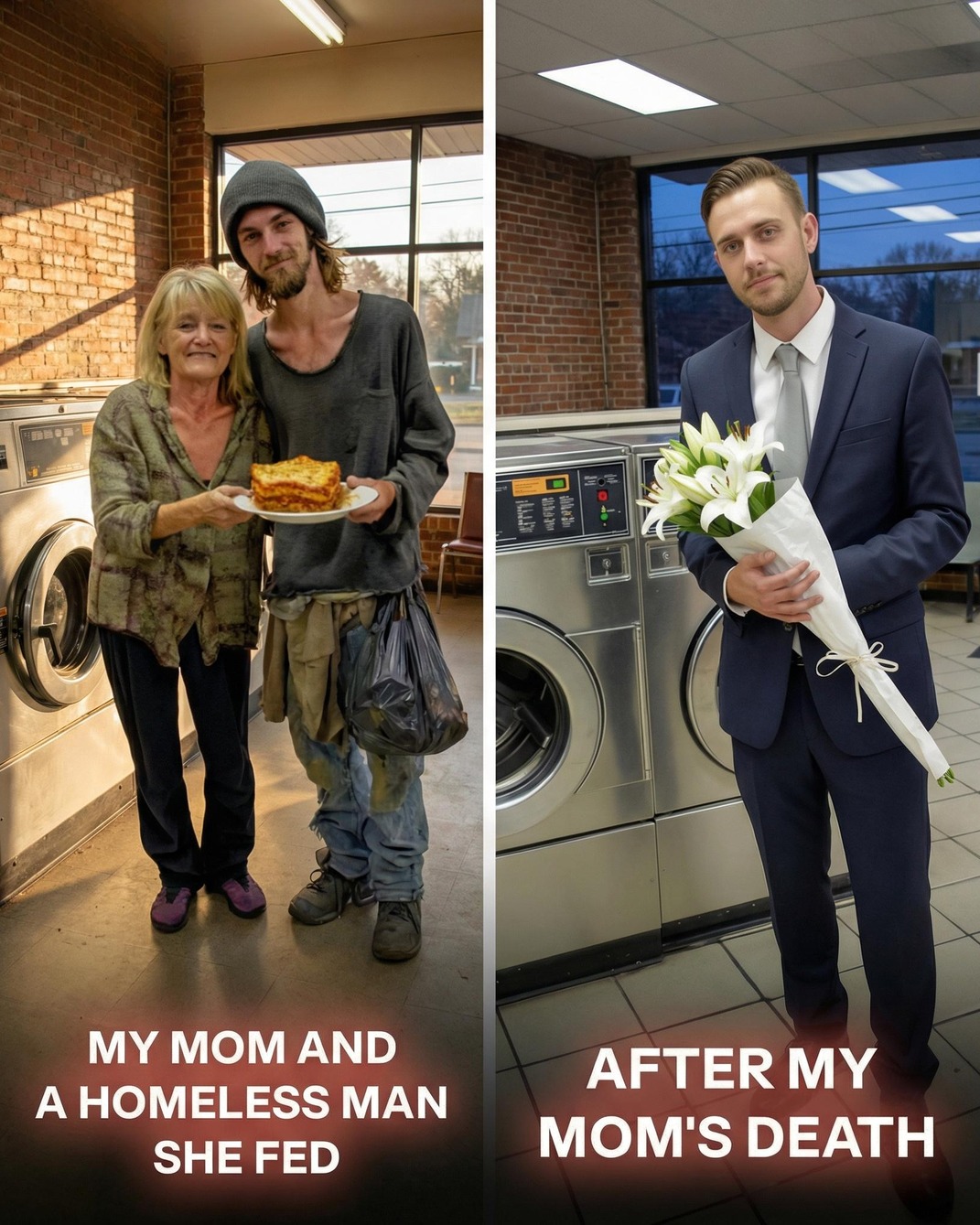
Every Christmas Eve, my mother followed a quiet tradition that never appeared in family photos or holiday cards. While our small apartment filled with the comforting smells of roasted meat, buttered potatoes, and fresh cornbread, she always prepared one extra plate. She wrapped it carefully in foil, placed it in a grocery bag, and set it aside.
When I was young, curiosity finally got the better of me. I asked who the meal was for. My mother smiled and simply said it was for someone who needed it.
That someone was Eli, a reserved young man who spent his evenings in the corner of our neighborhood laundromat. My mother never treated him differently or asked personal questions. Each year, she would quietly kneel beside him, hand him the meal, and offer a kind smile. Over time, I began to understand that her gesture wasn’t about giving—it was about recognizing someone’s humanity.
As the years passed, Eli became a familiar part of our Christmas routine. He never asked for help, yet my mother continued to show up. Slowly, pieces of his life emerged through gentle conversations: a challenging upbringing, time in foster care, and the loss of a close family member. My mother listened without judgment and never pushed for details.
Some years, she added warm gloves or socks to the meal. Once, she offered to help him look into housing options, but he declined, not wanting to feel obligated. She respected his wishes and continued the tradition. At the time, I didn’t fully understand her persistence, but I saw how small, consistent acts of kindness could build trust over time.
Years later, my mother passed away after a brief illness, leaving a quiet space that felt impossible to fill. By the following Christmas, I was simply going through the motions, unsure how to move forward. On Christmas Eve, standing in her kitchen, I nearly let the tradition fade away. But something inside me urged me to continue.
I prepared a simple meal, wrapped it the way she always had, and drove to the laundromat. When I stepped inside, I stopped in surprise. Eli was there—but he looked completely different. He stood confidently in a neat suit, holding a bouquet of white lilies. When he saw me, his eyes filled with emotion.
He explained that years earlier, my mother had quietly connected him with community programs that offered training and support. With time, he rebuilt his life, found stable work, and made a promise to himself to return one day and show her that he was doing well.
As we talked, Eli shared something I had never known. Long ago, when I was briefly separated from my family at a crowded fair, he had helped guide me safely to a police officer before disappearing into the crowd. My mother never forgot that moment. It was what first inspired her to seek him out and offer kindness.
He handed me an old photograph from that day, something he had kept all these years. Later, we visited my mother’s resting place, where he gently placed the lilies beside her name. Standing there, I realized her kindness had never truly ended—it had simply grown into new connections and new beginnings.
That Christmas Eve, I carried her tradition forward, understanding that when kindness is shared freely, its impact can last far longer than we ever imagine.