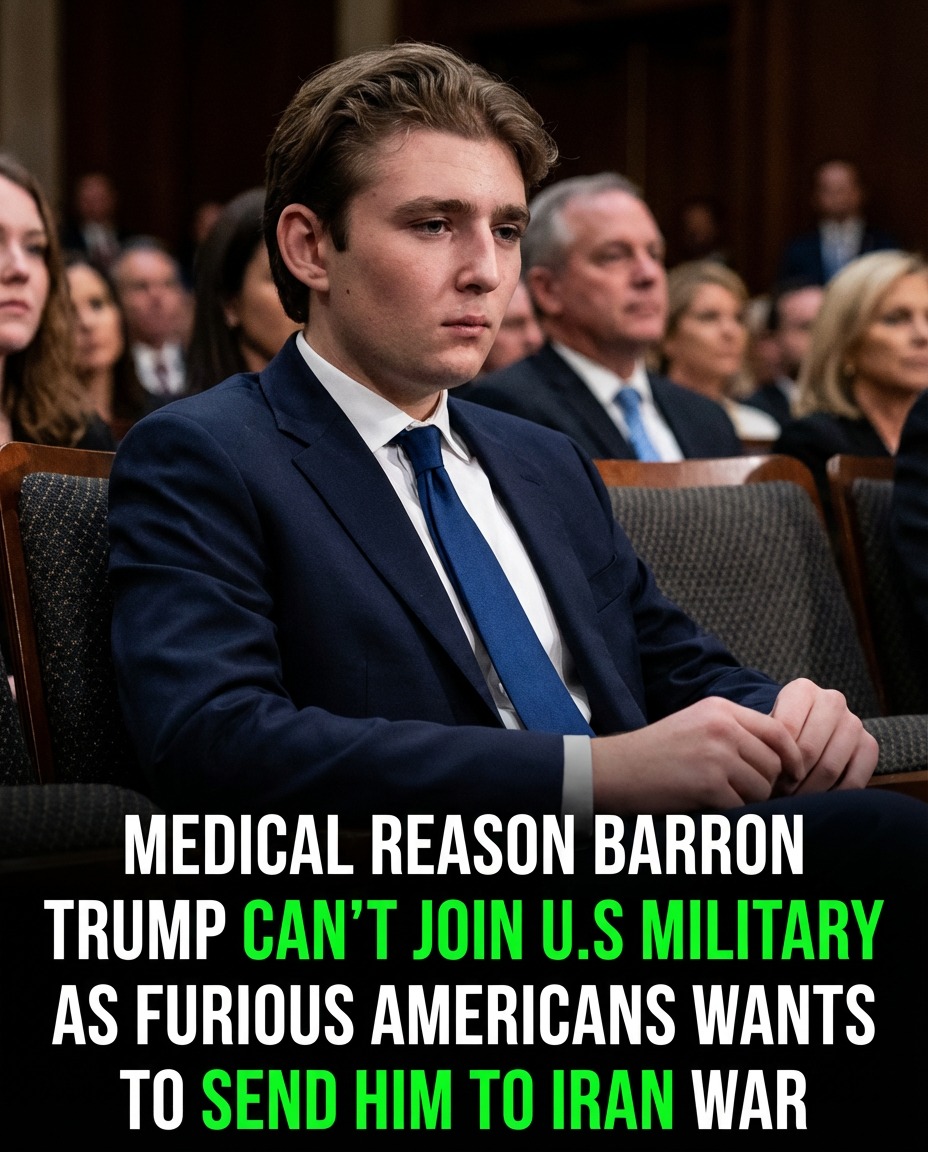
As discussions about U.S. foreign policy continue across social media platforms, the name Barron Trump recently began trending online. Some users suggested that the president’s youngest son should serve in the military, referencing broader conversations about fairness, public service, and historical draft deferments during the Vietnam era.
While online debates can quickly gain attention, military service in the United States is governed by clear legal and medical standards — not by social media trends or public pressure.
The United States Does Not Currently Have an Active Draft
It’s important to clarify that the United States does not currently operate under a mandatory military draft. Although young men are required to register with the Selective Service System when they turn 18, conscription would only occur if it were reinstated by Congress during a national emergency.
In any situation involving potential military service, eligibility is determined by established guidelines. These standards apply equally to all candidates, regardless of family background, political connections, or public visibility.
Physical and Medical Requirements Matter
The U.S. military maintains specific medical and physical criteria for enlistment. Height, weight, vision, hearing, and overall health are evaluated before a candidate can qualify for service.
Height requirements can vary depending on the branch and the role. While many tall individuals successfully serve, certain positions — especially those involving confined environments such as aircraft cockpits, armored vehicles, or submarines — have maximum height restrictions. In some cases, eligibility for particular roles may be limited to individuals under approximately 6 feet 8 inches.
These limitations are not personal. They are based on equipment design, operational safety, and the physical dimensions of military machinery.
Equal Standards for All Applicants
Military eligibility in the United States follows a structured process that includes medical evaluations, physical assessments, and legal documentation. Public figures and their family members are subject to the same regulations as every other citizen.
Although online conversations may reflect strong opinions about national policy or public responsibility, decisions about military service are ultimately determined by established criteria — not by public debate.
Understanding how the process works helps clarify why service eligibility is based on objective standards rather than public sentiment.