The Winter Olympics have always been a place where tradition meets innovation, and this year delivered a moment that perfectly captured that balance. Inside the Milano Ice Skating Arena, thousands of fans rose to their feet as an American skater executed a move many believed would never return to Olympic ice. In a matter of seconds, decades of history, debate, and evolution within the sport came together in one unforgettable performance.
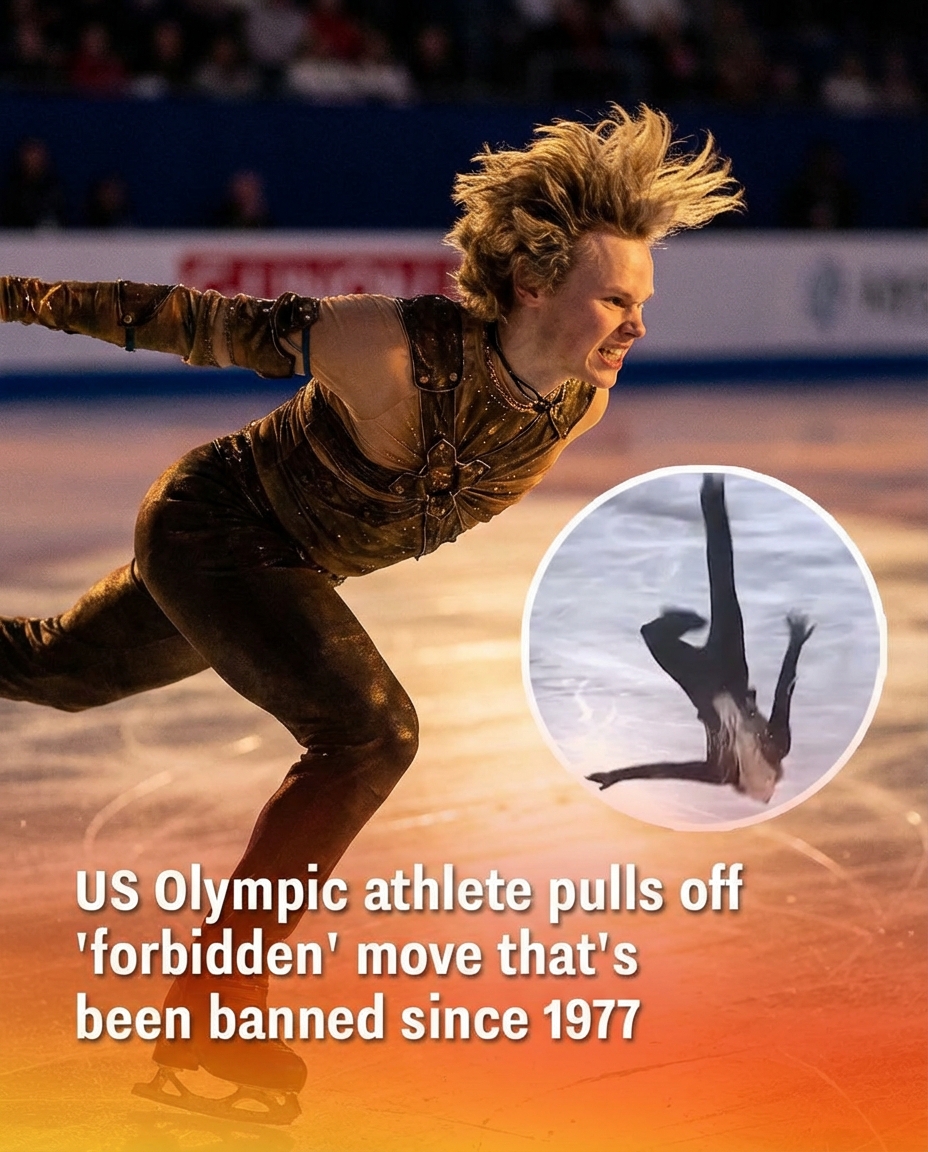
Team USA’s Ilia Malinin became the center of global attention during the men’s short program team event when he successfully landed a backflip—an element that had been absent from legal Olympic competition for nearly half a century. The arena erupted in applause as the move was completed cleanly, signaling not only a technical success but also the end of a long-standing restriction in figure skating.
Malinin’s bold routine earned him a strong score of 98.00 and instantly became one of the most talked-about moments of the Games. While backflips were once part of skating’s experimental past, safety concerns led the International Skating Union (ISU) to ban the move in 1977. At the time, officials believed the risks outweighed the benefits, and the decision effectively removed the backflip from competitive skating at the highest level.
The last skater to perform the element legally at the Olympics was American Terry Kubicka in 1976. After that, the backflip became more of a symbolic gesture than a competitive tool—occasionally attempted in exhibitions or performed with penalties. That changed in 2024, when the ISU officially lifted the ban, allowing the move to return under updated rules and modern training standards.
Malinin’s performance naturally drew comparisons to French skating legend Surya Bonaly, who famously landed a backflip at the 1998 Nagano Games despite knowing it would result in deductions. Her moment was remembered as one of defiance and courage. This time, however, the rules had shifted. Malinin’s backflip counted toward his score, marking a clear turning point in the sport’s history.
Speaking after the event, Malinin described the reaction from the crowd as unforgettable. He explained that the energy inside the arena fueled his confidence and reminded him why the Olympics are unlike any other competition. He also reflected on the importance of staying present and grateful, acknowledging how unpredictable elite sports can be and how rare Olympic opportunities truly are.
Although Malinin finished second overall behind Japan’s Yuma Kagiyama, the result did little to overshadow the impact of his skate. Across social media, fans and analysts praised the performance as fearless, exciting, and symbolic of a new era in figure skating. Many noted that while medals are important, moments that push the sport forward often leave the deepest impression.
By successfully bringing back a move once deemed too dangerous for Olympic competition, Ilia Malinin did more than deliver a high-scoring routine. He helped redefine what is possible in modern figure skating and reminded audiences around the world why the Olympic Games continue to inspire. In just one jump, a 50-year chapter quietly closed—and a new one began on the ice.