
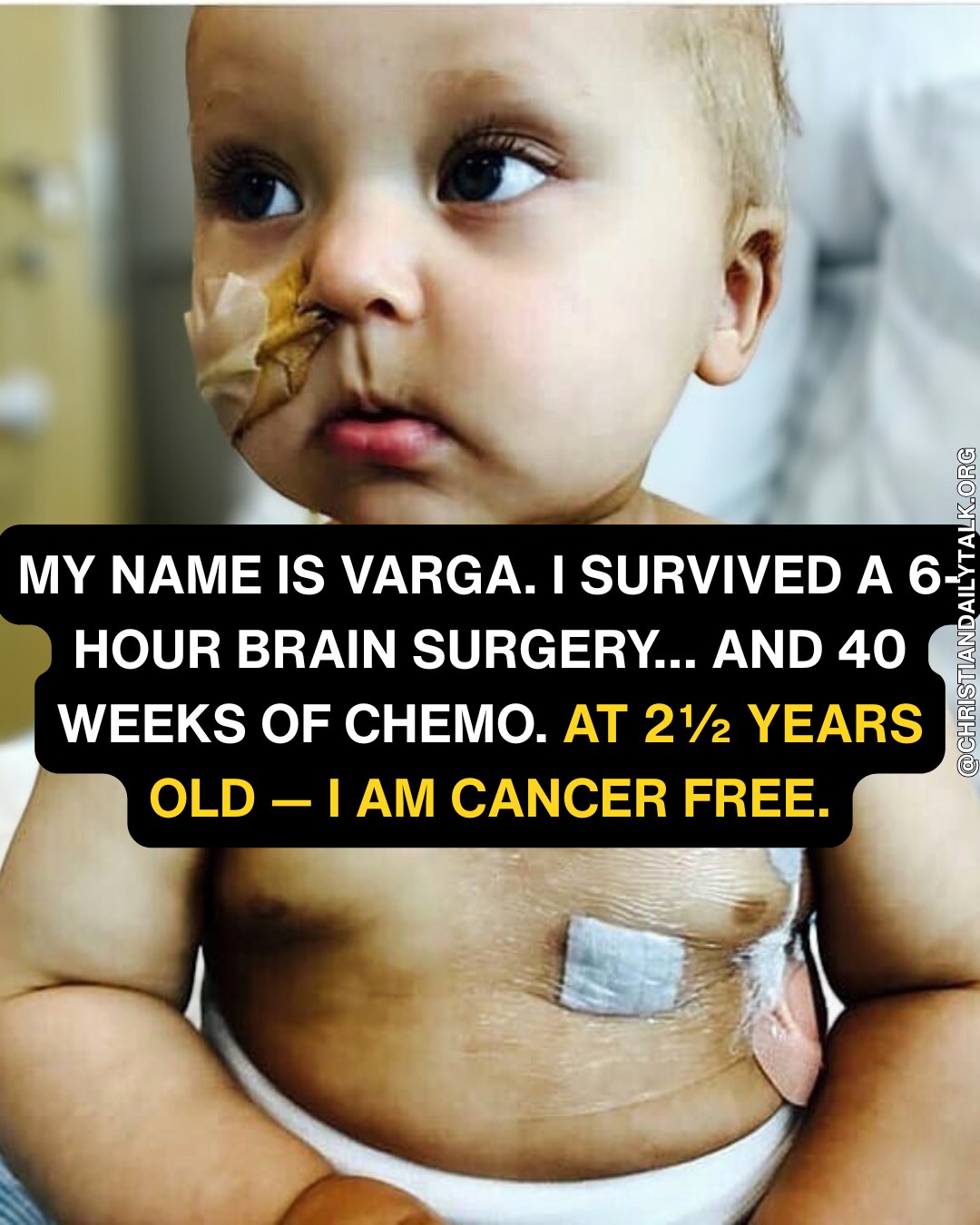
A Little Girl's Journey That Touched Countless Hearts
At just 10 months old, Varga's life took a turn no parent ever expects. While most babies her age were learning to explore their surroundings, she was facing a serious medical diagnosis: medulloblastoma, a rare and aggressive form of brain cancer. The news arrived suddenly and changed everything for her family in an instant.
The Diagnosis No Parent Expects
Before she could speak her first words or take her first steps, Varga was already showing extraordinary resilience. Her days became filled with doctor visits, tests, and careful monitoring as medical teams worked quickly to determine the best course of action. Every moment carried uncertainty, but also a quiet determination to fight for her future.
Medulloblastoma is a fast-growing tumor that begins in the cerebellum, the part of the brain responsible for balance and coordination. It is the most common malignant brain tumor in children, though it remains rare overall. In infants as young as Varga, the diagnosis is particularly challenging because treatment must balance aggressive cancer control against the vulnerability of a developing brain.
For parents, the moment of diagnosis is often described as the world splitting into before and after. One day your concerns are feeding schedules and nap times. The next, you are learning words like "oncology," "resection," and "protocol," and making decisions no parent should have to make.
The Surgery
On May 16, 2017, the path ahead became clearer. Just 13 days later, Varga underwent a complex six-hour brain surgery. The procedure required precision, experience, and steady hands. Operating on an infant's brain demands extraordinary skill: the structures are tiny, the margins for error are minimal, and the stakes could not be higher.
When it was over, doctors confirmed that the entire tumor had been successfully removed. Many described the outcome as remarkable. For her parents, it was a moment filled with overwhelming gratitude and relief.
A complete resection, removal of the entire visible tumor, is the best possible surgical outcome for medulloblastoma. It does not end the journey, but it transforms it. The family could move from the terror of the unknown to the discipline of a treatment plan.
The Long Road of Treatment
Yet healing is rarely a single moment. It is a journey. Following surgery, Varga began an intensive treatment plan that lasted 40 weeks. Chemotherapy became part of her routine, along with frequent scans, hospital stays, and long days that tested both strength and patience.
Forty weeks is nearly ten months, essentially the entirety of her second year of life. Consider what that means: while other toddlers were taking first steps, tasting new foods, and babbling new words, Varga's milestones were measured in blood counts, scan results, and completed cycles. Her parents' milestones were measured in endurance.
Chemotherapy in infants is carefully calibrated. Doses are calculated by weight and body surface area, and protocols for babies often differ from those for older children because developing organs process drugs differently. The medical team's job was to deliver enough treatment to prevent recurrence while protecting everything the treatment was trying to save: her hearing, her kidneys, her developing brain.
Despite the challenges, she continued forward, supported at every step by parents who refused to let fear have the final word.
What Makes Pediatric Cancer Different
Varga's story illustrates several truths about childhood cancer that deserve wider understanding:
- Children are not small adults. Their bodies process treatment differently, and protocols must be age-specific.
- The whole family is the patient. Siblings, parents, and extended family all absorb the trauma and disruption.
- Time moves differently. Forty weeks of treatment is a significant fraction of a baby's entire life, compressing enormous experience into early development.
- Resilience is real but not romantic. Varga's strength was remarkable, but it was extracted at a cost no child should pay.
- Follow-up is lifelong. Survivors of pediatric brain tumors require ongoing monitoring for late effects of both the disease and its treatment.
The Role of the Medical Team
Behind every story like Varga's stands a team: pediatric neurosurgeons, oncologists, radiologists, nurses, child life specialists, pharmacists, and physical therapists. Pediatric cancer care is among the most collaborative specialties in medicine because no single expert can manage what these children need.
The nurses who held Varga during difficult nights, the specialists who calibrated her chemotherapy, the surgeons who spent six hours in her tiny skull, each played a part in the outcome. Families in these situations often describe the medical team as a second family, bound by shared stakes in a child's survival.
Why Stories Like Varga's Matter
It is natural to wonder why one child's story deserves telling when pediatric cancer affects thousands of families. The answer is that individual stories do work that statistics cannot:
- They drive research funding. People donate to faces, not numbers.
- They build community. Other families in treatment find comfort in knowing they are not alone.
- They educate. Most people know little about pediatric brain tumors until a story like Varga's teaches them.
- They honor the experience. Surviving something this profound deserves witness.
Supporting Families Facing Pediatric Cancer
If Varga's journey moves you, there are meaningful ways to help families walking similar paths:
- Donate to pediatric cancer research organizations funding medulloblastoma and other childhood brain tumor studies.
- Support family housing charities that keep parents near hospitals during long treatments.
- Give blood and platelets. Children in chemotherapy often depend on transfusions.
- Offer practical help to families you know in treatment: meals, childcare for siblings, transportation.
- Remember them after the crisis. Support often floods in at diagnosis and fades during the long middle. The fortieth week needs help as much as the first.
Frequently Asked Questions
What is medulloblastoma?
A fast-growing malignant brain tumor that begins in the cerebellum. It is the most common malignant brain tumor in children, though rare overall.
What happened in Varga's case?
Diagnosed at 10 months old, she underwent a six-hour brain surgery 13 days after her care path was determined on May 16, 2017. Surgeons removed the entire tumor, followed by 40 weeks of chemotherapy and monitoring.
Why is treatment so long for infants?
Infant protocols must balance aggressive cancer control against the vulnerability of developing organs. Treatment is carefully calibrated and extended to maximize effectiveness while minimizing harm.
How can I help children with cancer?
Donate to pediatric cancer research, support family housing charities, give blood, offer practical help to affected families, and sustain that support through the long middle of treatment, not just at diagnosis.

