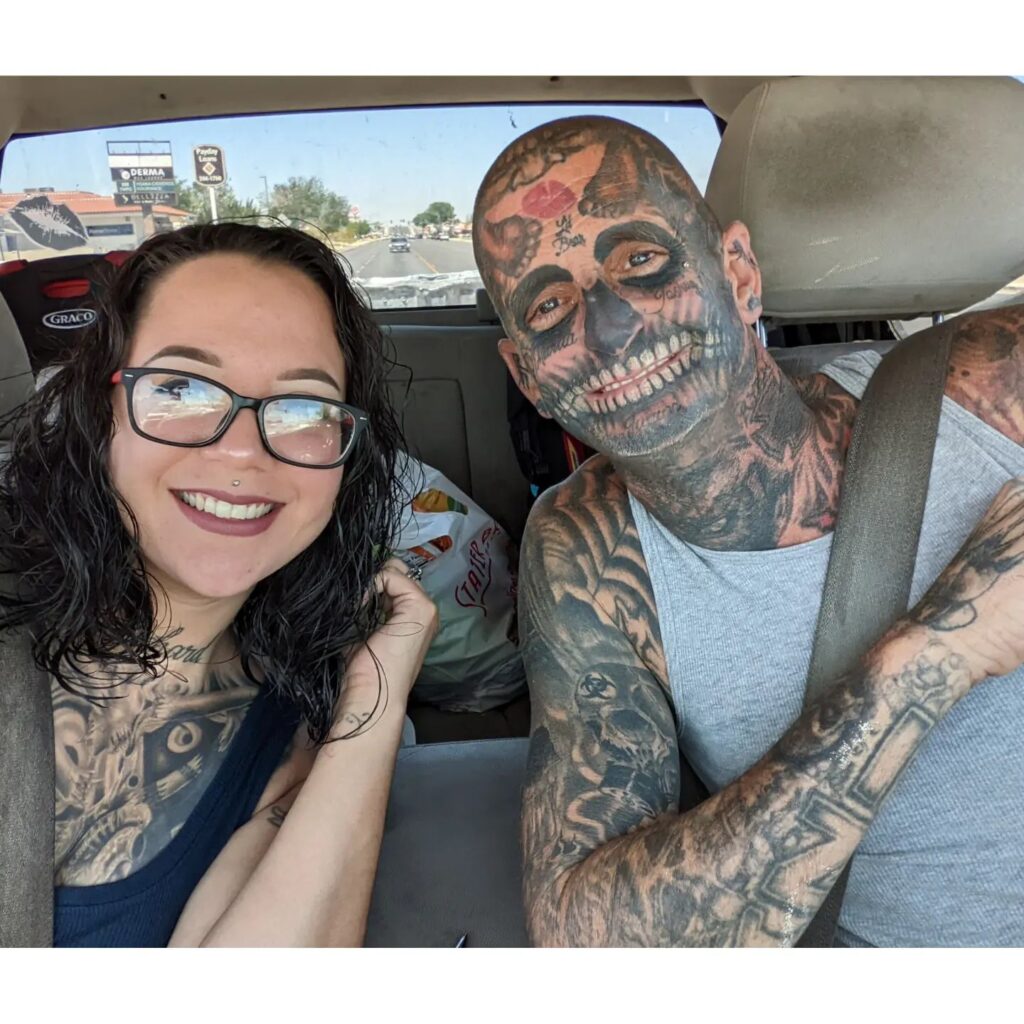
A Father’s Story Reminds Us Not to Judge by Appearance
The saying “don’t judge a book by its cover” still holds true today, especially when it comes to parenting. One father’s story is gaining attention online after people made quick assumptions based on his appearance, only to learn there was much more beneath the surface. His experience is a powerful reminder that character is revealed in actions, not aesthetics.
Meet Richard Huff
Richard Huff, a 51-year-old father of five, is known for his extensive collection of tattoos. With more than 240 pieces of body art covering about 85 percent of his body, his look often sparks strong reactions from others, particularly on social media.
For Richard, tattoos are a form of personal expression. What started as a small interest gradually became a passion over the years. Today, many of his tattoos hold deep personal meaning, including designs dedicated to his children. His body is, in a very literal sense, a canvas telling the story of his life and the people he loves most.
The Judgment He Faces
Despite his commitment to his family, Richard has faced criticism from strangers who question his parenting based solely on his appearance. Some people have even described him as intimidating, especially when seen in everyday settings like school events.
The criticism follows a familiar pattern. A heavily tattooed parent shows up at a school function, and other parents make assumptions: about lifestyle, about values, about fitness for parenthood. None of these assumptions are based on anything Richard has done. They are based entirely on how he looks.
This kind of snap judgment is one of the most common forms of prejudice in everyday life. Studies in psychology consistently show that people form impressions within seconds of seeing someone, and that those impressions are heavily influenced by appearance, often unfairly.
The Man His Family Knows
However, those closest to him paint a very different picture.
His wife, Marita, has openly shared that her first impression of Richard was shaped by his appearance. She admits she judged him at first glance, just like the strangers do now. But after getting to know him, she discovered his true personality. According to her, he is kind, caring, and deeply devoted to his family.
Together, they are raising five children, including three from Marita’s previous relationships. She has emphasized that Richard plays an active and supportive role in all of their lives, attending school functions and participating in family activities. He did not just marry Marita. He embraced her children as his own, showing up for all five with the same devotion.
Even their children have spoken up in his defense. One of his daughters has shared that while some classmates initially find her father’s tattoos unusual, she knows him as a loving and supportive parent. Children are often the most honest judges of character. They do not care about body art. They care about who shows up, who listens, and who loves them.
In His Own Words
Richard himself has addressed the criticism, explaining that his family’s happiness matters more than outside opinions. He believes that appearances do not define a person’s character or ability to be a good parent.
This is not defensiveness. It is clarity. Richard has figured out something many people never do: that the opinions of strangers are data about the strangers, not about him. His metric for success is not public approval. It is the well-being of his wife and five children.
Why We Judge by Appearance
Understanding why snap judgments happen can help us catch ourselves doing it:
- Evolutionary wiring: Humans evolved to make rapid assessments of others for safety. The instinct is outdated but persistent.
- Cultural associations: Tattoos, in particular, carry historical associations with rebellion that linger even as they become mainstream.
- Confirmation bias: Once we form an impression, we notice evidence that supports it and ignore evidence that contradicts it.
- Social signaling: Judging others can be a way of signaling our own values to our peer group.
None of these mechanisms are reliable guides to someone’s character. They are shortcuts, and shortcuts mislead.
The Tattoos Tell a Different Story
There is irony in the fact that the very thing people judge Richard for, his tattoos, includes tributes to his children. The body art that makes strangers question his parenting literally celebrates his parenting. If his critics took the time to ask about the tattoos instead of judging them, they would hear stories of devotion.
This is the deeper lesson of Richard’s story: the things we use to judge people often contain the evidence that would prove us wrong, if we only looked closer.
Supporters Speak Out
Supporters online have also spoken out, encouraging others to look beyond physical appearance and focus on actions and values instead. The response to Richard’s story has been largely positive, with many people sharing their own experiences of being misjudged, and many parents with tattoos expressing solidarity.
The conversation reflects a broader cultural shift. Tattoos have moved from subculture to mainstream, with a large share of adults now having at least one. As body art becomes more common, the stigma is fading, but as Richard’s experience shows, it has not disappeared.
What Truly Matters
This story serves as a reminder that people are often more than what they seem at first glance. Judging someone based only on looks can lead to misunderstandings, while taking the time to understand their story can offer a completely different perspective.
In the end, Richard Huff’s experience highlights an important message: what truly matters is how someone treats their loved ones, not how they look. A father who shows up for five children, who honors his wife, who wears his love for his family literally on his skin, has nothing to prove to anyone.
The next time you catch yourself making a snap judgment, remember Richard. Ask about the story instead of assuming it. You might find, as Marita did, that the person you judged at first glance turns out to be exactly the kind of person you admire.
Frequently Asked Questions
Who is Richard Huff?
Richard Huff is a 51-year-old father of five known for his extensive tattoo collection: more than 240 pieces covering about 85 percent of his body, many with personal meaning including tributes to his children.
Why do people judge him?
Strangers often find his heavily tattooed appearance intimidating and question his parenting based solely on his looks, especially in settings like school events.
What does his family say about him?
His wife Marita describes him as kind, caring, and deeply devoted, noting that her own first impression was wrong. His children describe him as a loving and supportive parent who is active in their lives.
How many children are they raising?
Five children together, including three from Marita’s previous relationships, all of whom Richard supports as an active, involved parent.
What is the message of his story?
That appearances do not define character or parenting ability. What matters is how someone treats their loved ones, and judging by looks alone leads to misunderstandings.