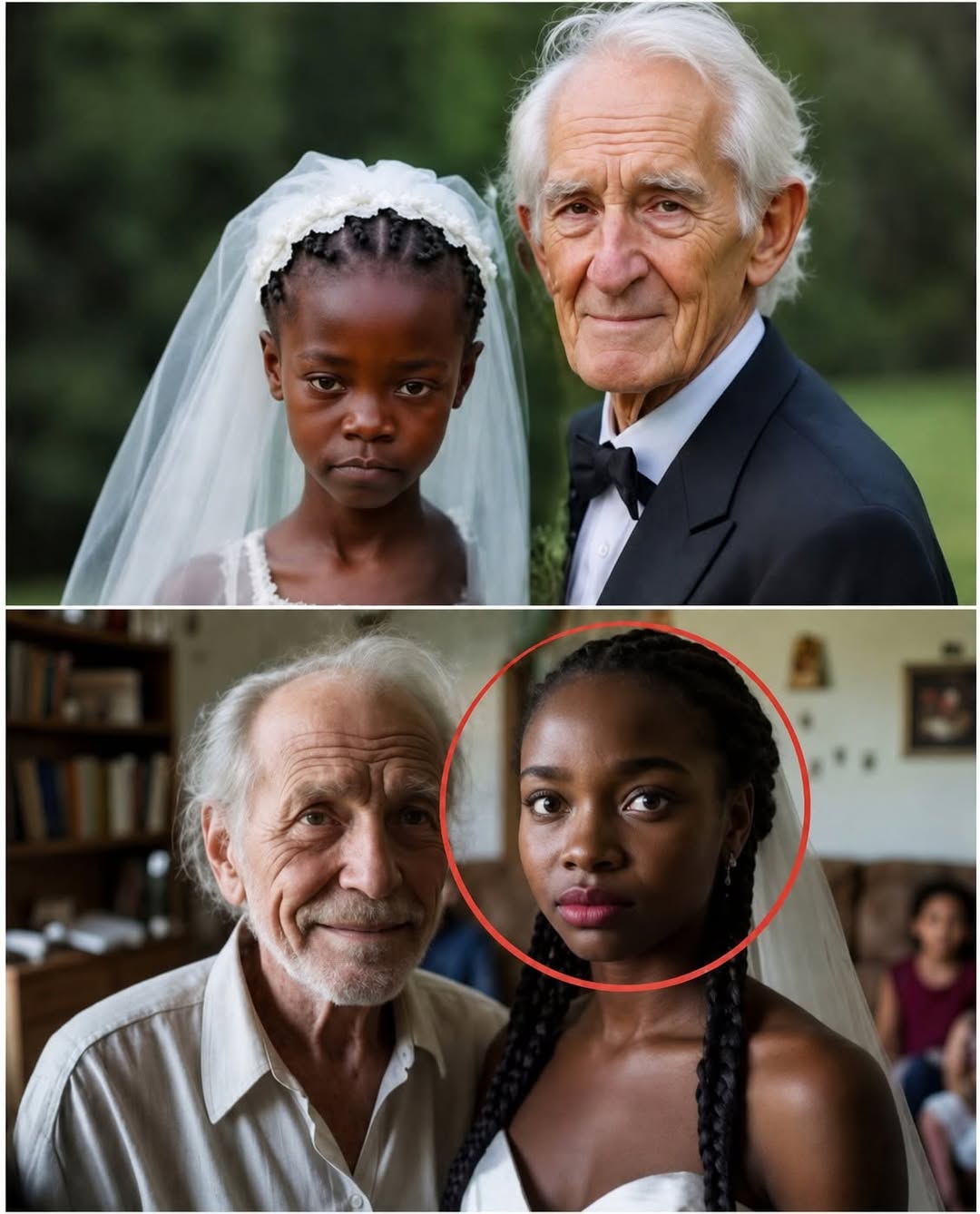
When people see an unusual relationship, it can be tempting to make assumptions before knowing the full story. That was exactly what happened with Amara, a young woman whose marriage to 70-year-old Edward Hale attracted attention and raised many questions.
From the outside, their relationship was easy for others to misunderstand. But behind the headlines was a quieter story about companionship, trust, grief, and two people who found comfort in each other during difficult periods of their lives.
Then, just ten days after their wedding, Amara discovered something unexpected that gave her a completely different perspective on their relationship.
How Amara and Edward Met
Edward Hale was an older widower who had been struggling with loneliness after losing his wife two years earlier.
He had no children and very few close relatives or friends. Although he was financially comfortable, his wealth could not replace the companionship he had lost.
Amara initially entered his life as a caregiver.
Over time, however, their relationship developed beyond the responsibilities of caregiving. They began talking about their lives, sharing memories, and learning more about each other’s experiences.
Edward appreciated Amara’s patience and kindness. Amara, in turn, felt that Edward treated her with respect and listened to her in a way she had not often experienced.
Their connection grew gradually.
Neither expected it to become a marriage, but eventually they decided to build a life together.
The Unexpected Discovery Ten Days After the Wedding
Ten days after their wedding, Amara was organizing Edward’s study when she noticed an old locked drawer.
She eventually found a key stored inside a small tin and opened the drawer.
Inside were several bundles of letters that had belonged to Edward’s late wife.
As Amara looked through them, she discovered something that immediately caught her attention: one of the letters was addressed directly to her.
The letter had been written only a few months before the wedding.
Its contents left Amara deeply emotional.
Edward’s late wife had apparently known about Amara and had expressed her hope that someone kind would remain in Edward’s life after her passing.
For Amara, the discovery was more than an old letter. It was a reminder that her presence in Edward’s life had meaning beyond what she had initially understood.
A Different Perspective on Their Marriage
The discovery caused Amara to reflect on everything that had happened.
People outside the relationship often focused on the large age difference between the couple. Some questioned whether money had influenced Amara’s decision.
But according to the story, their relationship had developed from everyday interactions, trust, and companionship.
Amara had not entered Edward’s life expecting to become his wife. Their connection developed naturally over time.
Edward, meanwhile, found someone who made his later years less lonely.
Their relationship demonstrated how complicated human relationships can be when viewed from the outside.
A photograph or headline can reveal only a small part of someone’s life. The reasons behind a major personal decision may be far more complicated than outsiders realize.
Learning to Ignore Other People’s Assumptions
Amara eventually stopped worrying about what other people thought.
She understood that not everyone would agree with her choices, particularly because of the significant age difference between her and Edward.
But she also realized that she was the person living that life.
Rather than spending her time trying to convince strangers that her relationship was genuine, she focused on the bond she had built with Edward.
Their home became a place where they could enjoy ordinary moments together, share conversations, and create memories.
For Amara, those experiences mattered more than public opinion.
What Happened Later?
Amara and Edward continued their life together, cherishing the relationship they had developed.
The letter from Edward’s late wife remained especially meaningful to Amara because it connected her with someone she had never had the opportunity to know personally.
Eventually, Edward passed away.
After his death, Amara was left with memories of their time together and the lessons she had learned from their unusual journey.
Rather than allowing other people’s judgments to define the relationship, she chose to remember the kindness, companionship, and moments they had shared.
Why People Were So Quick to Judge
Stories involving large age differences often attract strong reactions.
People may immediately wonder about money, family pressure, personal motives, or whether both people truly understand the relationship.
Those questions are understandable, but they can also lead to unfair conclusions when people do not know the full circumstances.
Amara’s story is a reminder that appearances rarely tell the entire story.
Every relationship has a history that may not be visible to outsiders.
Lessons From Amara’s Experience
There are several broader lessons that can be taken from the story.
Don’t Judge Too Quickly
First impressions can be misleading. Before reaching a conclusion about someone’s choices, it is worth remembering that we may not know what happened behind the scenes.
Relationships Can Be Unexpected
People sometimes form meaningful connections in circumstances they never anticipated.
A relationship can begin through friendship, work, caregiving, shared experiences, or simply spending time together.
Kindness Has Real Value
Amara’s relationship with Edward began with care and compassion. Her willingness to treat him with patience eventually became an important part of their connection.
Everyone Has a Different Story
What looks unusual from the outside may make perfect sense to the people involved.
Understanding someone’s circumstances often requires more than looking at their age, appearance, finances, or background.
Personal Choices Deserve Thoughtful Consideration
At the same time, unusual relationships should not automatically be romanticized. Healthy relationships should be based on mutual respect, informed decisions, clear boundaries, and genuine consent.
The most important thing is that people make major life decisions thoughtfully and understand the responsibilities involved.
Frequently Asked Questions
Why did Amara marry Edward?
According to the story, Amara and Edward developed a close relationship after she began working as his caregiver. Their connection gradually grew into companionship and eventually marriage.
Was Amara interested in Edward’s money?
The story portrays Amara’s motivation as companionship and affection rather than financial gain. Her relationship with Edward began before their marriage.
What did Amara discover in the locked drawer?
She found letters belonging to Edward’s late wife, including a letter written specifically for Amara.
Why was the letter important?
The letter gave Amara a new perspective on her relationship with Edward and made her feel that his late wife had recognized the importance of having someone caring in his life.
What happened to Edward?
Edward eventually passed away, leaving Amara with memories of their life together.
What can readers learn from the story?
The story encourages readers to avoid making immediate judgments about other people’s lives. It also highlights the importance of kindness, communication, respect, and understanding.
A Final Thought
Amara’s story is not simply about an unusual age difference.
At its heart, it is about two people who found companionship during different stages of their lives.
Their relationship may not have looked conventional to everyone, but the people involved understood their own circumstances better than outside observers could.
The discovery of the old letter gave Amara an emotional reminder that kindness can leave a lasting impact, even when we do not immediately understand where our actions may lead.
Perhaps the most valuable lesson is simple: we rarely know the complete story behind someone else’s life.
Before judging another person’s choices, it can be worth pausing, asking questions, and remembering that every person carries experiences that may not be visible from the outside.
Sometimes, the truth is more complicated—and more human—than the first impression suggests.
Note: This article presents the story as a personal-interest narrative. Details should be independently verified before being treated as a documented real-life account.