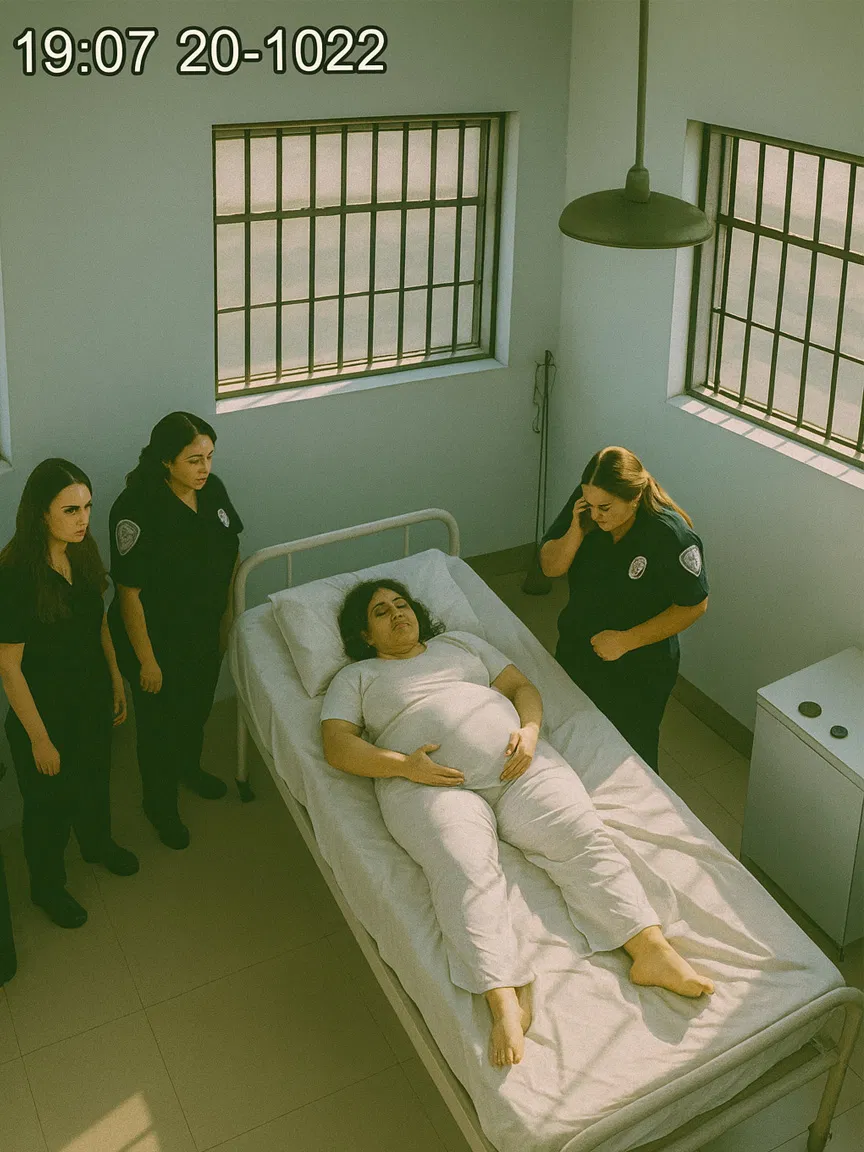
A Miracle Birth Behind Prison Walls: The Story of Hope and Survival
In the quiet of an early morning inside a prison hospital, an extraordinary event unfolded, one that no one present would ever forget. The day began with unusual stillness. The usual sounds of doors slamming and loud voices in the hallway were absent, leaving an unsettling calm that seemed to signal something significant was about to happen.
In the medical ward, a nurse reviewed her list of patients while a seasoned midwife prepared for the day. She had seen many difficult cases throughout her career: women giving birth in difficult conditions, stories of resilience and heartbreak. But something about this morning felt different.
The Patient Nobody Knew
The patient scheduled was known only as Prisoner #1462, a woman who had been transferred to the facility only a month earlier. She had no family history available, no documents, and spoke very little. Silent and withdrawn, she seemed to carry a heavy burden within herself.
When the midwife entered the small hospital room, she found the woman lying quietly on a narrow bed. Her pale face and stillness carried not fear, but a kind of solemn resignation, the look of someone who had stopped expecting good news long ago.
Gently, the midwife introduced herself and began her examination. What happened next shook the entire room.
A Heartbeat Fades, Then Returns
At first, the midwife could not hear the sound she was expecting: the strong, steady heartbeat of the unborn child. The silence was alarming, and tension filled the air as the guards looked on. In that suspended moment, everyone in the room understood what was at stake.
But just as hope seemed to fade, a faint rhythm returned. Weak, fragile, but still present. The midwife exchanged a glance with the nurse. There was still a chance, but there was no time to waste.
What followed was a race against time in the most unlikely of delivery rooms. Prison hospitals are equipped for basic care, not high-risk obstetric emergencies. Every decision had to be made quickly, with limited resources and the ever-present constraints of a secure facility.
Against Every Odd
Against the expectations of nearly everyone present, the delivery succeeded. A baby's cry, thin but unmistakable, filled the small room, and the tension broke all at once. Guards who had stood stone-faced through the procedure found themselves smiling. The nurse felt tears she had not expected. And the mother, Prisoner #1462, who had barely spoken in a month, wept openly as her child was placed in her arms.
It was, by every definition, a miracle birth: a fragile life that had nearly slipped away, saved in a place designed for punishment rather than new beginnings. For a few precious minutes, the prison hospital was not a ward but a delivery room like any other, filled with the same wonder that greets every birth.
Life Behind Bars: The Reality for Incarcerated Mothers
This extraordinary story opens a window onto a reality that receives far too little attention. Thousands of women enter correctional facilities pregnant each year, and their experiences vary enormously depending on location, resources, and policy.
- Prenatal care gaps: Many incarcerated women arrive with little or no prior prenatal care, and prison medical units are often understaffed for obstetric needs.
- Shackling controversies: The practice of restraining women during labor, though increasingly restricted by law, has been widely condemned by medical organizations as dangerous and inhumane.
- Separation after birth: In most systems, newborns are separated from their mothers within hours or days, placed with relatives or into foster care, a rupture with documented effects on both mother and child.
- Nursery programs: A small but growing number of facilities operate prison nursery programs, allowing mothers to keep infants with them for months, with research suggesting benefits for bonding and reduced recidivism.
Behind every statistic is a story like this one: a woman, a child, and a system struggling to balance security with humanity.
Why Stories Like This Matter
It would be easy to treat this as a feel-good anecdote and move on. But the story endures because it touches something deeper. It reminds us that hope is not a luxury reserved for comfortable circumstances. It can appear in a prison hospital at dawn, in the form of a faint heartbeat that refuses to stop.
The midwife, the nurse, and even the guards were changed by what they witnessed. Compassion, it turns out, does not check credentials at the door. When a new life hangs in the balance, the labels fall away, prisoner, guard, staff, and what remains is simply people, united in the oldest human drama there is.
For the mother, the birth was more than survival. Witnesses described a transformation: a woman who had been silent and withdrawn began to speak, to ask about her baby's future, to show the first signs of hope anyone had seen in her. A child she had carried in despair became, in an instant, a reason to keep going.
What Happens Next
The story, as originally told, ends at the moment of triumph, and perhaps that is fitting. The future for Prisoner #1462 and her baby remains uncertain, subject to laws, policies, and circumstances beyond any single person's control. But on that morning, in that quiet ward, something undeniable happened: life insisted on itself, and everyone present was privileged to witness it.
It is a reminder that behind every prison wall are human beings with human stories, and that sometimes, in the least likely places, hope finds a way to be born.
Frequently Asked Questions
How common is childbirth in prisons?
Thousands of incarcerated women give birth each year in the United States alone, with numbers varying by country and system. Most prison systems are required to provide medical care for pregnant inmates, though quality varies widely.
What happens to babies born to incarcerated mothers?
In most cases, the newborn is placed with a family member or in foster care shortly after birth. A limited number of facilities run nursery programs that allow mothers to keep their babies for an extended period.
Are women shackled during labor in prisons?
Many jurisdictions have passed laws restricting or banning the shackling of pregnant women during labor and delivery, following condemnation of the practice by medical associations. However, policies and enforcement still vary.
What are prison nursery programs?
These are specialized units within some correctional facilities where mothers can live with their infants for several months. Studies suggest they support mother-child bonding and may reduce repeat offenses.
Can witnessing events like this change prison staff?
Correctional workers and medical staff frequently report that moments of profound humanity, such as a birth, reshape how they see incarcerated people, reinforcing the importance of compassion within secure environments.