
A Night of Neighborly Respect: How One Simple Conversation Changed Everything
It was supposed to be an ordinary Saturday night. The glow of my lamp lit the corner of my small apartment as I prepared to settle in with a book. From the other side of the wall, a steady rhythm pulsed: laughter, upbeat music, and the unmistakable buzz of a weekend get-together. My neighbor seemed to be hosting a lively celebration, complete with guests whose joy spilled over into the hallway.
At first, I sighed and reached for my headphones. The bass from next door was strong enough to rattle a picture frame. I braced myself for a long night of muffled noise and restless sleep.
Then, unexpectedly, there was a knock at my door.
The Surprising Request
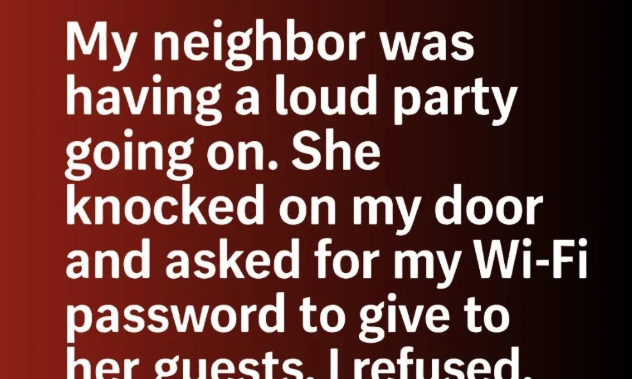
Standing there was my neighbor, smiling warmly. Instead of an apology for the noise, she made a polite, somewhat surprising request: could I share my Wi-Fi password so her guests could connect to the internet?
For a moment I hesitated. Sharing my network details felt like sharing a private key to my home, something I had always guarded carefully. Taking a steady breath, I thanked her for asking but gently explained that I wasn't comfortable sharing my password. My tone was calm and kind, but I still worried she might be offended.
To my relief, she nodded graciously, thanked me, and went back to her gathering. I assumed that was the end of the exchange and braced myself for the music to resume, perhaps louder than before.
The Unexpected Turn
But within minutes, everything changed. The music stopped. The laughter faded. Suddenly the apartment next door fell completely silent.
Confused, I sat in my living room, enjoying the unexpected quiet. Then my phone buzzed with a notification, a call from my neighbor. On the line, she offered a heartfelt apology. She said she hadn't meant to disturb me, and out of respect she and her guests had decided to wrap up early. Her tone was sincere and kind.
In that instant, what could have been an awkward neighborly standoff became something much more meaningful.
Why This Small Exchange Mattered
On the surface, nothing dramatic happened that night. No argument, no confrontation, no grand gesture. Yet the exchange contained lessons that apply far beyond apartment walls:
- Boundaries build trust. Saying no clearly and kindly showed my neighbor that I respected both her and myself. Paradoxically, the refusal strengthened the relationship.
- Tone is everything. The same refusal delivered with irritation could have started a feud. Delivered with warmth, it invited understanding.
- Respect is reciprocal. She respected my boundary; I had respected her enough to answer honestly rather than resentfully. That mutual respect changed the whole evening.
- Small courtesies compound. Her decision to end the party early cost her something. That sacrifice transformed a neighbor into someone I now genuinely like.
The Art of Saying No Without Damaging Relationships
Many people struggle with boundaries because they fear the other person's reaction. This story illustrates a framework that works:
- Acknowledge the request. Thanking her for asking signaled that I took her seriously.
- Be direct but warm. "I'm not comfortable with that" is clear without being harsh. No lengthy justification was needed.
- Don't over-apologize. Excessive apologizing can signal that your boundary is negotiable. One sincere acknowledgment is enough.
- Accept the outcome gracefully. When she responded well, the story ended. No need to rehash or feel guilty.
The fear that honesty will ruin relationships is usually unfounded. More often, as this night showed, honesty delivered with kindness deepens them.
What Good Neighbors Actually Do
Neighbor relationships are unique: intimate enough to affect daily life, distant enough to require deliberate care. Research on community well-being consistently finds that positive neighbor relations improve life satisfaction, safety, and even health. The habits that build them are simple:
- Communicate early. A quick heads-up about a party prevents far more conflict than an apology afterward.
- Respect quiet hours. Most buildings have them; good neighbors observe them even when they don't have to.
- Handle shared spaces thoughtfully. Hallways, laundry rooms, and parking areas are where neighbor friction usually starts.
- Respond to concerns with grace. The way my neighbor received my refusal is a model: no defensiveness, no guilt-tripping, just acceptance.
- Look for the win-win. She wanted her guests to have a good time; I wanted a quiet evening. Her solution honored both.
When Neighbor Situations Go Wrong
Not every boundary conversation ends this well. If yours doesn't, keep perspective:
- Document patterns. If noise or other issues persist, keep a simple log of dates and times.
- Try once more, in writing. A polite written note creates a record and gives the other person time to reflect.
- Involve management if needed. Landlords and HOAs exist partly to mediate these disputes.
- Know your local ordinances. Most cities have noise regulations. Knowing them gives your position legitimate backing.
- Protect the relationship where possible. Even when escalating, stay factual and calm. You may live next to this person for years.
The Takeaway
That short conversation taught me something valuable. Setting a boundary doesn't have to be rude; in fact, honesty delivered with respect can build trust. My neighbor's graceful response reminded me that mutual understanding often starts with a single open exchange.
By the end of the evening, both of us had gained something: a deeper appreciation for one another. What began as a potentially frustrating night turned into an unexpected reminder that clear communication, kindness, and respect still have the power to transform even the smallest interactions.
Sometimes the most meaningful moments of our lives aren't the dramatic ones. They're a knock on the door, an honest answer, and the surprising quiet that follows.
Frequently Asked Questions
Should I share my Wi-Fi password with a neighbor?
It is generally safer not to. Sharing gives others access to your network, which can affect your security, bandwidth, and liability. If you want to help, most routers allow you to set up a separate guest network with limited access.
How do I set a boundary with a neighbor without seeming rude?
Be warm, direct, and brief. Acknowledge their request, state your position clearly, and avoid over-explaining. Most reasonable people respect clarity.
What are typical quiet hours in apartment buildings?
Many buildings and cities set quiet hours between 10 p.m. and 8 a.m., though this varies. Check your lease and local ordinances for the specific rules in your area.
How can I be a better neighbor?
Give advance notice of gatherings, keep noise reasonable, handle shared spaces considerately, respond gracefully to concerns, and make an effort to learn your neighbors' names.
What should I do if a neighbor dispute won't resolve?
Document the issue, communicate in writing, involve your landlord or property manager, and if necessary, consult local mediation services or tenant rights organizations.



