A Simple Note on My Grocery Receipt Restored My Faith in People
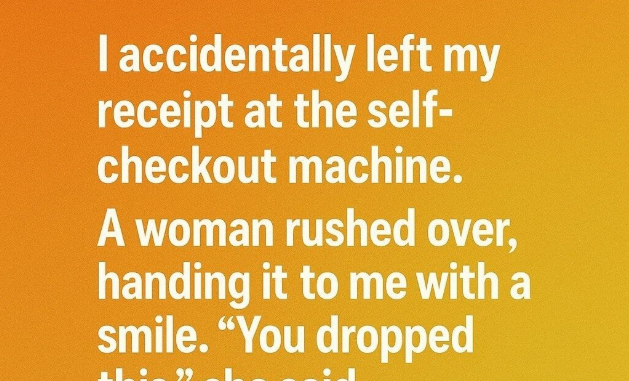
Some days feel so ordinary that we move through them on autopilot. That was me one Tuesday evening: tired, distracted, and just trying to finish my grocery run. I went through the self-checkout, bagged my items, and barely looked up. As I turned to leave, a woman behind me smiled gently and handed me my receipt. I thanked her quickly and went on my way, not giving it another thought.
Hours later, that forgettable piece of paper would change how I see strangers forever.
Six Words on the Back of a Receipt
Hours later, while cleaning up at home, I picked up that same receipt, ready to toss it into the trash. That's when I noticed something handwritten on the back: six simple words that made my heart skip a beat.
“Check your back seat.”
For a moment, I froze. My mind raced. Was it a warning? A prank? I replayed the moment at the store in my head but couldn't remember anything unusual. The woman had seemed kind, calm. After a few moments of uncertainty, curiosity got the better of me. I grabbed my keys, stepped outside, and cautiously opened my car door.
What Was Waiting in the Back Seat
What I found wasn't frightening. It was humbling.
My wallet was wedged deep between the back seat cushions, exactly where it had slipped earlier. I hadn't even realized it was missing. My cards, my cash, my ID: everything I would have panicked about losing, sitting quietly in the dark of my own car.
Instead of chasing after me or shouting across the parking lot, that stranger had chosen a gentle, thoughtful way to help. No scene, no fuss, just quiet kindness written on a piece of paper most people would never look twice at.
Think about what she did. She noticed my wallet slipping. She could have ignored it. She could have chased me down, making a moment of it. Instead, she picked up my receipt, wrote six words on the back, and handed it to me with a smile. She trusted that I would find the message, and she asked for nothing in return. Not my name. Not my thanks. Not even the satisfaction of watching me discover it.
Why This Small Act Hit So Hard
Standing there in the fading light, I realized how rare moments like this have become. We move so quickly these days, absorbed in our screens and routines, often forgetting how small acts of care can make a lasting impact.
That woman didn't know my name. She didn't want praise or reward. Yet her small gesture changed my entire day, and reminded me that goodness still thrives in quiet corners of the world.
There is a particular power to anonymous kindness. When someone helps you without any possibility of credit, it strips away every cynical explanation. She wasn't networking. She wasn't performing virtue for an audience. She just saw a problem and quietly fixed it. That purity is what makes the memory stick. You can't argue with it or explain it away. You can only receive it, and let it change you a little.
The Receipt I Couldn't Throw Away
I kept that receipt. It sits on my counter even now, the ink fading, but the message still clear. Every time I see it, I remember to slow down, notice others, and be a little more kind.
And it worked. I hold doors longer. I help people who seem lost. I try to do what she did: something small, yet deeply meaningful. Not because I expect it to come back to me, but because I know now how it feels to be on the receiving end of a stranger's quiet attention.
This is the part of the story I think about most. Her kindness didn't end with my wallet. It replicated. Every door I hold, every lost person I help, every small unnoticed kindness I offer is, in some small way, her kindness continuing through me. That is how goodness actually spreads: not through grand gestures, but through ordinary people paying small mercies forward.
Why We Think Kindness Is Rare (When It Isn't)
We often talk about how disconnected the world feels, how kindness seems rare. But that note reminded me of something powerful: kindness still exists. It just whispers instead of shouts.
The news shows us cruelty because cruelty is dramatic. Kindness is undramatic by nature. Nobody films the woman who writes on a receipt. Nobody goes viral for holding a door. The vast majority of human decency happens off camera, unrecorded, unrewarded, and therefore invisible to anyone measuring the world by headlines.
If you feel like the world has grown cold, consider that you might just be looking in the wrong places. Kindness isn't gone. It's quiet. It's the stranger who returns your cart, the coworker who covers your shift without being asked, the woman behind you at the self-checkout who notices what you didn't.
How to Be the Person With the Pen
You don't need a dramatic opportunity to practice this kind of kindness. The whole point is how ordinary it was.
- Pay attention to the people around you. She noticed a slipping wallet because she was actually looking.
- Act without making it about you. No announcement, no expectation of thanks. Just help.
- Choose the gentle method. A quiet note beat a parking lot chase. Consider what would feel best to receive.
- Don't wait to be asked. The best kindness is offered, not requested.
- Let it be small. Six words. That's all it took to restore someone's faith in people.
Frequently Asked Questions
What was written on the receipt?
Six handwritten words on the back: “Check your back seat.”
What did the narrator find?
Her wallet, wedged deep between the back seat cushions where it had slipped unnoticed earlier.
Why didn't the stranger just say something directly?
She chose a gentle, discreet approach: writing a note on the receipt and handing it over with a smile, avoiding any scene or fuss.
Why did this small act have such a big impact?
Because it was anonymous, selfless, and thoughtful. It proved that genuine kindness still exists without any motive, which challenged the narrator's cynicism about the world.
How did the experience change the narrator?
She kept the receipt as a reminder, and now consciously practices small kindnesses: holding doors longer, helping lost people, and looking for quiet ways to help strangers.