
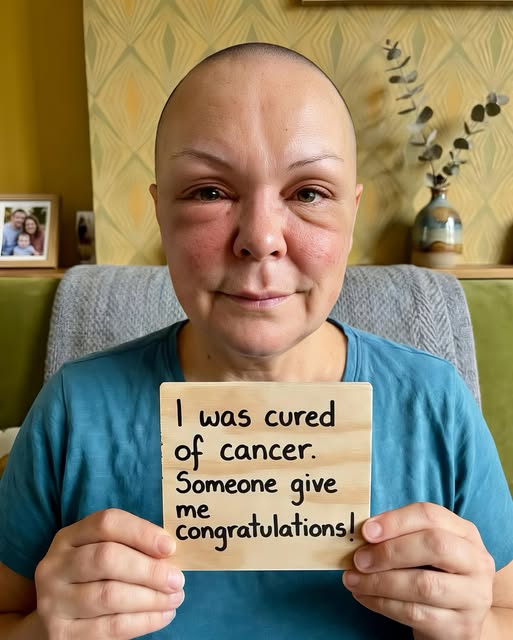
A Victory Worth Celebrating
Not every victory is marked by loud applause or grand celebrations, but some moments carry a quiet power that deserves to be recognized and shared. This is one of those moments.
After a long and challenging journey filled with uncertainty, emotional highs and lows, and countless moments of perseverance, she finally received the words she had been hoping for: she is cancer-free.
The Journey Behind the Words
Reaching this point was not easy. Behind the scenes were days that tested her strength, moments of doubt, and times when simply moving forward required incredible courage. There were also small victories along the way, each step forward becoming a reminder that progress, no matter how slow, still matters.
Her journey reflects the reality many people face when dealing with serious health challenges. It's not just about the medical treatments or the appointments. It's about the emotional weight of uncertainty, the strain on relationships, the financial pressures, and the daily choice to keep going when giving up would be easier.
Consider what "the journey" typically includes:
- The diagnosis moment, when life splits into before and after.
- The treatment gauntlet: surgeries, chemotherapy, radiation, or other therapies, each with its own side effects and fears.
- The waiting: for test results, for the next appointment, for signs that treatment is working.
- The invisible battles: anxiety at 3 a.m., the strain of appearing "fine" for others, the grief for the life you had planned.
- The small wins: a good blood count, a clear scan, a day with energy, a laugh that feels like your old self.
Each of these is a victory in its own right. The final "cancer-free" is the culmination of hundreds of smaller triumphs.
Why "Cancer-Free" Hits So Hard
Those two words carry extraordinary weight because of everything they represent:
- The end of active battle. Treatment is grueling. Hearing it's worked is validation of every hardship endured.
- Permission to plan. Cancer puts life on hold. "Cancer-free" reopens the future: plans, dreams, ordinary days.
- Relief for the whole circle. The patient isn't the only one who suffered. Family and friends carried their own fear, and the news lifts them too.
- Awe at the body. After betraying you, your body has fought back. That reconciliation is profound.
- Gratitude sharpened. Nothing clarifies what matters like nearly losing it. Cancer-free survivors often describe a permanently altered perspective.
The Emotions Are Complicated
What surprises many survivors is that the news doesn't bring pure, uncomplicated joy. Common feelings include:
- Fear of recurrence. The question "what if it comes back?" can shadow the celebration. This is normal and usually eases with time and clear scans.
- Survivor's guilt. Knowing others didn't get the same news can temper joy with sorrow.
- Identity disorientation. When "patient" has been your identity for months or years, who are you now?
- Exhaustion. The adrenaline of the fight drains away, revealing just how tired you really are.
- Pressure to feel only happy. Well-meaning people expect pure celebration, which can make complex feelings feel wrong. They're not.
All of these are normal. Healing emotionally takes longer than healing physically, and there's no timeline for it.
How to Celebrate Meaningfully
If you or someone you love has received this news, consider marking it intentionally:
- Acknowledge the journey. Look back at what was endured before rushing forward. The struggle deserves recognition.
- Thank the people. Doctors, nurses, family, friends, the coworker who covered shifts, the neighbor who brought soup. Gratitude completes the circle.
- Do something symbolic. Plant a tree, take a trip, write a letter to your future self. Rituals help the mind accept that a chapter has closed.
- Allow mixed feelings. Celebration and fear can coexist. Give yourself permission for both.
- Pay it forward. Many survivors find deep meaning in supporting others still in treatment: volunteering, mentoring, donating, or simply sharing their story.
Supporting Someone Who Just Heard the News
- Celebrate genuinely. Don't minimize with "I knew you'd beat it." Instead: "I'm so happy. You've been through so much."
- Don't rush past it. The instinct to immediately talk about "what's next" can feel dismissive. Linger in the joy first.
- Remember the fear doesn't vanish. Check in weeks and months later, especially around follow-up scans.
- Follow their lead. Some survivors want a party; others want quiet. Ask what feels right.
- Keep showing up. Support often evaporates after good news. The recovery period still needs community.
Life After: The New Normal
"Cancer-free" is a milestone, not a return ticket. Life after cancer involves:
- Surveillance schedules: regular scans and check-ups that bring their own anxiety ("scanxiety" is real).
- Physical recovery: rebuilding strength, managing lingering side effects, adjusting to a changed body.
- Emotional recalibration: integrating the experience without being defined by it.
- A changed perspective: most survivors describe lasting shifts in priorities, relationships, and appreciation for ordinary days.
This new normal isn't worse than the old one. Many survivors say it's richer. But it's different, and honoring that difference is part of healing.
The Takeaway
She is cancer-free. Two words that represent months or years of courage, thousands of small choices to keep going, and a community that refused to let her fight alone.
Not every victory comes with applause. Some come quietly, in a doctor's office, in words that change everything. This is one of those victories, and it is absolutely worth celebrating.
To everyone still in the fight: her story is proof that the words you're waiting to hear are possible. Keep going. Your victory may be closer than you think.
Frequently Asked Questions
What does "cancer-free" actually mean medically?
It generally means no detectable cancer at the current time, often expressed as "no evidence of disease" (NED). It doesn't guarantee cancer will never return, which is why follow-up surveillance continues.
Is it normal to feel anxious after being declared cancer-free?
Yes, extremely common. Fear of recurrence, survivor's guilt, and identity adjustment are all normal parts of post-treatment life. Support groups and counseling can help.
How can I support a friend who just finished cancer treatment?
Celebrate with them, acknowledge what they endured, don't rush them to "move on," check in during follow-up scan times, and continue offering practical and emotional support.
What is scanxiety?
The anxiety survivors feel before, during, and after follow-up scans. It's one of the most commonly reported challenges of post-cancer life, and it typically eases as clear results accumulate over time.
How do cancer survivors give back?
Many volunteer with cancer organizations, mentor newly diagnosed patients, participate in fundraising walks, donate to research, or share their stories to raise awareness and hope.



